
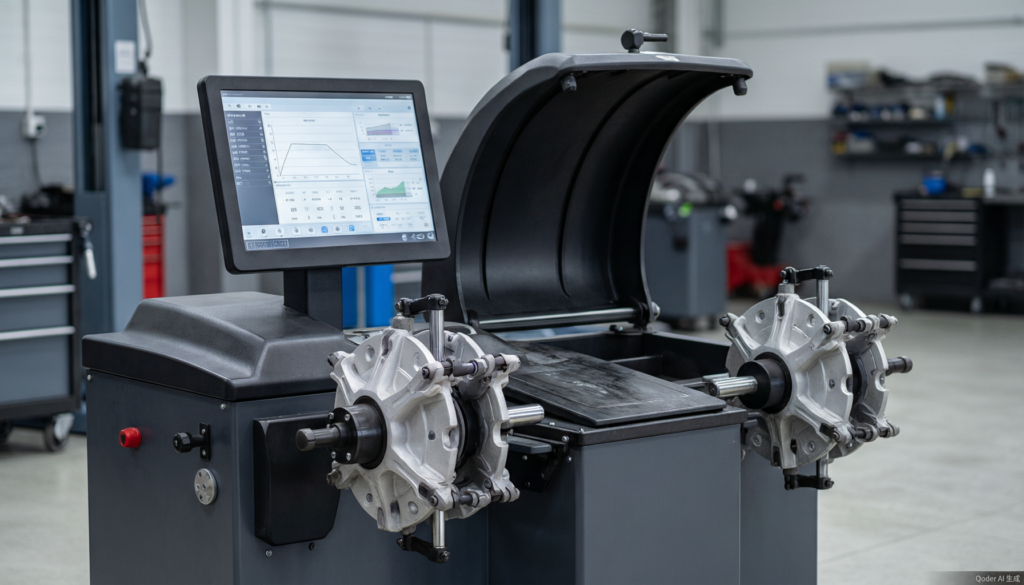
Wheel balancers require specific wheel dimensions to calculate where imbalance occurs and how much correction weight is needed. The method of entering these dimensions—manually or automatically—affects setup speed, technician workload, and the potential for input errors. But automatic entry is not a complete solution; it describes how some measurements are acquired, not whether the machine will balance the wheel accurately.
This guide compares manual and automatic data entry methods, explains what each can and cannot do, and identifies the functions you should confirm before ordering. The goal is to help you evaluate whether automatic entry provides enough workflow value for your service volume and market position.
Which Wheel Dimensions Does a Balancer Need?
Every wheel balancer needs three key dimensions to calculate imbalance correction: rim diameter, rim width, and the distance from the machine to the wheel (or the wheel’s offset).
| Dimension | Label | What It Controls | Typical Input Method |
|---|---|---|---|
| Rim diameter | D | Radius at which correction weights are placed | Read from sidewall or rim marking; captured automatically by A/D systems |
| Rim width | W | Weight distribution across inner and outer flanges | Usually manual; optional automatic on premium models |
| Distance | A | Positions the wheel relative to the machine for calculating correction plane | Manual tape measure or automatic arm/sensor |
| Offset | L | Alternate reference: distance from mounting surface to centerline | Manual or automatic depending on manufacturer’s approach |
How Manual Wheel-Dimension Entry Works
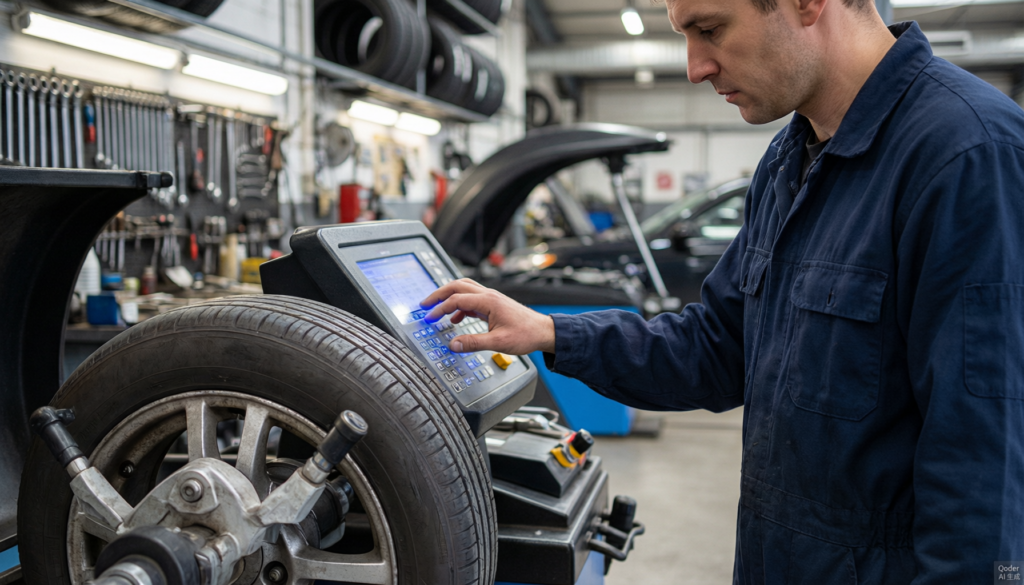
Manual entry requires the technician to measure each dimension and type the values into the balancer’s control panel before starting the balance cycle.
Rim diameter is typically read from the tire sidewall or rim markings (e.g., “17×7.5J” indicates 17-inch diameter, 7.5-inch width). The technician enters these values using the balancer’s keypad or touchscreen. Rim width may also be measured with calipers if the markings are unclear or worn.
The distance (A dimension) is measured using a mechanical arm or gauge that contacts the wheel’s inner surface. The technician positions the arm, reads the scale or digital display, and enters the value. For offset-based systems, the technician measures the wheel’s offset or uses a gauge that converts the measurement automatically.
Manual entry gives the technician full control over the input values, but it also introduces the possibility of measurement errors, misread scales, or typing mistakes. Each wheel requires individual measurement and entry, which adds time to the setup process.
How Automatic A/D Data Entry Works
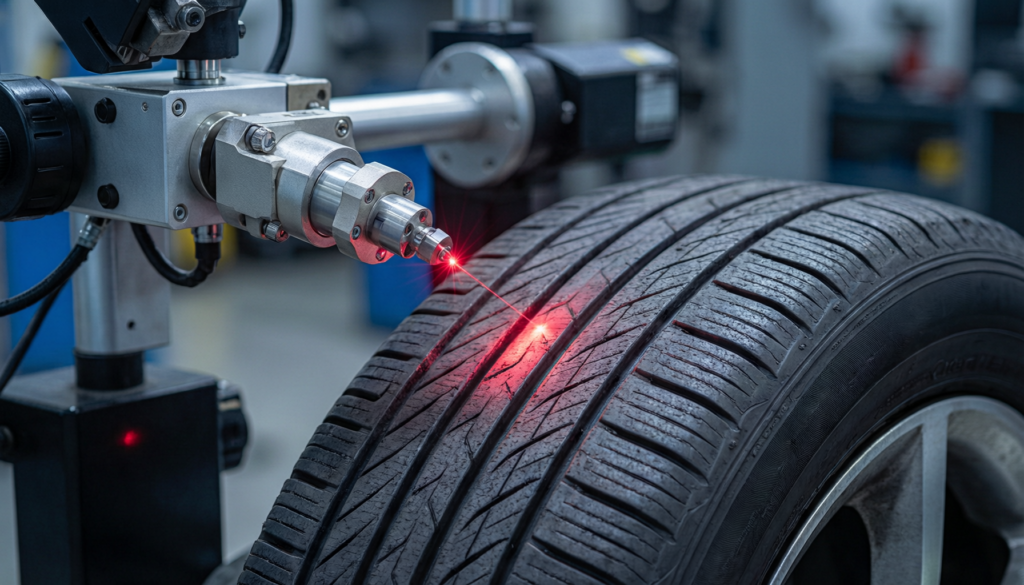
Automatic entry systems acquire the distance (A) and diameter (D) dimensions using sensors or mechanical probes, reducing the number of manual measurements the technician must perform.
When the wheel is mounted on the balancer shaft, the technician lowers a measuring arm or activates a sensor that contacts the wheel’s inner surface. The balancer’s control system reads the position and calculates the distance automatically. A similar process may measure the rim diameter using a probe that contacts the rim flange.
Automatic A/D entry eliminates the need for the technician to read scales, remember values, or type numbers for these two dimensions. The system captures them directly from the wheel’s position on the machine. This can reduce setup time, especially for high-volume workshops that balance many wheels per day.
However, automatic entry does not capture all dimensions. Rim width typically still requires manual entry or a separate measurement step. The technician must verify that the automatic system has captured the correct values before starting the balance cycle.
Which Measurements May Still Require Manual Input?
Even balancers with automatic A/D entry may require manual input for rim width, offset, or special wheel configurations.
| Measurement | Why Still Manual | What to Verify |
|---|---|---|
| Rim width | Requires sensors contacting both inner and outer flanges; not standard on most A/D machines | Whether the quoted model includes automatic width acquisition or if it remains a manual step |
| Offset / Distance | Non-standard mounting positions, unmarked values, or wheels with spacers can confuse automatic sensors | Whether the automatic system supports the full offset range of your common wheel types |
| Special wheel modes | Motorcycle, multi-piece rims, and split-rim configurations may bypass automatic entry entirely | Whether manual override is available and practical for these wheel types in daily use |
Setup Speed, Technician Workload, and Input Errors
Automatic entry can reduce setup time and technician workload, but its impact on input errors depends on how the system is used and whether the technician verifies the captured values.
| Factor | Manual Entry | Automatic Entry |
|---|---|---|
| Setup time per wheel | Technician measures and keys in each dimension before the balance cycle begins | Two or three measurements eliminated; faster at high volume |
| Input error risk | Higher — misread values, wrong unit entry, or transposed numbers are possible | Lower — but incorrect capture is still possible if the arm or sensor contacts a damaged surface |
| Verification requirement | Technician is already engaged with each value; verification is inherent | Technician must check captured values against the wheel before starting the cycle |
| Impact at low volume | Manageable; limited repetition so fatigue is low | Time savings minimal; verification overhead may offset the automatic advantages |
Why Automatic Entry Does Not Automatically Mean Higher Accuracy
Automatic data entry describes how wheel dimensions are acquired, not how accurately the balancer measures imbalance or how well it corrects it. Sensor quality, calibration, centering, and mechanical precision determine accuracy—not the entry method.
A balancer with automatic A/D entry can still produce inaccurate results if the wheel is not centered properly on the shaft, if the sensor is misaligned, if the machine is not calibrated, or if the measurement system has poor resolution. The automatic entry only reduces the manual steps; it does not improve the underlying measurement performance.
Measurement accuracy depends on the balancer’s sensor quality, signal processing, mechanical rigidity, and calibration procedures. Repeatability (the ability to measure the same imbalance consistently) is equally important. A machine that captures dimensions automatically but has poor sensor stability will still produce inconsistent results.
When comparing balancers, do not assume that automatic entry means higher accuracy. Instead, compare the measurement specifications (resolution, accuracy, repeatability), the sensor technology, the calibration requirements, and the manufacturer’s quality control processes. Automatic entry is a workflow feature, not a performance guarantee.
Which Entry Method Fits Your Workshop or Product Range?
The choice between manual and automatic entry depends on your service volume, wheel mix, technician skill level, and market positioning.
| Workshop Profile | Recommended Entry | Key Rationale |
|---|---|---|
| High-volume tire center (20+ wheels/day) | Automatic A/D as standard | Cumulative time savings per shift; reduced technician fatigue drives throughput |
| Low-volume or specialty shop | Manual entry | Flexibility for unusual wheel types; less overhead verifying captured values |
| Distributor targeting volume service centers | Automatic A/D as competitive feature | Differentiator when buyers compare machines for high-throughput environments |
| Distributor targeting small/specialty shops | Manual or mixed product range | Match the feature set to the end-customer’s actual workflow needs |
Functions to Confirm in the Supplier’s Quotation
Before ordering a balancer with automatic entry, confirm which dimensions are captured automatically, which still require manual input, and how the system handles special wheel configurations.
| Function | What to Verify |
|---|---|
| Automatic A/D entry | Confirms whether distance and diameter are captured automatically; check the measurement method (mechanical arm, sensor, probe). |
| Automatic width entry | Optional feature; confirm whether included or available as an add-on. |
| Manual override | Verify that technicians can override automatic measurements and enter values manually for special wheels. |
| Special wheel modes | Check whether automatic entry works for motorcycle wheels, multi-piece rims, or wheels with spacers. |
| Measurement verification | Confirm how technicians verify that automatic measurements are correct before starting the balance cycle. |
| Calibration requirements | Automatic systems may require periodic calibration; check the frequency and procedure. |
When you send this checklist to suppliers, they can clarify which automatic entry functions are included in the quoted model. This reduces ambiguity and helps you compare quotations on equal terms.
If you’re also comparing balancer specifications (measurement accuracy, resolution, repeatability), our guide to how wheel balancers measure imbalance explains the sensor technology and measurement principles. The entry method is separate from the measurement performance—both must be evaluated independently.
Frequently Asked Questions
What does automatic A/D mean?
Automatic A/D refers to the automatic acquisition of the distance (A) and diameter (D) wheel dimensions. The balancer uses sensors or mechanical probes to measure these values when the wheel is mounted, eliminating the need for manual measurement and entry of these two dimensions.
Which wheel dimensions must be entered?
Every balancer requires three dimensions: rim diameter, rim width, and the distance from the machine to the wheel (or the wheel’s offset). Some machines capture diameter and distance automatically, but rim width typically still requires manual entry unless the machine has optional automatic width acquisition.
Does automatic entry measure rim width?
Most balancers with automatic A/D entry do not measure rim width automatically. Rim width typically requires manual entry or a separate measurement step. Some models offer optional automatic width acquisition, but it’s not standard. Verify whether the quoted model includes this feature.
Is automatic data entry more accurate?
Automatic entry does not automatically mean higher accuracy. It reduces manual measurement steps, but accuracy depends on sensor quality, calibration, centering, and mechanical precision. A balancer with automatic entry can still produce inaccurate results if the underlying measurement system is poor or if the automatic measurements are not verified.
Which functions should be confirmed before ordering?
Confirm which dimensions are captured automatically (A/D, width), whether manual override is available, how special wheel configurations are handled, how technicians verify automatic measurements, and what calibration is required. These details vary by model and affect whether the automatic entry functions match your workflow needs.


