
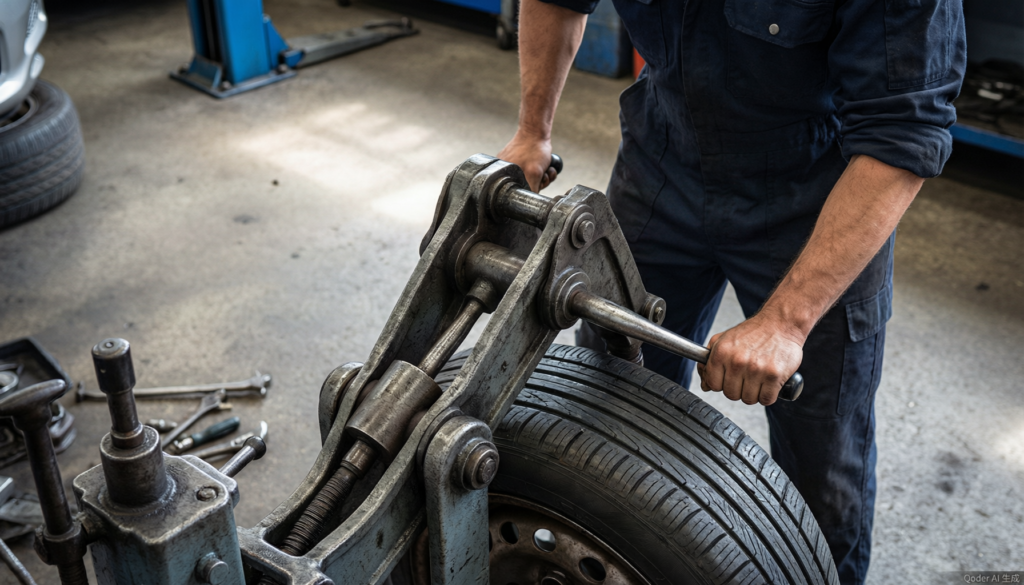
Non-electric tire changers serve specific applications where electrical power is unavailable, unreliable, or impractical. Mobile service operators, roadside rescue teams, and small rural workshops often need machines that can operate without a stable electrical supply. But “non-electric” describes the power source, not the operating system—these machines vary significantly in design, capability, and limitations.
This guide explores when non-electric tire changers are the right choice, compares manual, foot-operated, and air-powered designs, and identifies the tire range, utilities, and productivity limits you should verify before ordering. The goal is to help you match the machine to your specific application rather than assuming all non-electric models perform the same way.
What Does “Non-Electric Tire Changer” Actually Mean?
“Non-electric” means the machine does not require electrical power to operate. It does not describe a single operating system or performance level. Different models use manual, foot-operated, or pneumatic (air-powered) mechanisms.
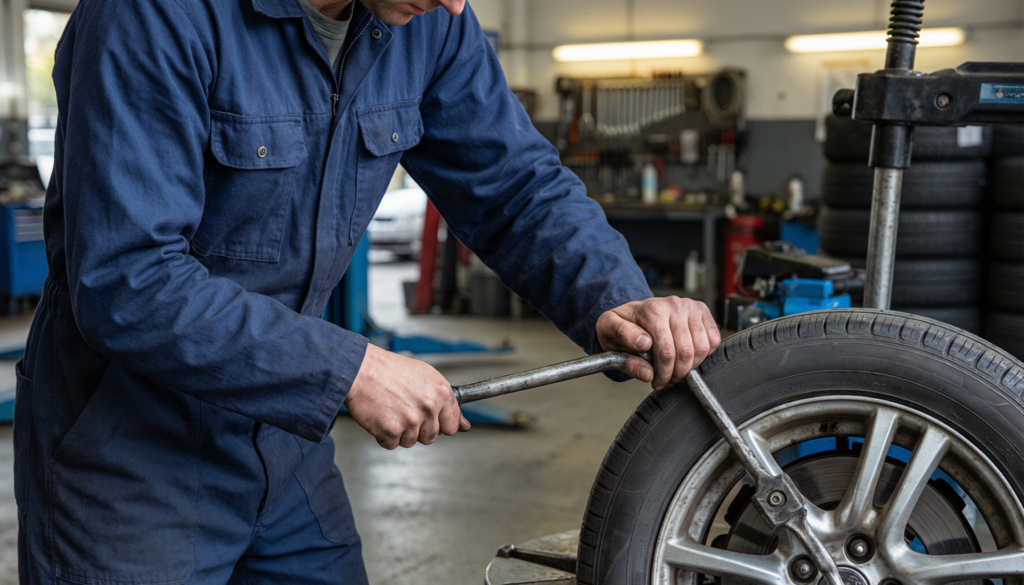
Manual tire changers rely entirely on human force. The operator uses hand tools to break the bead, pry the tire off the rim, and mount the new tire. These machines are simple, portable, and inexpensive, but they require significant physical effort and skill. They are suitable for low-volume applications or emergency situations where no other option is available.
Foot-operated tire changers use a mechanical lever activated by the operator’s foot. The foot pedal provides mechanical advantage, reducing the effort needed to break the bead or operate the mounting head. These machines are still manual (no external power source), but they are easier to use than purely manual designs. They are common in small workshops and mobile service operations.
Neumático (air-powered) tire changers use compressed air to operate the bead breaker, mounting head, and other functions. These machines require an air compressor but no electrical power. They are faster and easier to operate than manual or foot-operated designs, making them suitable for higher-volume mobile service or small workshops with air supply.
The required utilities and operating limits must be checked separately for each model. Do not assume that all non-electric tire changers have the same capability or effort requirements.
Compare Manual, Foot-Operated, and Air-Powered Designs
Each design type has distinct advantages and limitations. The choice depends on your service volume, available utilities, technician skill level, and target tire range.
| Design | Weight | Utilities Required | Service Speed | Best For |
|---|---|---|---|---|
| Manual | 20–50 kg | None (no electricity, no air) | 15–30 min per tire | Occasional use, extreme portability, roadside emergency |
| Foot-operated | 30–70 kg | None (mechanical advantage via pedal) | 10–20 min per tire | Small workshops, mobile service, moderate volume |
| Neumático (air-powered) | 70–150 kg | Compressed air (8–12 bar); air via gasoline engine or PTO | 5–10 min per tire | Higher-volume mobile service, small shops with air supply |
Mobile Service, Roadside Rescue, and Small-Workshop Applications
Non-electric tire changers are designed for applications where electrical power is unavailable, unreliable, or impractical. Understanding your specific application helps you select the right machine type.
Mobile tire service operators travel to customer locations to change tires. They may work from a service van, truck, or trailer. The tire changer must be portable enough to transport and operate in various locations (driveways, parking lots, roadsides). Pneumatic machines are popular for mobile service because they offer good speed and can be powered by the vehicle’s air compressor or a separate gasoline-powered compressor.
Roadside rescue teams service vehicles that have broken down or been in accidents. They work in emergency situations, often on highways or in remote locations. The tire changer must be rugged, portable, and able to operate without electrical power. Foot-operated or pneumatic machines are common in these applications, depending on the team’s vehicle setup and service volume.
Small workshops in rural areas may lack stable electrical power or have limited electrical capacity. Non-electric tire changers allow these workshops to offer tire service without upgrading their electrical supply. Foot-operated machines are suitable for very low-volume workshops; pneumatic machines are better for workshops that handle a moderate volume and have air compressors (even gasoline-powered ones).
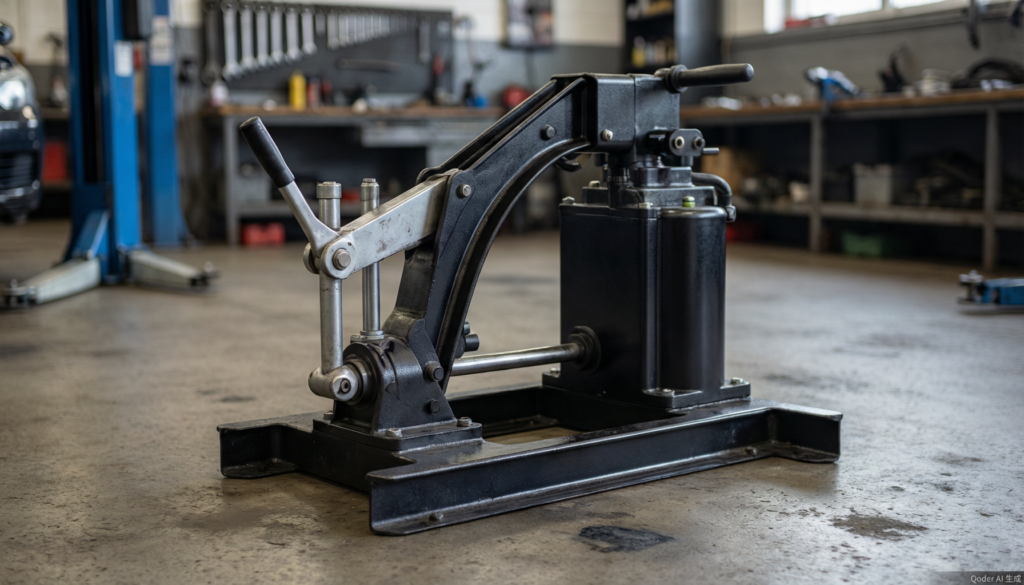
Compare non-electric and powered options in the full tire changer range to see how capacity specifications differ across designs.
Tire Range, Rim Range, and Bead-Breaking Capability
Non-electric tire changers have more limited tire and rim ranges than powered workshop machines. Verify that the machine can handle your target tires before ordering.
| Capability | Manual / Foot-Operated | Neumático | What to Verify |
|---|---|---|---|
| Tire diameter range | 13”–20” | Up to 22”–24” depending on model | Covers the full range of tires you service |
| Tire width range | Up to 8” width | Up to 10” or more | Your widest tire profile |
| Rim compatibility | Standard steel and alloy rims | Larger rims and some special profiles | Multi-piece, deep-dish, or very wide rims may need adapters not included |
| Bead-breaking method | Operator strength or foot lever | Air pressure — easier and faster | Adequate force for stiff, damaged, or run-flat tires |
Machine Mounting, Stability, and Transport Requirements
Non-electric tire changers must be stable during operation and portable enough to transport to the service location. These requirements can conflict, so you must balance them based on your application.
| Mounting Option | Stability | Portabilidad | Best For |
|---|---|---|---|
| Floor-mounted (permanent) | Highest — anchored to concrete | Low; requires uninstall and transport | Fixed workshops with dedicated tire service area |
| Vehicle-mounted | High when locked to van/truck bed | Mobile — travels with the service vehicle | Roadside rescue, fleet mobile service |
| Free-standing (portable) | Moderate; needs weights or temporary anchors | Flexible — place on any flat surface | Temporary setups, multi-site operators, field events |
Pneumatic machines generate more force during operation, so they require more robust mounting than manual or foot-operated designs. Verify that the machine’s weight and dimensions fit your service vehicle, and that you can load and unload it safely without a separate lift.
To understand how different tire changer types compare in capability, see our guide to tire changer machine types and how to evaluate a tire changer manufacturer.
Operator Effort, Service Speed, and Practical Limitations
Non-electric tire changers require more operator effort and time than powered workshop machines. Understanding these limitations helps you set realistic expectations for productivity.
Operator effort varies significantly by machine type. Manual machines require the most effort (bead breaking, prying, mounting all done by hand). Foot-operated machines reduce the effort for bead breaking and some mounting operations, but the operator still provides all the power. Pneumatic machines require the least effort (air power does the heavy work), but the operator must still position the tire, operate the controls, and verify the result.
Service speed is directly related to operator effort and machine type. Manual machines are the slowest (15–30 minutes per tire). Foot-operated machines are moderate (10–20 minutes per tire). Pneumatic machines are the fastest (5–10 minutes per tire), comparable to electric workshop machines. If you handle many tires per day, the time difference adds up significantly.
Practical limitations include the tire sizes the machine can handle, the operator’s physical capability, and the working environment. Manual and foot-operated machines may struggle with large, stiff, or damaged tires. Pneumatic machines can handle more difficult tires but require a reliable air supply. Working in tight spaces (roadside, parking lots) may limit the machine’s operating position or the operator’s ability to apply force.
When a Powered Tire Changer Is the Better Choice
Non-electric tire changers are not universal replacements for powered workshop machines. In some applications, a powered machine is the better choice.
| Scenario | Why Powered Wins | Non-Electric Limitation |
|---|---|---|
| High-volume workshop (20+ tires/day) | Speed and consistency of fully electric cycles | Even pneumatic models may not match throughput over a full shift |
| Large or difficult tires (truck, off-road, run-flat) | More robust bead breakers, powerful motors, better tool geometry | Manual/foot designs struggle; pneumatic may lack sufficient force |
| Stable electrical power available | Eliminates the only advantage of non-electric designs | No practical reason to accept higher effort and slower speed |
| Dedicated service bay with ventilation | Full automation, no manual positioning workarounds | Non-electric machines are designed for constrained environments that do not apply here |
Non-electric machines excel where electrical power is unavailable, unreliable, or impractical. If your application does not have these constraints, evaluate powered models from the tire changer selection guide before committing to a non-electric design.
Questions to Ask Before Ordering a Non-Electric Model
Before ordering a non-electric tire changer, verify that the machine matches your application, tire range, utilities, and productivity requirements.
| Question | What to Verify |
|---|---|
| Machine type | Is the machine manual, foot-operated, or pneumatic? What are the effort and speed differences? |
| Tire and rim range | What tire diameters, widths, and constructions can the machine handle? What rim sizes and types are supported? |
| Utility requirements | Does the machine require compressed air? What pressure and volume? Can your air compressor supply these requirements? |
| Mounting and stability | How is the machine mounted (floor, vehicle, free-standing)? Is it stable during operation? Can it be transported easily? |
| Bead-breaking capability | How does the bead breaker work? Is it adequate for stiff or damaged tires? Can it handle run-flat tires? |
| Service speed | How long does it take to change one tire? Is this speed acceptable for your service volume? |
| Operator requirements | How much physical effort is required? What skill level is needed? Is training available? |
| Limitations | What tires or situations can the machine NOT handle? When should you upgrade to a powered machine? |
When you send these questions to suppliers, they can clarify whether their machine matches your application. This reduces the risk of ordering a machine that is inadequate for your needs or unsuitable for your working conditions.
If you’re also evaluating tire changer types (manual, semi-automatic, fully automatic), our guide to choosing the right tire changer covers the operational differences between powered designs. Non-electric machines serve a different application (no electrical power), but the tire-handling principles are similar.
For high-volume applications where non-electric designs may fall short, review wholesale tire changer options with powered bead breakers and automatic mounting arms.
Frequently Asked Questions
How does a non-electric tire changer work?
Non-electric tire changers use manual force, foot-operated mechanical advantage, or pneumatic (air) power to break the bead, pry the tire off the rim, and mount the new tire. They do not require electrical power, making them suitable for mobile service, roadside rescue, or workshops without stable electricity.
Does a pneumatic tire changer need electricity?
No, a pneumatic tire changer does not need electricity. It uses compressed air to power the bead breaker, mounting head, and other functions. The air compressor can be powered by a gasoline engine or vehicle power take-off (PTO), eliminating the need for electrical power.
Can one be mounted in a service van?
Yes, many non-electric tire changers can be mounted in a service van or truck. Vehicle-mounted designs provide stability during operation and portability during transit. Verify that the machine’s weight, dimensions, and mounting requirements match your vehicle’s capacity and layout.
Is it suitable for high-volume work?
Non-electric tire changers are generally not suitable for high-volume work (20+ tires per day). Manual and foot-operated designs are slow and labor-intensive. Pneumatic designs are faster but still may not match the throughput of powered workshop machines. For high-volume applications with stable electrical power, a powered machine is likely more productive.
What should buyers confirm before ordering?
Confirm the machine type (manual, foot-operated, pneumatic), tire and rim range, utility requirements (compressed air pressure and volume), mounting method, bead-breaking capability, service speed, operator effort, and limitations. Verify that the machine matches your specific application, target tires, and working conditions.


