
As a workshop owner, you know a single scratched rim can wipe out a day’s profit. With 2026 fleets shifting toward heavy EV tires and larger alloys, the risk of damage claims is higher than ever. This guide explores the essential tire changer types for modern passenger cars. We focus on practical equipment choices that improve your shop’s efficiency while protecting your bottom line.
Main Categories of Tire Changer Machines
Tire changers break down into distinct categories based on arm design, automation, and power source. Choosing the right configuration dictates your shop’s efficiency, rim protection, and handling capacity.
Design and Arm Configurations
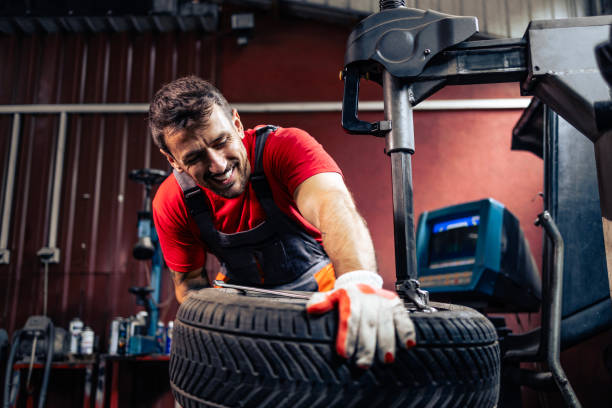
Swing-arm models offer an affordable entry point for many shops. They rely on an adjustable tabletop with four jaws to secure the wheel externally or internally, giving operators precise clamping control. Tilt-back models take a different approach. They use a tilting vertical tower mechanism that clears the work area instantly, allowing technicians to make rapid adjustments and process high volumes of standard tires without fighting the equipment.
When wheel protection is the absolute priority, center-post and leverless designs take over. Center-post models grip the wheel through the center bore rather than the rim edge, significantly dropping the risk of cosmetic damage to expensive alloys. Leverless machines push this further by using robotic arms and specialized polymer tool heads. This setup eliminates manual physical effort and keeps metal levers completely away from the wheel.
| Design Type | Description & Key Features | Workshop Applications |
|---|---|---|
| Swing-Arm | Adjustable tabletop with four jaws and manual descending arm. | Low to medium volume shops handling standard passenger cars. |
| Tilt-Back (Tilt Tower) | Vertical tower tilts backward pneumatically for rapid clearance. | Mid-sized to high-volume shops dealing with SUVs and low-profile tires. |
| Leverless | Robotic tool heads and rollers remove the tire without metal levers. | Premium service centers focused on ultra-high-performance and run-flat tires. |
Power Systems and Automation Levels
The drive system defines the machine’s absolute capability. Pneumatic machines run on compressed air and dominate high-traffic automotive shops. They deliver fast cycles and require minimal setup, making them perfect for standard car service. Hydraulic systems abandon speed for raw, unyielding power. Manufacturers build these heavy-duty changers to muscle oversized, stiff-sidewall commercial tires off their rims without stalling.
Equipment capabilities scale across four distinct automation tiers:
- Manual low-volume units: Operator-dependent machines best suited for budget-constrained or mobile setups.
- Semi-automatic setups: Feature partial automation, such as powered jaw clamping, commonly found on standard swing-arm models.
- Fully automatic systems: Power the mounting and dismounting process entirely through electric or advanced pneumatic controls.
- Premium robotic leverless models: Provide full mechanical assistance to guarantee strain-free operation on difficult assemblies.
You must match the machine category directly to the vehicles you service. Standard tilt tower units and swing-arm models perfectly handle passenger and light truck rims ranging from 10 inches up to 30 inches. Step up to massive 95-inch off-road, agricultural, or mining tires, and standard machines will fail. For that scale, you need a heavy-duty hydraulic horizontal changer engineered specifically to support thousands of pounds of wheel assembly.
Swing-Arm Tire Changers for Standard Passenger Tires
Swing-arm tire changers deliver cost-effective, space-saving reliability. Their semi-automatic design balances precision and durability, making them the default choice for low-volume tire service.
Design Mechanics and Operation
Swing-arm models operate using a vertical column with helicoidal motion. The working arm descends manually, swinging away from the work area and returning precisely to the rim edge. This simple mechanical setup allows technicians to mount and demount tires quickly without damaging steel or expensive alloy wheels.
- Clamping capacity: Adjustable turntables secure wheels externally up to 28 inches or internally up to 26 inches.
- Operating speed: High-torque electric or pneumatic motors drive the turntable between 6 E 14 RPM.
- Space requirements: These units require up to 30% less floor space than tilt-back alternatives, fitting easily into tight garages and small bays.
Shop Applications and Daily Performance
In a daily shop environment, these tire changers process standard passenger cars and vans effortlessly. Shops often pair them with pneumatic assist towers to safely manage the stiff sidewalls and low-profile tires common on modern passenger vehicles. Mechanics depend on their robust construction to maintain a consistent workflow without fighting the equipment.
- Bead-breaking control: Pedal-actuated bead breakers deliver reliable force and consistent speed without the mechanical complexity of heavy-duty commercial setups.
- Ideal applications: Affordable pricing and intuitive semi-automatic controls make them perfect for DIYers, race shops, and small businesses.
- Market longevity: Low upfront costs and proven components secure their position as the go-to standard vehicle service machine through 2026.
Maximize Workshop Efficiency With Premium Tire Changers
Tilt Back Changers for High-Volume SUV Performance
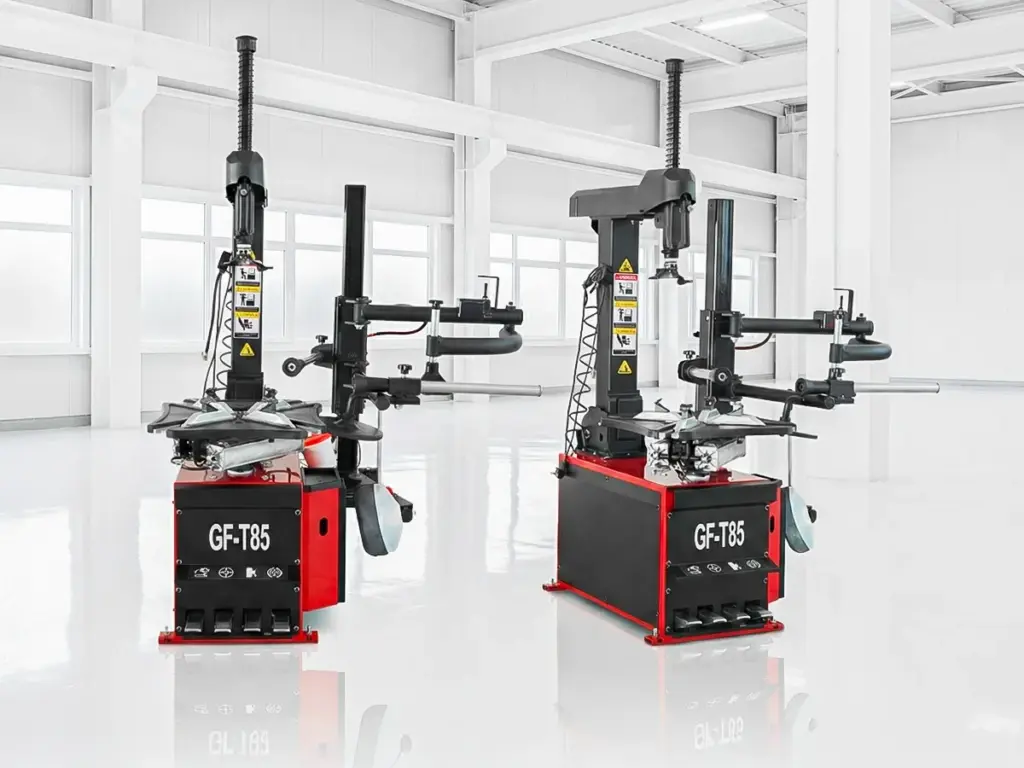
Tilt-back tire changers use rigid frames and automatic positioning to handle massive SUV and light truck wheels quickly, cutting technician fatigue and protecting delicate rims.
Core Mechanics of Tilt-Back Structures
High-volume shops servicing modern SUVs need equipment that handles bulk without breaking down or exhausting operators. Tilt-back towers solve this by using automatic positioning and leverless demounting systems. These mechanical advantages cut technician fatigue and prevent the damage often associated with prying low-profile SUV tires.
To maintain high wheel turnover rates for the large-diameter light truck setups entering the market through 2026, manufacturers build these machines on rigid G-frame architectures. This heavy structure withstands heavy daily use, keeping the tower aligned and preventing the flex that leads to scratched alloys.
Component Specifications for Oversized Wheels
Servicing oversized wheels requires specific hardware upgrades to muscle through stiff sidewalls safely.
- Clamping Range: Self-centering jaws provide a grip range extending from 12 A 34 inches.
- Rim Protection: Integrated protective inserts grip delicate chrome SUV rims firmly without scratching the surface.
- Bead Breaking: Dual-disc servo-positioned bead breakers and integrated bead blasters seat stubborn SUV beads rapidly.
- Motor Torque: 2-speed 220V motors supply the extreme torque necessary to rotate thick performance tires without stalling.
These targeted components allow technicians to process heavy, difficult wheel assemblies rapidly and consistently without damaging customer property.
Leverless Tire Changers for Precision Performance Service
Leverless tire changers eliminate metal-on-metal contact, using specialized rollers and polymer components to safely service delicate alloy wheels without causing costly scratches or deformation.
How Leverless Mechanisms Prevent Rim Damage
Traditional tire changers rely on metal levers and brute force, creating an immediate risk for luxury wheels. Leverless designs replace these outdated tools with engineered contact points to eliminate the threat of rim damage.
- Gradual Roller Pressure: Rollers apply even force around the tire circumference while the wheel spins, breaking the bead seal without concentrating stress on the fragile rim edge.
- Hardened Plastic Arms: These arms slide neatly under the tire bead to lift it over the rim. This removes the need for heavy downward force and prevents scratches, especially on stiff low-profile or run-flat tires.
- Polymer Guide Components: Specialized duck heads position the tire bead safely during rotation, entirely avoiding metal-on-metal contact.
Essential Protective Accessories for Alloy Wheels
Even with a fully automated leverless machine, shops servicing high volumes of delicate alloys need an extra layer of defense. Dedicated protective accessories act as sacrificial barriers between the equipment and the customer’s expensive wheels.
- Rim Protection Kits: These dedicated packages include cone covers and plastic inserts designed to shield the mount and demount heads during operation.
- Durable Plastic Shields: High-wear shields fit directly onto leverless models, providing a reliable physical barrier for shops handling luxury rims daily.
- Routine Maintenance: Technicians must inspect these plastic inserts regularly, replace them as soon as wear appears, and apply proper lubrication to minimize friction during tire changes.
What to Look for When Buying a Tire Changer in 2026
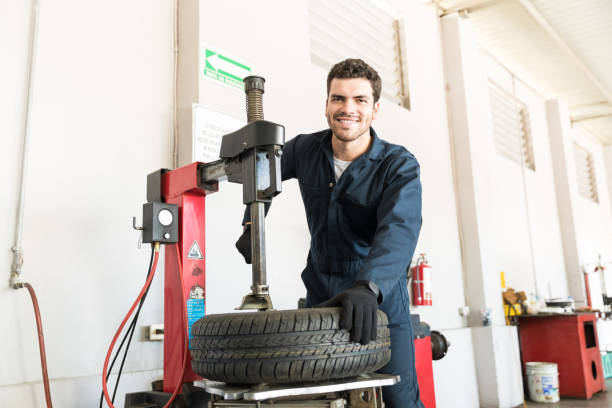
Purchasing a tire changer is a long-term investment in your shop’s productivity. To ensure your equipment stays relevant as vehicle designs evolve, prioritize the following features during your procurement process.
1. Clamping Capacity and Versatility
With the rise of electric SUVs and luxury light trucks, 20-inch wheels are no longer the exception—they are the standard.
- Internal and External Range: Look for a machine that handles at least 12″ to 26″ (with premium models reaching 30″).
- Self-Centering Jaws: Ensure the turntable uses a self-centering system to prevent misalignment, which is the leading cause of rim slips and edge damage.
2. Motor Torque and Speed Control
Modern 2026 tires, especially those designed for heavy EVs, feature incredibly stiff beads that require high rotational force.
- High-Torque Motors: Aim for units delivering at least 1100Nm of torque to prevent stalling when mounting low-profile tires.
- Two-Speed Systems: A pedal-controlled two-speed motor allows technicians to use slow speeds for precision work (protecting the bead) and high speeds for volume turnover.
3. Integrated Rim Protection Technology
In a market where a single scratched rim can cost more than a month’s profit, “protection” is a functional requirement, not an accessory.
- Non-Marring Components: Verify that the mount head, jaws, and bead-breaker shovel are equipped with high-grade nylon or polymer inserts.
- Frame Rigidity: A heavy-duty “G-Frame” or reinforced tower prevents the machine from flexing under load. Even a few millimeters of flex can cause the tool head to contact the alloy surface.
4. Expansion Support for Helper Arms
If you aren’t buying a leverless machine, you must ensure your tilt-back or swing-arm unit is compatible with pneumatic assist tools.
- IL “Third Arm” Necessity: For high-volume SUV service, a helper arm is essential to keep the tire bead in the drop-center of the rim.
- Modular Upgrades: Choose a brand that offers modular add-ons, allowing you to upgrade a basic unit into a high-performance system as your customer base shifts toward luxury vehicles.
Elevate Your Tire Service Efficiency with Guorange Equipment
Running a tire shop in 2026 is a different beast than it used to be. Between heavy EV batteries making tires stiffer and customers expecting a showroom finish on their luxury alloys, the stakes are high. One slip with an outdated lever can eat up your entire day’s profit in a single damage claim. You need gear that doesn’t just work harder, but works smarter.
That’s where Guarancio comes in. We don’t try to be everything to everyone. Instead, we focus on what we do best: building high-performance tire changers specifically for passenger cars, SUV, and the new wave of electric vehicles. Our goal is to give your technicians the confidence to handle the world’s most expensive rims without breaking a sweat.
From space-saving swing-arm models to fully robotic systems that do the heavy lifting for you, Guorange equipment is built for the long haul. We’ve stress-tested every unit to handle the non-stop grind of a busy bay without losing its precision. When you choose Guorange, you’re choosing a smoother workflow and a better bottom line.
Why Global Workshops Trust Guorange
- Built for the EV Era: Our high-torque motors and reinforced structures handle the extra weight of electric vehicle tires with ease.
- Scalable to Your Shop: Whether you’re a boutique garage or a high-volume center, our modular designs grow with your business.
- True Rim Protection: We use specialized polymer tools to ensure you never have to worry about metal-on-metal scratches.
- Export-Grade Toughness: Our machines are designed for easy maintenance and extreme durability, no matter where your shop is located.
Ready to stop worrying about rim damage and start turning wheels faster? Take a look at our 2026 lineup and find the setup that fits your service bay. Contact us today—tell us which vehicles you’re seeing most, and we’ll help you find the perfect machine to get the job done right.
Domande frequenti
What is the difference between swing arm and tilt-back tire changers?
Swing arm changers feature a horizontal arm that you manually swing over the wheel. They require less space and cost less, making them ideal for standard passenger tires. Tilt-back models feature a vertical tower that tilts backward via a foot pedal. This design gives operators unobstructed access to the wheel and automatically adjusts to tire sizes, speeding up operations for shops handling wide or low-profile tires.
Why do some tire changer machines need a helper arm?
A helper arm provides mechanical support to hold the tire bead in the drop center of the wheel during mounting. This added pressure reduces physical strain on the technician and prevents damage to stiff sidewalls. Shops use helper arms to easily process tough assemblies like run-flats and low-profile tires without fighting the machine.
Can basic tire changers handle run-flat tires?
Basic manual or simple swing arm machines struggle with run-flat tires because their reinforced sidewalls require high torque and pressure. Technicians using basic equipment risk rim damage and spend excessive time on a single wheel. To service run-flats safely and efficiently, shops rely on semi-automatic or fully leverless machines equipped with pneumatic bead assist arms and center clamping systems.
How do different machines clamp wheels safely?
Most standard tire changers use an adjustable four-jaw tabletop system that grips the rim from the inside or outside. Technicians attach plastic jaw protectors to these claws to prevent scratching alloy wheels. Premium leverless and tilt-back machines often use a center-clamp system instead. This method secures the wheel entirely through the center hub, completely removing the risk of claw-induced rim damage.


