
Wheel alignment has become a precision-driven service in modern repair workshops, directly affecting vehicle safety, tire life, and driving stability. Even small deviations in alignment angles can lead to uneven wear, poor handling, and customer comebacks that impact shop efficiency and reputation.
For technicians and service centers, modern alignment is no longer a basic adjustment. It now involves tighter OEM specifications, advanced measurement systems, and accurate calibration of key angles like camber, toe, and caster. In this article, we’ll break down how modern wheel alignment works and what matters in a professional workshop environment.
What Modern Wheel Alignment Really Means
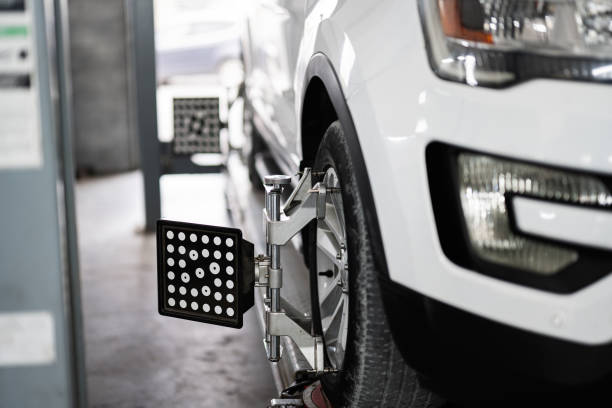
Wheel alignment, commonly referred to as alignment, is an important maintenance process that sets a vehicle’s wheels to the correct angles for safe and stable driving. It focuses on adjusting the suspension so the wheels are positioned properly in relation to each other and the road.
With proper alignment, a vehicle will track straight, steer more predictably, and maintain even tire wear over time. To achieve this, technicians use dedicated alignment systems to measure and adjust key angles such as camber, toe, and caster according to factory specifications.
The Technology Behind Modern Alignment
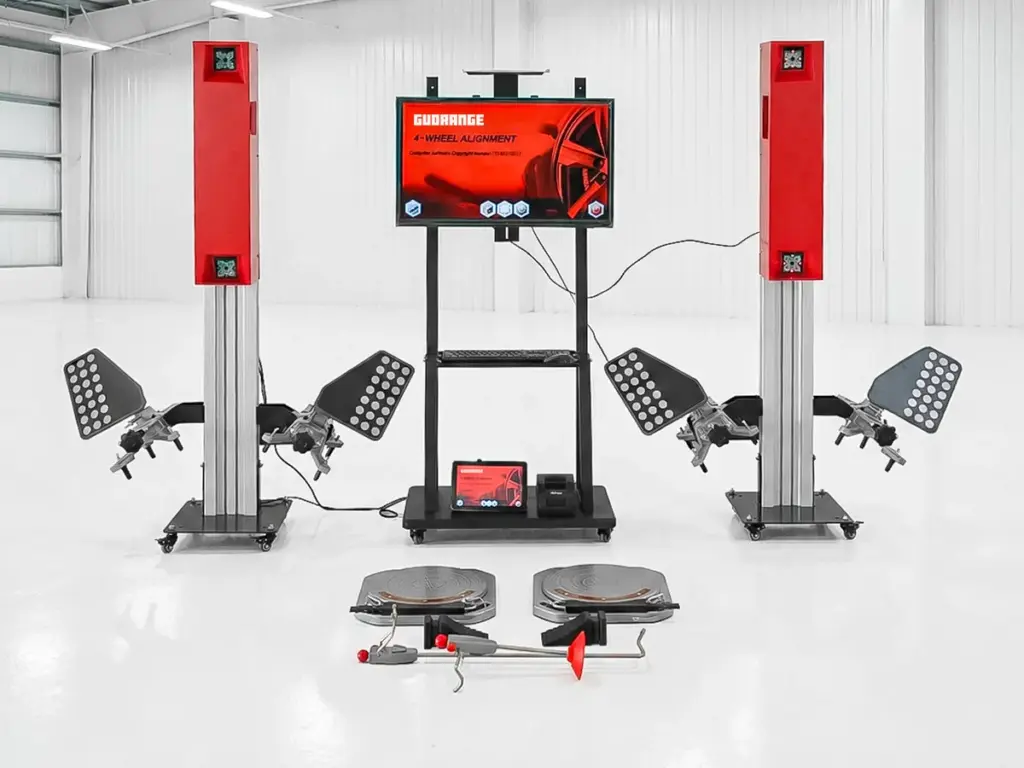
Modern suspensions require precision that manual tools simply cannot provide. Shops rely on computerized alignment racks equipped with high-resolution cameras and sensors to track real-time target positions as adjustments occur.
- Digital Integration: The software cross-references digital databases containing exact OEM data based on the specific year, make, model, and trim.
- Micro-Precision: The system calculates angles down to fractions of a degree to achieve optimal suspension geometry.
- Verified Reporting: The machine produces diagnostic before-and-after printouts to document out-of-spec measurements and completed corrections.
Why Wheel Alignment Is More Important for Modern Vehicles
Modern vehicles rely on precise alignment to keep safety sensors, complex suspensions, and efficiency metrics functioning. Small deviations now trigger major safety and performance failures.
Integration with Advanced Driver-Assistance Systems (ADAS)
Safety features like automatic braking and lane-keeping do not operate in a vacuum. They rely entirely on the mechanical foundation of the vehicle tracking straight and true. When a vehicle leaves the factory, its software expects the physical chassis to match the digital steering inputs perfectly.
- Sensor Assumptions: Cameras, radars, and lidar systems assume the chassis follows a predictable path aligned with steering input.
- System Malfunctions: Misaligned wheels cause the vehicle to crab, triggering false lane departure alerts and inaccurate automatic emergency braking.
- Calibration Prerequisites: Manufacturers increasingly require a verified, in-spec wheel alignment before performing critical ADAS calibrations.
Sensitivity of Modern Suspension and Steering Designs
Older cars tolerated minor alignment errors because their softer suspensions absorbed the drift. Today, automakers build stiff, highly engineered chassis setups to maximize handling and fuel economy. This rigidity means the margin for error is essentially zero.
- Strict Tolerances: Modern vehicles utilize complex multi-link suspensions, stiffer bushings, and tighter geometric tolerances to improve handling.
- EPS Calibration: Electric Power Steering (EPS) systems depend on precise alignment to calibrate steering angle sensors and torque assist maps.
- Direct Contact Feedback: Minor deviations in camber, caster, or toe translate directly to the contact patch, leading to immediate steering wander or tramlining.
Impact on Electronic Stability and Braking Systems
Electronic control units constantly monitor grip levels to keep the vehicle safely on the road. If the physical alignment pulls the car sideways, the computer receives conflicting data. The software tries to fix a mechanical problem, which directly compromises overall vehicle safety.
- Sensor Reliance: Electronic Stability Control (ESC) relies on steering angle and yaw rate sensors to accurately manage vehicle grip.
- False Triggers: Alignment issues can mimic instability, causing electronic control units to trigger unnecessary braking or power interventions.
- Compromised Braking: Incorrect alignment creates uneven load distribution during emergency maneuvers, undermining ABS effectiveness and extending stopping distances.
Effects on Modern Tires, Fuel Efficiency, and EV Range
The financial cost of misalignment scales dramatically on modern cars and electric vehicles. Heavy battery packs and specialized tires require perfect geometry to deliver the advertised range and lifespan. A misaligned wheel acts like an anchor dragging on the pavement.
- Rapid Tread Wear: Low-profile and specialized EV tires offer less sidewall flex, making them highly susceptible to rapid, uneven wear from slight misalignments.
- Drag and Fuel Loss: Wheels fighting against the direction of travel increase rolling resistance, which actively decreases fuel economy in combustion vehicles.
- EV Range Penalties: For heavier electric vehicles, misalignment significantly reduces usable battery range and amplifies noticeable cabin noise.
Maximize Workshop ROI with 3D Aligners
How Camber, Toe, Caster, and Thrust Angle Affect Vehicle Handling
Proper synchronization of camber, toe, caster, and thrust angle guarantees predictable handling, maximizes tire life, and eliminates highway wandering and driver fatigue.
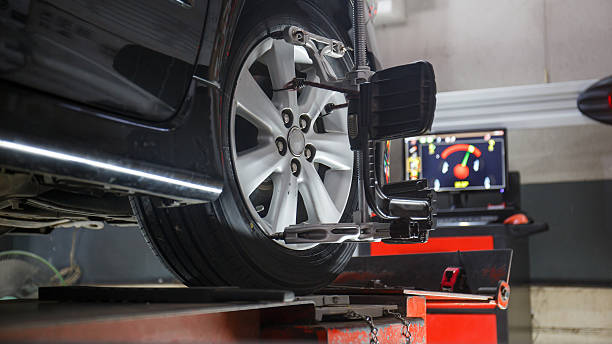
The Impact of Toe on Directional Control and Stability
Toe dictates whether the vehicle tracks effortlessly down the highway or requires constant driver input. Correct settings keep the steering wheel centered and reduce the need for constant corrections.
- Slight toe-in: Increases straight-line stability, helping the vehicle track smoothly at highway speeds.
- Slight toe-out: Provides sharper initial turn-in and faster steering response, a configuration often used in performance or front-wheel-drive setups.
- Excessive toe misalignment: Causes the vehicle to feel twitchy or reluctant to turn, while producing aggressive sideways scrubbing that rapidly destroys tire edges.
How Camber Influences Cornering Grip and Vehicle Pull
Camber manages the tire’s contact patch during hard cornering and straight-line driving, heavily influencing lateral grip and tire wear patterns.
- Negative camber: Keeps the outer tire more upright during a turn. This maintains a larger contact patch for increased lateral grip and reduced understeer.
- Excessive negative camber: Compromises straight-line braking traction by placing too much load entirely on the inner tire edge.
- Side-to-side camber imbalances: A camber split creates a constant drift. The vehicle naturally pulls toward the side with more positive camber.
- Static camber tension: Pushing static camber too far adds tension to suspension components, triggering darting on uneven surfaces and accelerated localized tire wear.
The Role of Caster in Self-Centering and Tracking
Caster relies on a trail effect to manage high-speed tracking and steering return. Positive caster positions the tire contact patch behind the steering axis, producing strong steering wheel self-centering.
- Tracking and stability: Adequate positive caster significantly improves high-speed tracking, anchoring the vehicle against crosswinds and road ruts.
- Dynamic camber gain: During cornering, caster dynamically increases negative camber on the outside wheel. This boosts grip without requiring extreme static camber settings.
- Pulling tendencies: Unequal caster from left to right forces the vehicle to pull toward the side with less positive caster.
Thrust Angle’s Effect on Straight-Line Tracking
The thrust angle dictates the exact direction the rear axle points relative to the geometric centerline of the vehicle. Technicians adjust the thrust angle as the critical first step in a four-wheel alignment to prevent wandering and unpredictable lane-change behavior.
- Zero thrust angle: Ensures the rear wheels follow exactly behind the front wheels, creating true straight-line tracking.
- Misaligned thrust angle: Causes dog-tracking. The vehicle body travels slightly sideways, forcing the driver to hold the steering wheel off-center just to travel in a straight line.
Combined Effects on Overall Vehicle Dynamics
Alignment angles interact continuously to shape the vehicle’s driving characteristics. Balancing these angles limits excessive drag and scrubbing, which extends tire life and lowers rolling resistance.
- Straight-line stability: Toe, thrust angle, and caster act together to dominate highway tracking, prevent wandering, and reduce driver fatigue.
- Cornering performance: Camber, caster, and toe dictate how the suspension enters a corner, holds its line, and maintains traction under body roll.
- Emergency maneuvers: Proper synchronization of all four angles ensures stable, predictable contact patches during hard braking and evasive steering inputs.
The Difference between Front-End Alignment vs Four-Wheel Alignment
Front-end alignments work for older, fixed-axle vehicles, but modern cars with independent rear suspensions require a four-wheel alignment to ensure straight tracking and maximum tire life.
Scope of Wheel Adjustments
A front-end alignment targets a very specific area. Technicians adjust only the front suspension geometry, specifically focusing on toe, camber, and caster at the steering wheels. Rear wheels in a front-end service are measured to provide a baseline reference, but they remain completely unadjusted.
A four-wheel alignment takes a complete chassis approach. Technicians correct the rear toe and camber first to establish a perfectly straight foundation. Once they secure the rear geometry, they adjust the front wheels to match that newly corrected rear baseline.
Vehicle Compatibility and Suspension Types
Your vehicle’s chassis architecture dictates which service you need. Front-end alignments suit vehicles built with a solid, fixed rear axle lacking any adjustability. You will typically see this on heavy body-on-frame trucks, large utility vehicles, and classic cars.
Four-wheel alignments serve as the standard operating procedure for modern cars, crossovers, minivans, and small SUVs. Any vehicle featuring an independent rear suspension (IRS) or an all-wheel drive (AWD) setup requires full four-wheel adjustments to maintain the manufacturer’s intended suspension geometry.
Handling the Thrust Angle
The thrust angle dictates the exact direction the rear wheels point relative to the vehicle’s geometric centerline. It determines whether your vehicle drives perfectly straight or crabs sideways down the highway.
During a front-end alignment, the rear axle is physically fixed. Technicians perform a thrust angle check simply to align the front wheels parallel to the fixed rear axle’s direction. During a four-wheel alignment, the technician actively adjusts the rear thrust angle to zero before they configure the front wheels, creating a unified tracking path.
Precision and Impact on Tire Wear
Front-end corrections improve straight-line stability and reduce front tire edge wear. But if a vehicle has an existing rear misalignment, a front-only service cannot fix it. Leaving a misaligned rear axle unadjusted often causes ‘dog-tracking’, where the vehicle body travels slightly sideways relative to the actual direction of travel.
Four-wheel alignments resolve this by bringing the entire chassis into specification. This complete correction maximizes tire life across all four wheels, eliminates uneven tread scrubbing, and ensures predictable, stable handling during high-speed cornering.
How Modern Wheel Alignment Machines Work
Modern alignment machines use precision cameras and OEM databases to guide technicians through exact geometric adjustments, ensuring factory-spec tracking and optimal tire contact.
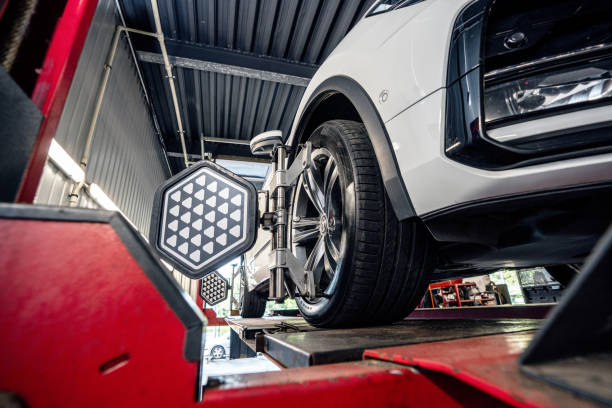
Initial Setup and Sensor Mounting
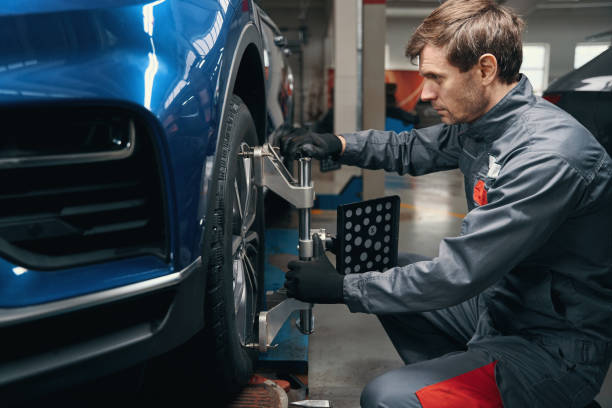
The technician positions the vehicle on a perfectly level alignment rack equipped with front turnplates and rear slip plates. They securely attach wheel clamps holding CCD sensor heads or 3D optical targets to each wheel. The operator then loads the specific manufacturer alignment tolerances for that exact vehicle into the computer console.
Rolling Compensation Process
The technician locks the turnplates and slip plates, then rolls the vehicle backward and forward a short distance. This rolling compensation process allows the cameras and sensors to map the true wheel planes and cancel out any rim runout or clamp placement errors. Once the system registers the compensation, the technician unlocks the turnplates and slip plates to allow free wheel movement for the remainder of the process.
Capturing Baseline Measurements
The alignment software prompts the technician to perform a caster sweep by turning the steering wheel left and right. The computer uses this movement to calculate the primary geometric angles, including toe, camber, caster, and thrust angle. The console displays this real-time, color-coded diagnostic data so the operator can instantly identify which wheels fall outside factory specifications.
Live Suspension Adjustments
The technician secures the steering wheel in a perfectly centered position using a dedicated lock. They correct the rear axle toe and camber first to establish an accurate thrust line for the vehicle. With the rear tracking straight, they adjust the front axle components while monitoring live screen updates to bring all angles into acceptable ranges.
Final Verification and Reporting
The technician torques all suspension fasteners to specification and runs a final measurement cycle to ensure stability. The software generates detailed before-and-after printouts to document the exact angle corrections made during the service. A final road test confirms straight-line tracking, proper steering feel, and the complete absence of pull.
Key Features to Look for in a Modern Wheel Alignment System
Modern alignment systems dictate shop throughput and ADAS compliance. Choosing the right features means the difference between high-margin turnarounds and costly customer comebacks.
| Feature Category | Modern Benchmark | Legacy Standard |
|---|---|---|
| Measurement Speed | Seconds (Contactless) to < 2 minutes | 10+ minutes with manual compensation |
| Sensor Technology | 3D Imaging / Contactless Cameras | Rim-mounted CCD or older Laser heads |
| System Integration | ADAS & Electronic SAS Reset | Mechanical geometry adjustments only |
Core Measurement and Sensor Technology
A shop cannot properly service independent rear suspensions or modern chassis designs without four-wheel measurement capabilities. The system must calculate the thrust angle accurately to ensure the vehicle tracks straight and the steering wheel remains centered on the road.
Top-tier machines capture precise toe, camber, and caster angles down to fractions of a degree. You will typically choose between three main sensor types based on your bay volume and budget constraints:
- Contactless Systems: The current benchmark for high-volume shops, requiring zero physical contact with the rim or tire to measure angles.
- 3D Imaging: Uses high-speed overhead cameras and lightweight reflective targets to build a fast, highly repeatable model of the wheels.
- CCD & Laser: Electronic heads mounted to the wheels, functioning as reliable options for lower-volume operations.
Speed and Workflow Efficiency
Bay turnover speed directly impacts your daily revenue. Fast equipment drastically reduces setup time, completing initial measurement cycles in under two minutes. Advanced contactless systems handle this phase in mere seconds.
Your aligner needs to work seamlessly with your existing hardware. Look for systems that integrate directly with 4-post or scissor alignment lifts utilizing front turnplates and rear slip plates. Workflow features should include:
- Automated Runout Compensation: Corrects minor rim mounting misalignments without requiring technicians to manually jack up the vehicle.
- Rolling Compensation: Allows technicians to simply roll the vehicle backward and forward to establish the true wheel plane.
Software and Reporting Capabilities
Hardware holds little value without accurate data. The machine must access continuously updated global OEM databases to pull exact vehicle specifications and tolerances. This ensures your technicians never rely on outdated specs for newly released vehicle models.
During the adjustment phase, the software displays real-time adjustment visuals. On-screen target ranges guide technicians as they turn tie rods or eccentrics, eliminating guesswork and reducing rework. Once the job is done, the system generates detailed before-and-after printouts or digital reports. You use these reports to document service quality and justify the invoice to the customer.
Modern Vehicle System Integration
Aligning the suspension is only half the job on a late-model vehicle. Modern cars rely on precise geometry to operate Advanced Driver Assistance Systems (ADAS) like lane-keeping assist and adaptive cruise control. The wheel alignment provides the foundational baseline for these critical camera and radar calibrations.
Your equipment must handle the electronic side of the alignment process. Key integration capabilities include:
- SAS Reset Compatibility: Supports Steering Angle Sensor recalibration after technicians complete the physical suspension adjustments.
- Geometric Center Alignment: Ensures the vehicle’s true mechanical center aligns perfectly with electronic steering and safety sensors.
Accuracy, Calibration, and Durability
A machine that loses its calibration costs you money through tire wear complaints and shop comebacks. You need hardware that delivers highly repeatable measurements on every vehicle that rolls onto the rack.
Check the manufacturer’s calibration procedures. The process should be straightforward to maintain long-term sensor stability without requiring frequent service calls. Finally, assess the build quality. The cameras, targets, and computer consoles must withstand challenging workshop conditions, performing accurately despite variations in ambient lighting, extreme temperatures, dust, and constant lift vibration.
How to Choose the Right Wheel Alignment Machine for Your Workshop
Selecting the Right Alignment Technology
Choosing between different alignment technologies directly affects workflow speed and technician efficiency. 3D alignment systems are widely used in busy workshops because they offer fast setup and high measurement accuracy, while conventional systems are more budget-friendly but require more manual steps. Fixed installations provide maximum stability for dedicated alignment bays, and mobile configurations are better suited for workshops that need to share space across multiple services.
Ensuring Broad Vehicle Coverage and Precision
Your wheel aligners must be capable of handling a wide range of vehicles, from standard passenger cars to larger or low-profile models. This includes support for different wheelbases, track widths, and load requirements commonly found in modern workshops. High-precision measurement systems and stable calibration help ensure consistent results and reduce the risk of repeat alignments, which directly improves workshop efficiency.
Evaluating Software Features and Workflow Efficiency
Modern alignment systems rely heavily on software to guide technicians through each step of the process. A well-designed interface reduces training time, minimizes human error, and helps avoid unnecessary vehicle repositioning during alignment work. Regular database updates are also essential to keep specifications accurate for new vehicles, including EVs and hybrid models, while stable connectivity between cameras and sensors ensures uninterrupted workflow.
Checking Lift Integration and Build Quality
A reliable alignment system must integrate smoothly with the lifts already used in your workshop, whether they are 4-post lifts, scissor lifts, or alignment jacks. The system also needs to maintain accuracy at different working heights, as technicians rarely operate at a single fixed position. At the same time, durable construction and stable hardware are essential to withstand continuous use in demanding workshop environments.
Analyzing Total Cost of Ownership and ROI
When evaluating an alignment machine, the initial purchase price is only part of the decision. Long-term value depends on how quickly the system can improve workflow efficiency, increase daily alignment capacity, and reduce comebacks. Additional costs such as installation, training, software updates, and maintenance should also be considered, along with future needs like ADAS compatibility, which can directly impact long-term service profitability.
Frequently Asked Questions
What causes bad wheel alignment?
Bad wheel alignment primarily stems from impacts, component wear, and vehicle modifications. Hitting potholes, curbs, or speed bumps bends suspension components and immediately knocks wheels out of specification. Over time, worn bushings, ball joints, and sagging shocks cause the alignment angles to drift. Modifying ride height with lift or drop kits changes suspension geometry and requires immediate alignment correction.
How long does a 4-wheel alignment take?
A standard 4-wheel alignment takes between 60 and 90 minutes. This timeframe covers the initial inspection, mounting alignment sensors, measuring angles, and adjusting camber, caster, and toe. The process takes two hours or more if the vehicle has seized adjustment bolts, modified suspensions, or worn parts that complicate the procedure.
Will an alignment fix a shaking steering wheel?
An alignment only fixes a shaking steering wheel if the vibration directly stems from misaligned wheels, which usually happens alongside a pulling sensation or off-center steering. Unbalanced tires, bent rims, worn suspension parts, or warped brake rotors cause the vast majority of steering wheel shakes. Balancing the tires and checking for physical damage is a more effective first step for vibration issues.
What is the difference between a 2-wheel and a 4-wheel alignment?
A 2-wheel alignment adjusts only the front wheels. Technicians typically reserve this for trucks or older vehicles with a solid, non-adjustable rear axle. A 4-wheel alignment adjusts the front and rear wheels, setting the rear thrust angle first so the vehicle tracks completely straight. Most modern cars, SUVs, and all-wheel-drive vehicles require a full 4-wheel alignment.
How often should wheel alignment be checked?
Industry standard practice recommends checking your wheel alignment at least once a year, or roughly every 12,000 to 15,000 miles. Schedule an immediate check if the vehicle pulls to one side, the steering wheel sits off-center, or the tires show uneven wear. Alignments are also necessary after hitting a deep pothole, replacing suspension parts, or installing new tires.
Is an alignment necessary after installing new tires?
Mounting new tires does not mechanically change your suspension geometry, but we strongly recommend an alignment check. Proper alignment ensures the new tires wear evenly across the tread, protecting your investment and preventing premature replacement. If your old tires showed uneven wear patterns, an alignment is critical to keep the new set from suffering the exact same damage.
Final Thoughts
While older alignment systems may seem more affordable at first, modern 3D and ADAS-compatible solutions are becoming the standard for shops that want consistent accuracy and fewer customer comebacks. Today’s undercar service depends on digital measurement and strict OEM specifications, not manual adjustment, which makes reliable equipment essential for stable daily operations.
At Guorange, we design and supply automotive repair equipment that helps workshops upgrade to more precise and efficient alignment workflows. If you’re planning a new setup or equipment upgrade, our team can help you match the right alignment system to your bay layout, vehicle mix, and long-term service goals. Contact us today to get tailored recommendations and improve your workshop performance.


