
Starting a tire shop requires a complete setup that can handle the real daily workload from the very beginning. Basic hand tools alone are not enough if you want stable output and consistent service quality. You need equipment that supports tire mounting, balancing, repair, inflation, and safe vehicle handling in a smooth workflow.
When you choose the right setup, you reduce delays, improve efficiency, and keep your service process under control. In this guide, you will see exactly what equipment you need to start and run a reliable tire shop efficiently.
Tire Changing Machines You Need First
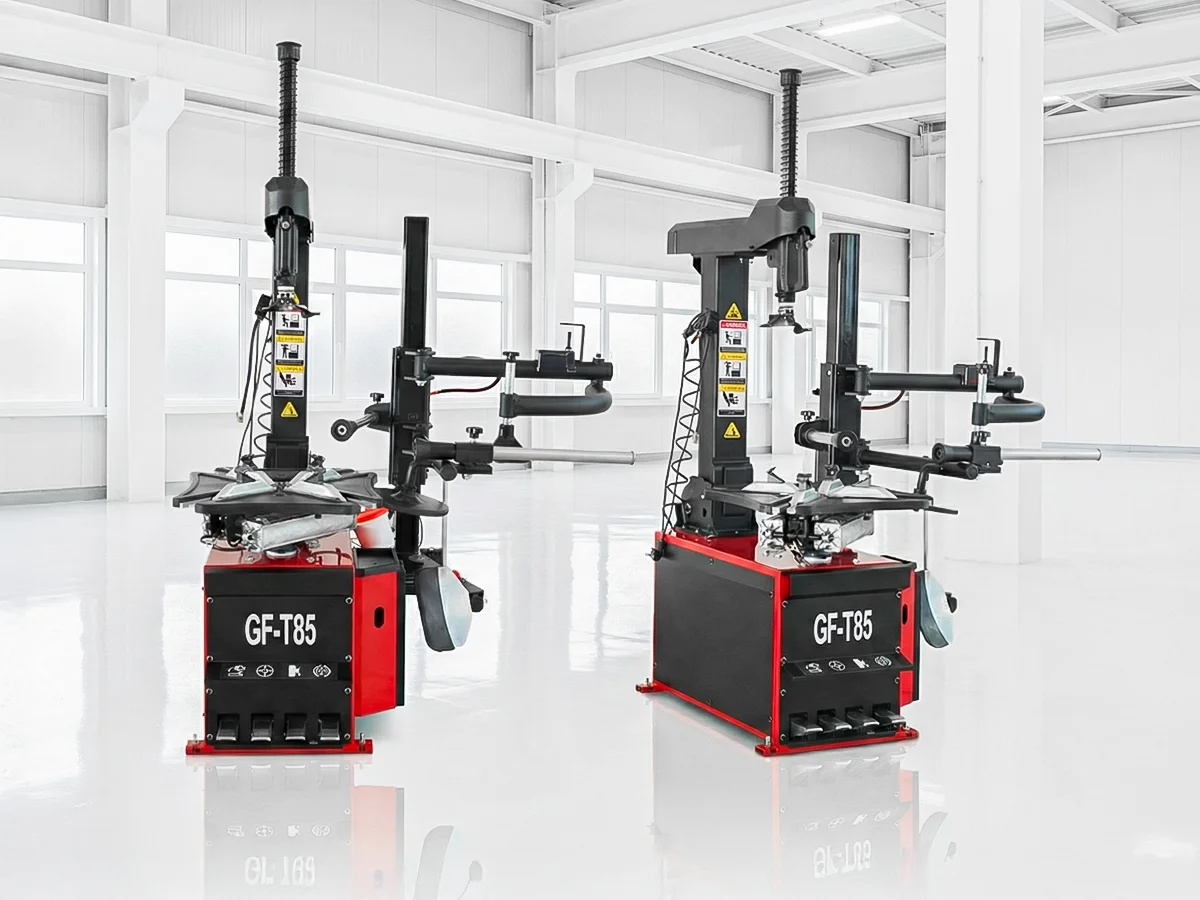
Primary Tire Changer Machine Types
You have four main tire changer options when outfitting your starter bay. The right choice depends entirely on the vehicles rolling through your doors and the speed required to process them.
- Swing-arm machines: Handle basic passenger-car needs efficiently. They work best for startups changing fewer than 20 standard tires per day while keeping upfront costs low.
- Tilt-tower models: Improve ergonomics and speed up turnaround times for shops scaling into moderate daily volume.
- Leverless or touchless systems: Protect expensive, low-profile, or large-diameter wheels. They rely on automation to offset lower technician experience levels and eliminate expensive rim damage.
- Heavy-duty and center-post changers: Provide dedicated clamping and handling for commercial trucks or specialty service work.
Matching Equipment to Your Service Goals
Buying the wrong machine specifications can restrict long-term revenue. Equipment should match both daily workflow needs and workshop limitations to avoid inefficiency and unnecessary cost. Daily volume is a key starting point when selecting the right tire changing machine, as shops handling under 50 tires per day can often rely on semi-automatic systems, while higher-volume operations benefit more from fully automatic equipment to maintain speed and consistent output.
Vehicle mix also directly shapes equipment choice. Shops working with luxury or performance vehicles should prioritize wheel-protection features to reduce the risk of rim damage and avoid costly compensation issues. At the same time, shop infrastructure must be checked in advance, including available floor space, helper arm clearance, and a stable 220V power supply to ensure smooth installation and operation.
Finally, a complete setup depends on compatible supporting tools. A tire changer performs best when paired with a wheel balancer, a reliable air compressor, bead lubricant, and TPMS service tools, helping the workshop operate as a fully integrated and efficient service bay.
Wheel Balancing Equipment Requirements
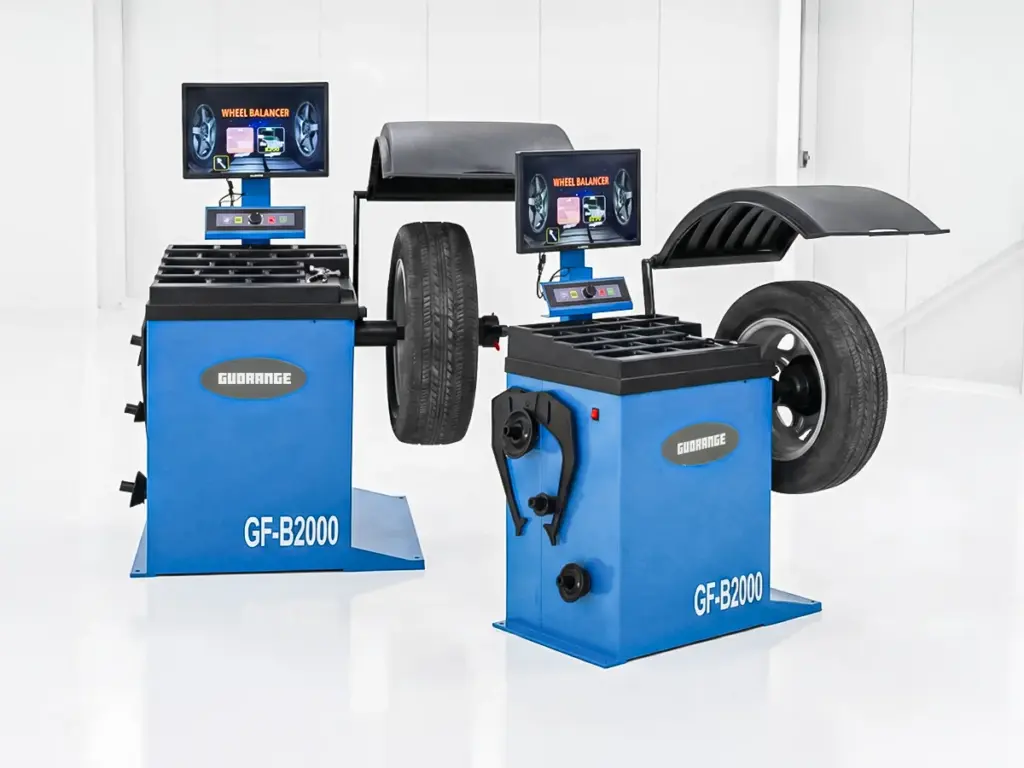
Core Balancer Specifications and Costs
To operate profitably, you need a wheel balancer that handles the exact wheel sizes your market demands. Standard digital wheel balancers that process 14-inch to 22-inch passenger and light truck wheels serve as the baseline for most new operations.
- Initial Cost: Startup shops typically spend $1,500 to $5,000 on reliable digital units.
- Precision Features: Owners must secure units with high accuracy, fine weight resolution, and laser-guided weight placement to reduce vibration-related customer comebacks.
- Speed Enhancements: Features like automatic data entry for rim width, diameter, and offset cut down cycle times and speed up the daily workflow.
- Advanced Diagnostics: High-volume operations often upgrade to units with road force measurement to pinpoint tire uniformity issues that standard balancing misses.
Complementary Tools and Workflow Setup
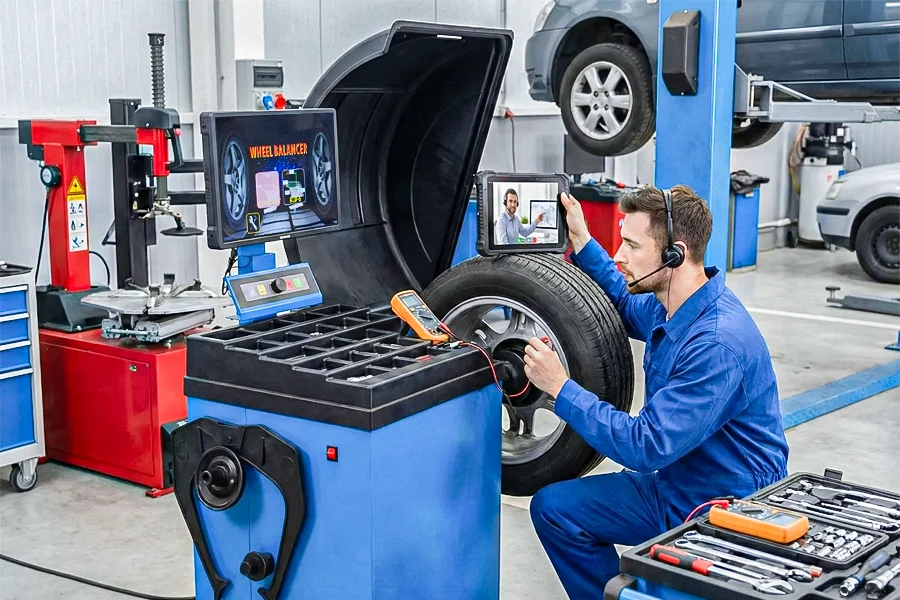
A high-quality balancer cannot function efficiently in isolation. You need the right physical setup and accessory tools to move vehicles in and out of the bay quickly.
- Consumables and Hand Tools: Shops stock essential balancing consumables and hand tools, including clip-on weights, adhesive weights, wheel weight pliers, and rim-cleaning chemicals.
- Floor Space: Managers assign dedicated floor space directly adjacent to the tire changer so technicians can roll heavy wheel assemblies safely without blocking vehicle bays.
- Electrical Requirements: Operators require dedicated 110V or 220V electrical circuits to prevent power fluctuations that can skew sensitive digital balancer readings.
- Maintenance and Training: Staff execute routine calibration schedules and train new hires on proper wheel mounting techniques to maintain equipment accuracy over time.
Premium Auto Service Equipment At Factory Prices
Vehicle Lifts for Tire Service Operations
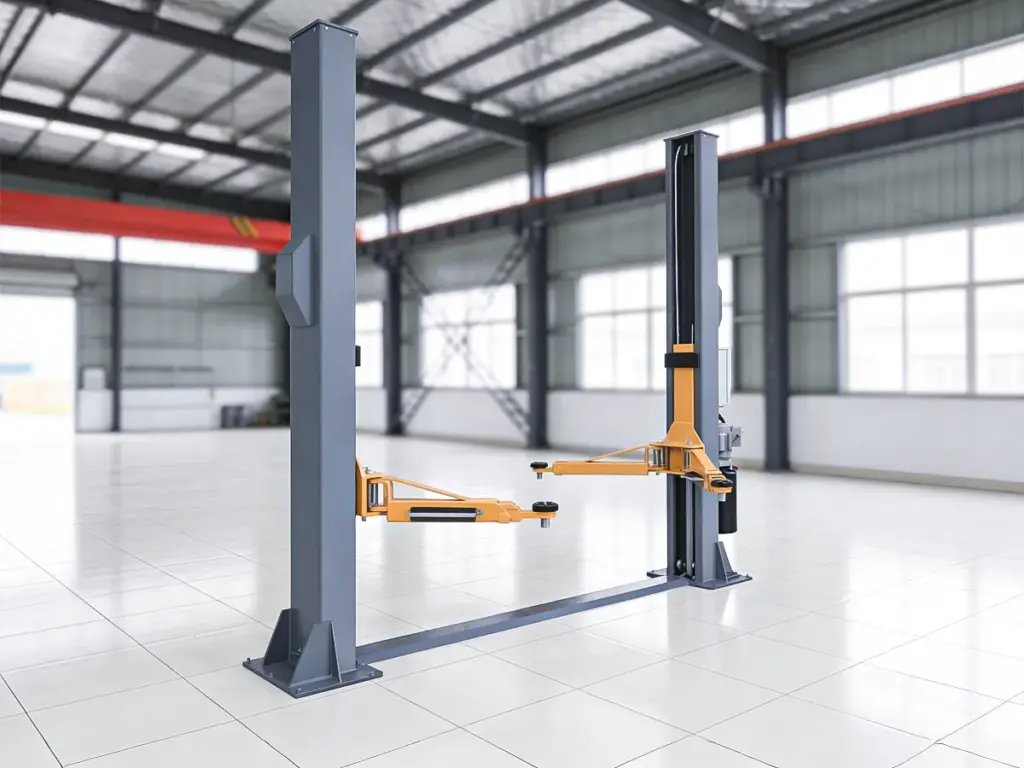
Primary Lift Types and Capacity Planning
Vehicle lifts act as the operational bottleneck or accelerator in any tire shop. The right equipment setup directly impacts how many vehicles your technicians can process daily.
- Two-post lifts: Use these as the standard for general service, providing full wheel and undercarriage access for tire, brake, and suspension work.
- Four-post drive-on lifts: Equip alignment bays with these units, integrating bridge jacks to allow wheel removal while the vehicle remains supported.
- Scissor lifts: Deploy low-rise or mid-rise scissor lifts for rapid tire changes, reducing initial equipment costs and fitting easily into smaller shop layouts.
- Capacity planning: Match lift capacity to the local vehicle mix. Select 9,000 to 12,000 lb ratings for standard passenger fleets and higher capacities for heavy-truck regions.
Before purchasing any equipment, verify your facility specifications. You must ensure adequate ceiling height and concrete slab thickness meet the manufacturer’s anchor requirements before installation.
Safety Standards and Operational Maintenance
Lift accidents result in severe injuries, expensive lawsuits, and OSHA citations. Establishing a rigid safety culture and maintenance routine protects your personnel and your margins.
- Regulatory compliance: Adopt Automotive Lift Institute (ALI) standards to establish workplace safety guidelines and fulfill OSHA General Duty Clause obligations.
- Daily pre-use checks: Mandate daily pre-use inspections to check for hydraulic leaks, deformed structural components, and proper function of locking devices.
- Annual audits: Schedule annual comprehensive inspections with certified professionals to verify equipment integrity and reduce workplace liability.
- Operator training: Train operators to identify OEM lifting points, assess the vehicle center of gravity, and perform stability shake tests before raising the lift fully.
- Maintenance tracking: Track all maintenance activities using digital records or QR codes attached to the lifts, logging fluid changes, anchor bolt checks, and arm pin condition.
Consistency in tracking these metrics eliminates guesswork and ensures your equipment operates at peak performance year-round.
Air Compressors and Pneumatic Tools
Sizing Equipment for Shop Demand
Air compressors are the core power source in any tire shop, and correct sizing is critical for keeping your workflow stable. If you choose an undersized system, you will quickly notice delays as pressure recovery slows down tool usage across multiple bays. To size it correctly, you should calculate the total simultaneous CFM demand from impact wrenches, grinders, and inflators, then multiply by 1.25 to 1.5 for a safe margin at 90 PSI. For continuous operation, you are better off choosing near 100% duty cycle units, with piston compressors for lighter use and rotary screw systems for higher demand environments.
System Layout and Air Quality Control
System layout directly affects how efficiently your tools perform and how long they last. You need to ensure clean, dry air by installing moisture separators and air dryers at key distribution points in your system. At the same time, you should match hose diameter and coupler flow ratings to your tools to avoid pressure drops during daily work. A well-planned layout helps you maintain steady air delivery across all service bays, especially during peak hours.
Maintenance and Installation Practices
Proper installation and routine maintenance are what keep your system reliable over time. You should place the compressor in a well-ventilated, low-noise area to avoid overheating and improve working conditions in your shop. Regular checks, such as filter replacement, leak detection, and lubrication, help you maintain stable pressure output. You also need to manage condensate and oil separation correctly according to environmental standards to keep your system efficient, safe, and compliant.
Tire Repair and Patching Equipment

Core Repair Tools Setup
Tire repair starts with having the right core tools in place. You need plug kits, patch materials, tire repair cement, and a strong reaming and insertion tool set to handle common puncture types efficiently. A proper setup also includes bead spreaders and tire buffers so you can prepare the inner liner correctly before applying any patch. When your tools are well organized, you reduce repair time and improve consistency across every job.
Proper Repair Workflow
A reliable repair process follows a clear sequence that you should stick to every time. First, you inspect the tire carefully to locate both the puncture and any hidden internal damage. Then you prepare the injury area by cleaning, buffing, and applying cement before installing a plug or patch, depending on the damage type. By following a consistent workflow, you avoid missed defects and ensure each repair meets safety standards before the tire goes back on the vehicle.
Equipment Quality and Safety Standards
The quality of your repair equipment directly affects the safety of your work. You should choose certified patch materials that can withstand heat, pressure, and long-term road stress. Cheap or uncertified products can fail under load, which puts both your shop and your customers at risk. It is also important to replace worn tools regularly and keep your repair station clean, so you maintain a professional and safe working environment at all times.
Wheel Alignment Equipment for Advanced Services
Alignment Equipment Technologies and Bay Components
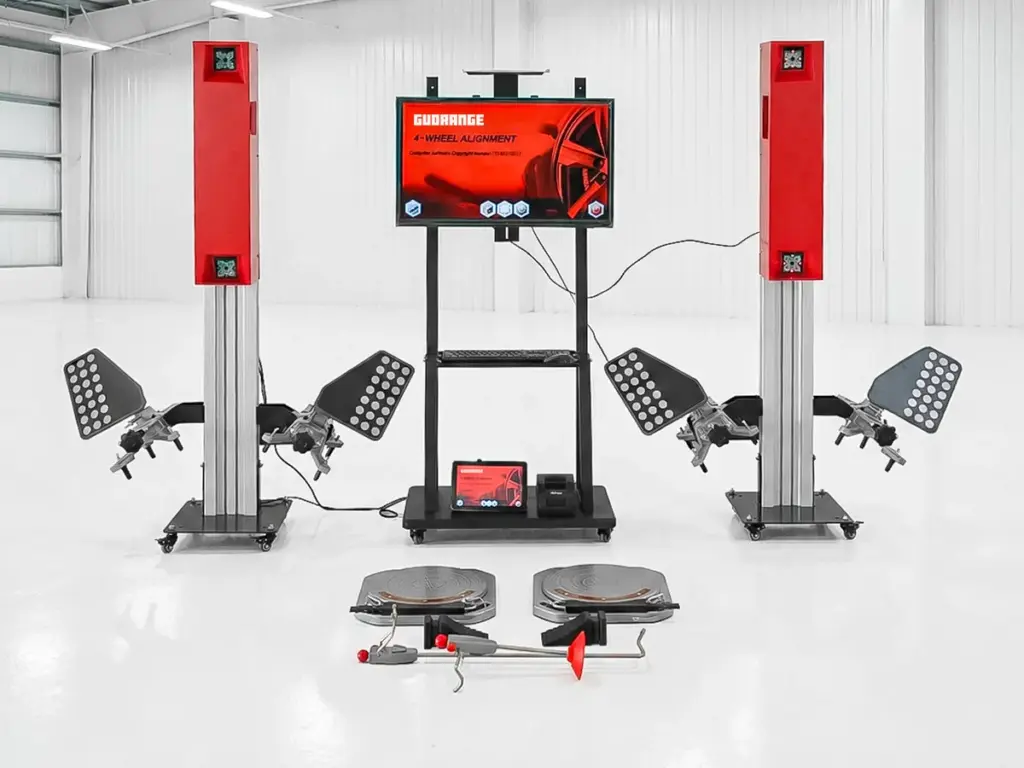
Modern wheel alignment systems dictate the speed and accuracy of your entire suspension bay. Choosing the right wheel aligner determines how fast your technicians turn over a vehicle while maintaining tight manufacturer tolerances.
- Imaging and 3D Systems: High-resolution cameras and wheel-mounted targets capture suspension geometry instantly. This setup achieves rapid 15-minute turnaround times, easily supporting high daily vehicle volume.
- Laser and Electronic Systems: These units measure suspension angles using electronic wheel-head sensors. They deliver precise digital readouts and serve as a practical alternative to top-tier 3D setups.
- Core Bay Components: A functioning bay requires a dedicated alignment rack or a modified lift. You must equip this setup with front turnplates and rear slip plates to allow free-wheel movement during angle adjustments.
- Console Software: The system provides real-time camber, caster, and toe readings against OEM specifications. It visually guides technicians directly through the necessary mechanical adjustment steps.
Integrating Alignment with ADAS and Shop Workflows
Standalone alignments generate strong labor margins, but their real value lies in integration. Modern vehicles require precise geometric alignment before technicians can successfully calibrate onboard safety sensors.
- ADAS Dependency: Advanced driver-assistance systems rely heavily on an accurate thrust angle. Forward-facing cameras and radar modules process data incorrectly if the vehicle’s geometry is out of spec.
- OEM-Approved Tolerances: Operating manufacturer-approved equipment guarantees your shop meets the strict geometric tolerances required for complex modern vehicles entering service facilities in 2026.
- Service Bundling: Service advisors drive recurring revenue by bundling alignments with related jobs. You capture more margin when you pair an alignment with new tire installations, steering component replacements, and routine suspension diagnostics.
- Rapid Inspection Checks: Adding quick alignment checks to standard inspection processes uncovers hidden tire wear issues. Transparent before-and-after digital reports build customer trust and easily justify the service fee.
Frequently Asked Questions
How much does it cost to start a tire shop?
A new, full-service tire shop typically costs $50,000 to $150,000 to launch. This budget covers facility deposits, minor renovations, commercial equipment, initial tire inventory ($10,000 to $60,000), and working capital for early payroll and overhead. You can launch a bare-bones used-tire shop for $5,000 to $30,000 by leasing a smaller space and buying used equipment.
Is a tire shop a profitable business?
Yes, a well-managed tire shop generates steady profit driven by consistent, recurring demand for replacements and repairs. Small neighborhood shops often bring in $10,000 to $30,000 a month, leaving $3,000 to $10,000 in profit. Full-service centers scale to $50,000 to $100,000 or more in monthly revenue. Net profit margins typically run 10% to 20% of gross revenue.
What size air compressor do I need for a tire shop?
You need a two-stage, 220V commercial air compressor with a minimum tank size of 30 gallons to run impact wrenches and air jacks. For a busy shop aiming for smooth operation and fewer pressure drops, buy a 60- to 80-gallon tank. Set the compressor to maintain 120 to 150 PSI system pressure, regulated down to 90 PSI at the tools. It must produce enough SCFM to exceed your highest-rated tool’s requirement multiplied by 1.5.
Do I need an alignment machine to start?
You do not strictly need an alignment machine to open a shop focused on basic tire sales, mounting, and balancing. Many new operators wait until they build steady cash flow before buying one. An alignment machine acts as a highly profitable addition that requires zero parts cost. Offering alignments allows you to operate as a full-service center and capture more revenue per ticket, making it an essential upgrade for early growth.
What is the profit margin on tires?
The gross profit margin on new retail tire sales usually ranges from 25% to 40%. Shops often apply a flat dollar markup or a standard percentage markup over the tire cost. To boost overall margins, successful shops attach high-margin labor services like mounting, balancing, and alignment to every tire sale. Selling used tires also delivers excellent margins because of the low upfront acquisition cost.
How many bays does a profitable tire shop need?
A small neighborhood startup can operate profitably with 4 to 6 bays when you maximize throughput and keep time-per-tire low. To build a high-volume, full-service center generating over $50,000 per month, plan for 8 to 10 bays. This larger layout accommodates multiple technicians, dedicated alignment racks, and quick-service stations to keep traffic moving during peak hours.
Final Thoughts
Setting up a tire shop requires a complete and well-structured system rather than separate standalone machines. Each piece of equipment, from core service tools to supporting systems, affects your daily efficiency, safety, and service consistency. When your setup matches real workload demands, you can reduce downtime and maintain a more stable and professional operation.
At Guorange, we understand the real challenges of running a busy workshop, so we design automotive repair equipment around durability, practicality, and real service conditions. We focus on helping you build a more efficient and reliable workflow from the ground up. If you are planning to upgrade or start your tire shop, contact us today and let’s build a better workshop together.


