
A tire changer and a wheel balancer handle two consecutive steps of the same job, so buyers often ask whether the two machines should be ordered together. A combined order can simplify negotiation, documentation, and freight, but it does not remove the need to check whether the two models actually fit the same workshop.
This guide explains what a package quotation normally covers, which specifications you still have to match model by model, and how to compare a combined quotation against two separate ones on the same commercial basis.
Why Are the Two Machines Sold Together?
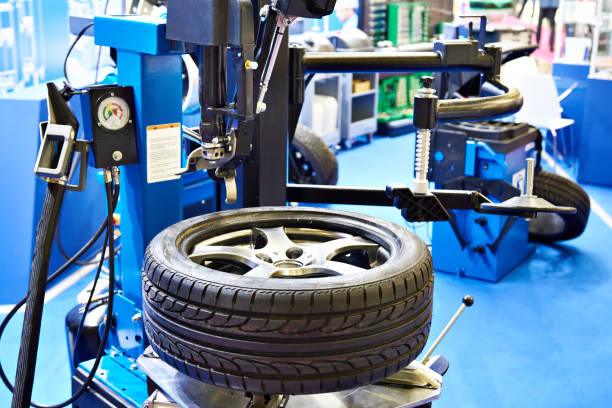
Mounting and balancing form one service chain, so suppliers quote both machines together to make ordering, pricing, and delivery easier to arrange.
Two Steps in One Service Chain
The tire changer removes and fits the tire on the rim. The wheel balancer then spins the assembled wheel, shows where the weight is off, and indicates where correction weights go. A wheel that leaves the changer unmixed and unbalanced is not ready for the vehicle, which is why most workshops that offer tire service run both steps in house.
Because the two machines serve the same bay, suppliers frequently present them on one quotation. That arrangement reduces the number of documents to process and puts both machines under one sales contact. If you are still deciding which machine type suits your volume and wheel mix, start with our tire changer machine types guide, and read how a wheel balancer measures imbalance for the measurement side.
What a Package Does Not Mean
A package in this category is a commercial bundle: two independent machines quoted, shipped, and invoiced together. It is not a single combined workstation, and the two units keep their own controls, motors, power supply, and air supply.
That distinction carries practical consequences. Buying both machines from one supplier does not automatically align their wheel size ranges, load capacities, or utility demands, and it does not merge their spare parts or training. Each machine still has to be checked against the same datasheet criteria you would apply if you bought it alone.
What Is Actually Included in a Package?
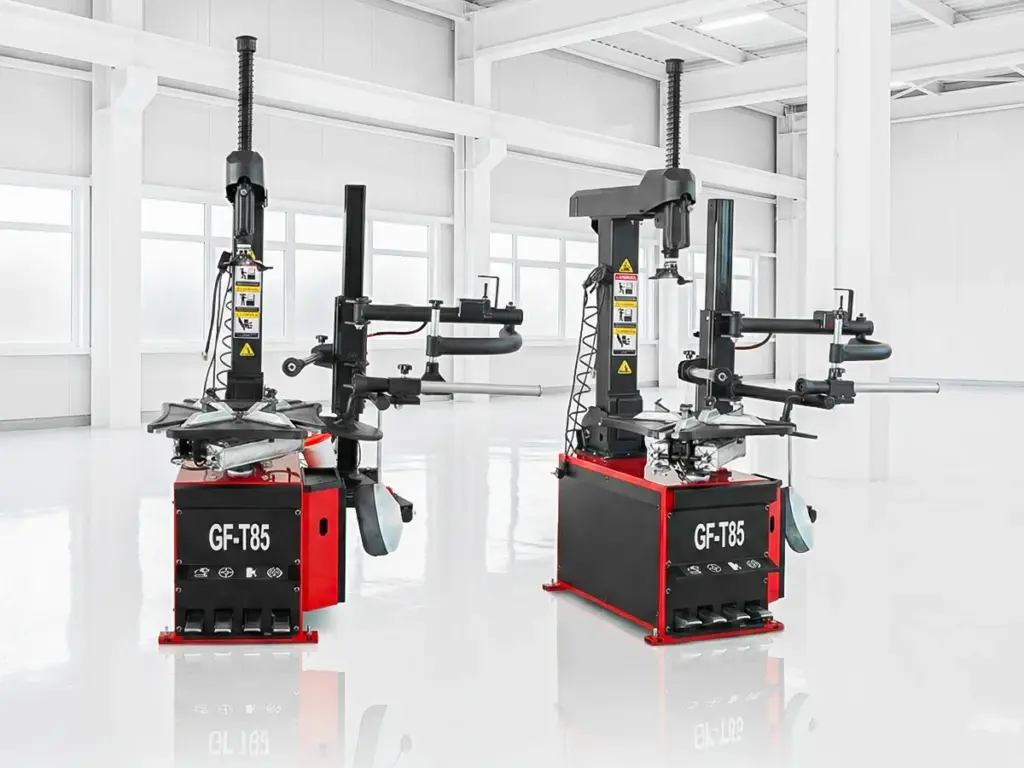
Treat the included-accessory list as a claim to verify. Only the items written on your proforma invoice, with model and quantity, are contractually yours.
Core Machines on the Quotation
A combined quotation should name both machines by model, not by series or marketing label. Check that the changer matches the vehicles you serve, and that the balancer covers the wheels that come off them. The tire changer range and the wheel balancer range on our site list published specifications for each model.
- Changer type: rim-clamp swing arm, tilt-back, or leverless head, each with different wheel handling behavior and rim protection characteristics.
- Balancer type: digital spin balancer with manual, partially automatic, or automatic measurement of rim distance, diamètre, and width, depending on the model.
- Published limits: rim diameter and width range, maximum wheel weight, motor rating, and required air pressure taken from each machine datasheet.
Items to Confirm Instead of Assuming
Marketing pages tend to describe a fully equipped bay. The delivered content is usually narrower, and the difference shows up after the machine is installed. Use the table below as a purchasing checklist, and ask the supplier to mark every item as included, optional at a stated price, or not supplied.
| Item | How It Usually Appears | What to Confirm |
|---|---|---|
| Centering cones and adapters | Listed as standard equipment with the balancer | Which rim bore ranges the supplied set covers, and which adapter kit your wheels need |
| Quick-release nut and shaft accessories | Shown in the machine photograph | Whether the nut and shaft guard are on the packing list for your order |
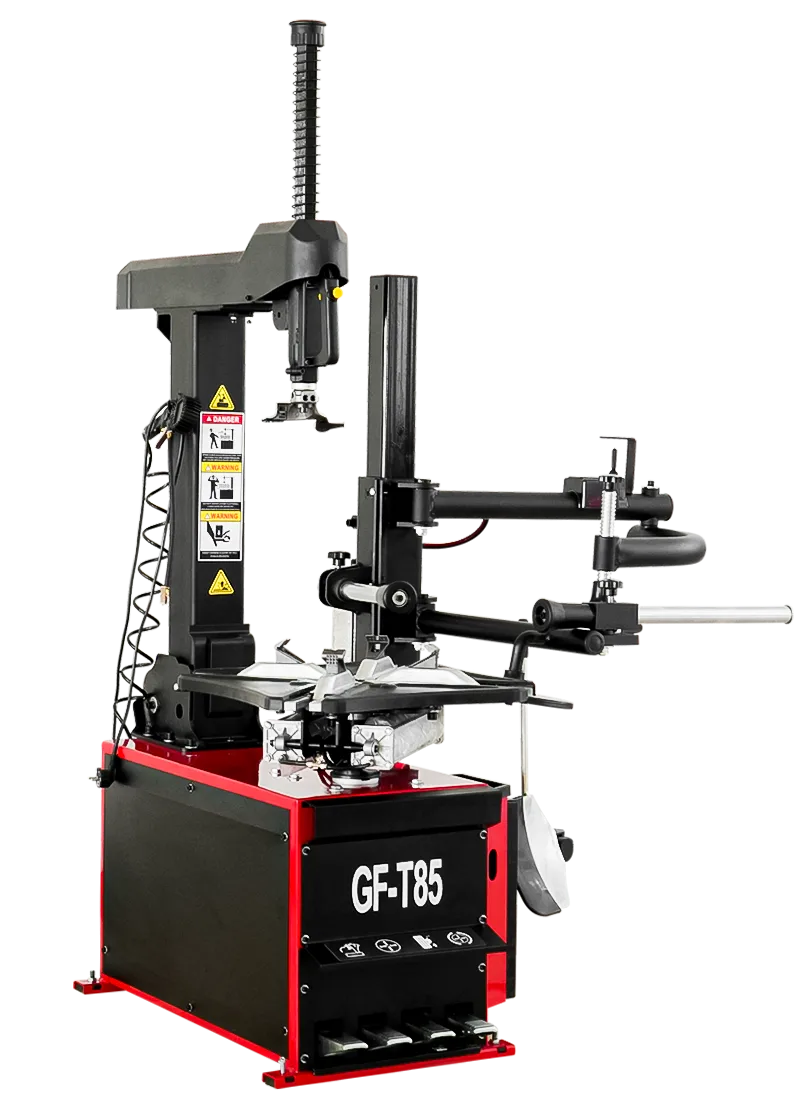
| Assist arm | Described as available on the changer | Whether it is fitted on the quoted model, optional, or a different model altogether |
| Rim protection and mounting consumables | Mentioned as accessories in the catalog | Quantities supplied, and which items you must purchase locally |
| Installation and commissioning | Offered as a service by some suppliers | Whether on-site work exists for your market, who pays travel, and what remote support covers |
| Formation des opérateurs | Advertised as free training | Format, langue, duration, and whether videos, manuals, and remote sessions are included |
| Warranty scope | Stated as a warranty period only | Parts and labor coverage, wear parts excluded, spare parts supply, and who bears shipping on warranty items |
When Should You Buy Together or Separately?
Buying the pair together fits a new or rebuilt bay that needs both steps at once. Buying separately fits a replacement, a capacity change, or a staged budget.
| Situation | Reasonable Route | Reason to Check First |
|---|---|---|
| New wheel-service bay, or full replacement of both machines | One combined quotation | Both models still suit your vehicle mix and wheel size range |
| Distributor equipping several bays or a customer network | One order, model list split by bay | Whether each bay needs the same performance tier |
| One machine fails or reaches end of service | Replace that machine only | The surviving machine already covers the wheels you now handle |
| Workload has shifted to heavier or larger assemblies | Upgrade the limiting machine first | Which machine actually sets the pace of the bay |
| Cash is committed elsewhere, and the bay can start with one step | Staged purchase | Whether the second machine will still be available at the same configuration |
Arguments That Do Not Hold
Two claims appear often in this category and are worth setting aside. The first is that a package guarantees compatibility; as covered above, the two machines keep separate specifications, and you verify them separately. The second is that high volume forces you to split the purchase. Since a package is already two independent machines, a busy bay runs both at the same time either way.
What a busy bay actually has to size is the number of machines per process. Look at how many mounting and balancing hours your order pattern consumes per shift, how many technicians work at the same time, whether peak days are dominated by passenger car wheels or by larger assemblies, and whether vibration complaints need a dedicated diagnostic position. Those inputs decide whether you need a second changer, a second balancer, or a higher tier on one of them.
How Should Their Capacities Be Matched?

Match the two machines by writing down the wheels you actually serve, then checking each machine against that same list.
Capacity mismatch shows up as work the bay has to send out or refuse. The following items need to line up across both datasheets:
- Service scope: whether the tire and rim size ranges the changer can mount overlap with the ranges the balancer can measure.
- Weight handling: whether the balancer’s maximum wheel load covers the heaviest assembly the changer is rated to handle.
- Vehicle types: whether both machines are intended for the same segment, for example passenger car and light truck, rather than one built for cars and one built for trucks.
- Wheel construction: whether low-profile, runflat, or sensitive alloy wheels require rim protection components, bead-handling tools, and operating procedures suitable for wheels fitted with TPMS sensors.
- Accessoires: whether the cones, pinces, and adapters for those wheels are included, optional, or supplied by others.
- Throughput: whether the cycle time of each machine fits the number of wheels per shift, reading both figures from the same type of test conditions.
On the balancer side, data entry differs by model. Some machines take rim distance, diamètre, and width manually; others partially or fully automate one or more of those measurements through a shaft arm, ultrasonic sensor, or gauge wheel. Treat vendor labels for these functions as model features rather than as an industry-wide performance class, and compare what the machine actually measures against what your wheel mix requires.
For every figure in your comparison, use the datasheet and installation manual of the specific model and serial range you intend to order. Published specifications change with model revisions, and a number taken from a catalog page, a competitor’s machine, or a reseller listing is not a specification you can install to.
What Space and Utility Requirements Must Be Checked?
Plan the bay from the installation drawings of the exact models you order, then verify each utility separately for each machine.
Floor Space and Clearances
Required space depends on the exact machine dimensions, tower movement, hood opening range, wheel-handling area, and local safety requirements. Use the installation drawings for both models and leave sufficient operator and maintenance clearance around each machine.
- Movement envelopes: allowance for the changer arm or head travel, the balancer hood opening, and the space needed to carry a wheel and assembly without crossing another working position.
- Floor and foundation: a flat, level concrete floor with adequate bearing capacity for machine weight plus the heaviest assembly, following the anchoring method stated in the manual, since some machines are floor-anchored while others rely on their own frame and leveling feet.
- Environment: a dry, enclosed position that protects control electronics and pneumatic components from condensation, dust, and temperature swings.
Electrical Connection
Confirm voltage, frequency, and phase against the rating plate of each machine, then have a qualified electrician install the supply, disconnect, and protection in line with the manual and the electrical code that applies at the installation site. Circuit protection requirements, including any residual current protection, are set by the equipment instructions and local regulations, so do not carry a value over from another shop or another market. Record the socket, breaker, and cable sizes you agreed on before shipment, as these items are usually prepared by the buyer.
Compressed Air
Compressed air demands differ by model and by option list. Verify the operating pressure and the air consumption per cycle of each machine, then check that your compressor and line sizing can meet the combined demand of the equipment that may run at the same time, including blast inflation if your changer offers it. Integrated air tanks for blast inflation appear on models equipped for that function, not on every changer, so confirm the configuration and follow the safety instructions that apply to it.
Install the filtration, regulation, moisture control, and lubrication equipment specified by the machine manufacturer. Some pneumatic parts require lubricated air, while others need dry, oil-free air, and a general recommendation can harm the wrong side of that line.
How Should You Compare Quotations and Shipping Terms?
A combined quotation may simplify purchasing and shipping, but buyers should compare the package price, included accessories, freight terms, and after-sales scope against separate quotations before deciding.
Build the Full Landed Cost
Machine price is the first line, not the last. Write down every cost element for both scenarios, one package and two separate orders, so the comparison uses the same basis:
- Equipment: each machine at the configuration quoted, with model, options, and any software or calibration included.
- Optional accessories: assist arm, adapter and cone sets, rim protection items, and additional tools priced separately.
- Conditionnement: export plywood or steel frame packing, pallet count, total gross weight, and dimensions, which drive freight volume.
- Trade term: the Incoterm stated with a named port or place, and the version of the rules used.
- Freight: ocean or air freight, currency adjustment factors, terminal handling at both ends, and any surcharges shown on the booking.
- Destination charges: customs clearance, duties and taxes, demurrage or storage if the container waits, and delivery from the port.
- Site works: unloading equipment at the door, positioning in the bay, electrical and air connection, and any local calibration.
- Support stock: wear parts and consumables you plan to hold, plus training materials and language of the manuals.
Read the Trade Term Before the Total
The same machine pair can produce very different totals under different Incoterms, because the term fixes where the seller’s cost and risk stop and yours begin. Freight, insurance, export and import clearance, and unloading are allocated differently from one term to another. The ICC Incoterms rules page gives the official definitions of each term and how transport, insurance, and customs responsibility divides between seller and buyer. That page is a reference on the terms themselves; it says nothing about the price, discount, or delivery arrangement stated on any specific quotation, and you should confirm each detail in writing with the supplier.
Ask every supplier to quote on the same term and the same destination, otherwise a lower machine price can simply move cost into freight and clearance. Confirm on paper whether packing, inland transport to the port, export customs, insurance, and unloading at your address sit inside or outside the stated figure. For a distributor serving several end customers, also check whether split delivery to different addresses is possible and what it costs, since a single consignment is cheaper to move but does not always match how the machines will be deployed.
What Should You Confirm Before Ordering?
Close the gap between the marketing description and the delivered order with written answers on six points.
- Exact models: model numbers, option lists, and current datasheets for each machine on the quotation, with the serial range if the supplier offers several versions.
- Matching evidence: size and weight ranges of both machines side by side, plus the vehicle segment each machine is designed for.
- Site conditions: your measured voltage, frequency, phase, air pressure, and air delivery capability, checked against the installation manual of both models.
- Delivered content: packing list detail, included accessories with quantities, and the spare parts you should order with the machines.
- Commercial terms: unit prices inside the package, payment terms, lead time, trade term with named place, and the validity period of the quotation.
- After-sales scope: warranty period and coverage, wear part exclusions, remote support hours and language, response time, and spare parts supply.
If a supplier confirms a package only by phone, ask for the same terms in writing before you commit funds. The written version is also the document your team will install, train, and claim warranty against later. Our guide to evaluating a tire changer manufacturer covers the supplier questions behind that step, and you can send your specification sheet through our contact page for a written response.
Foire aux questions
Do I need both a tire changer and a wheel balancer?
Oui, if you offer tire service. The changer mounts and demounts the tire on the rim; it does not measure weight distribution. The balancer spins the assembled wheel and shows where correction weights belong. Skipping the balancing step leaves vibration, uneven wear, and handling complaints on your side.
Is it cheaper to buy a tire changer and wheel balancer together?
Not automatically. A combined order can reduce paperwork and may lower packing and freight per unit, but the outcome depends on the models, the accessories included, the trade term, and the after-sales scope. Compare a package against two separate quotations on the same specification and the same delivery basis before treating it as the lower-cost route.
What is included in a tire changer and wheel balancer package?
Read the packing list. Suppliers differ on cones and adapter sets, quick-release accessories, assist arms, rim protection items, tools, manuals, training materials, and installation support. Treat anything not written on your proforma invoice with model and quantity as not supplied, and price the gap separately.
How much floor space do the two machines need?
There is no fixed figure that fits every model. Required space depends on the exact machine dimensions, tower or head movement, hood opening range, wheel-handling area, and local safety requirements. Work from the installation drawings for both models and leave operator and maintenance clearance around each machine.
Can I buy the two machines separately?
Oui. Both machines are sold individually, which suits a single replacement or a staged budget. If you replace only one unit, verify that the remaining machine still covers the wheels you now serve, including rim diameter and width range and maximum wheel weight, so the pair stays usable as one process.
Pensées finales
Two machines can be quoted and shipped together, and for a new bay that is often the simpler route. Whether a combined order is the right one still comes down to whether the vehicle range, tire and rim capacity, workload, site conditions, accessory list, and after-sales terms of those two models genuinely match each other and your shop.
Run the same checklist on both routes. Write down the wheels you serve and the hours each process consumes, collect datasheets for the specific models, and put the package and the separate quotations on one landed-cost sheet under the same trade term. If you want a starting point, send your vehicle types, wheel size and weight range, shift volume, and site power and air conditions, and we will reply with a matched proposal and a written quotation.


