
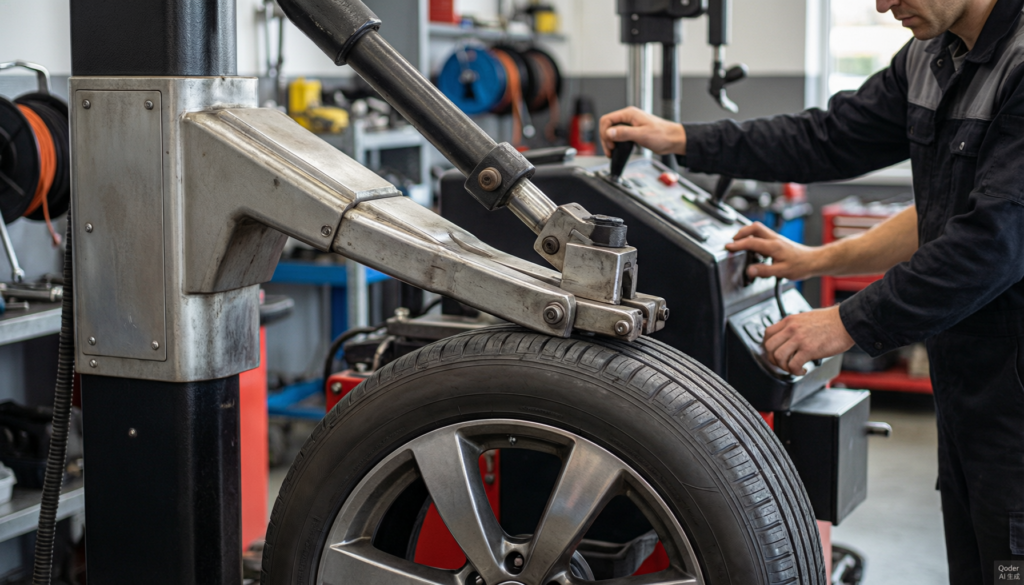
Low-profile and run-flat tires present distinct handling challenges that standard tire changers may not address. The stiffer sidewalls, tighter bead seating, and reduced flexibility require specific machine functions—not just higher power, but controlled force application, precise rim protection, and appropriate tool geometry.
This guide walks through the selection process: from defining your tire and rim range to comparing assist tools, bead-breaking systems, clamping mechanisms, and workflow requirements. The goal is to help you evaluate machines based on how they handle difficult tires in practice, not just on paper specifications.
Why Low-Profile and Run-Flat Tires Are More Difficult to Handle
Low-profile and run-flat tires are not simply “stiffer versions” of standard tires. Their construction changes how they respond to mounting, demounting, and bead-breaking forces.
Low-profile tires (typically aspect ratio 45 or lower) have shorter, stiffer sidewalls that resist deformation. This makes it harder to break the bead away from the rim flange and harder to manipulate the tire during mounting. The reduced sidewall height also means the bead sits tighter against the rim, requiring more controlled force to seat properly.
Run-flat tires add reinforced sidewalls that can support the vehicle’s weight even after air pressure loss. This reinforcement makes the sidewall significantly stiffer than standard tires—often two to three times more rigid. The bead may be tighter, the tire less flexible, and the margin for error smaller. Improper handling can damage the bead, the rim, or the tire’s internal reinforcement structure.
Both tire types require machines that can apply force precisely and consistently. A standard tire changer designed for flexible, easy-to-handle tires may lack the control, tool geometry, or power to work with these constructions safely and efficiently.
Define the Tire, Rim, and Vehicle Range Before Comparing Machines
Before evaluating tire changer models, document the full range of tires, rims, and vehicles your workshop services. This list becomes the baseline for machine selection.
Start with tire dimensions: rim diameter (typically 16” to 22” for low-profile and run-flat applications), rim width (measured in inches), and overall tire diameter. Note the aspect ratios you handle most frequently—35, 40, 45—and whether you work with both passenger-car and light-commercial sizes.
Next, list the rim types: alloy wheels, forged wheels, multi-piece wheels, or wheels with special finishes. Some rims have delicate surfaces that require protective inserts; others have tight bead-seat profiles that make tire removal more difficult. Document the rim flange shapes and drop-center depths you encounter.
Finally, identify the vehicles you service: performance sedans, SUVs with low-profile tires, luxury vehicles with run-flat equipment, or specialty cars. Each vehicle type may bring different tire constructions, rim sizes, and handling requirements. A machine that works well for 18” performance tires may struggle with 22” run-flat SUV tires.
Assist Arms, Pressing Tools, and Drop-Center Control
Assist arms and pressing tools help manipulate stiff sidewalls during mounting and demounting. Their design and control determine whether the tire can be handled without damage.
| Component | Function | What to Verify for Low-Profile and Run-Flat |
|---|---|---|
| Assist arm | Presses the tire sidewall down onto the rim flange during mounting, creating slack for the opposite bead | Adjustable pressure settings (not just on/off); smooth pneumatic operation; maximum arm reach depth |
| Pressing tool (helper roller) | Pushes the tire bead into the rim’s drop center to create working clearance | Multiple pressing positions or adjustable tool geometry; adequate force for stiff run-flat sidewalls |
| Drop-center control | Keeps the opposite bead seated in the rim well while you work the visible side | Tool contact angle matches rim profile; prevents tire slippage during bead seating |
An assist arm alone does not prove suitability for every tire type. Verify that the pressing tools, drop-center control, and tool geometry match your specific tire and rim range before committing.
Bead Breaking Force and Sidewall Control
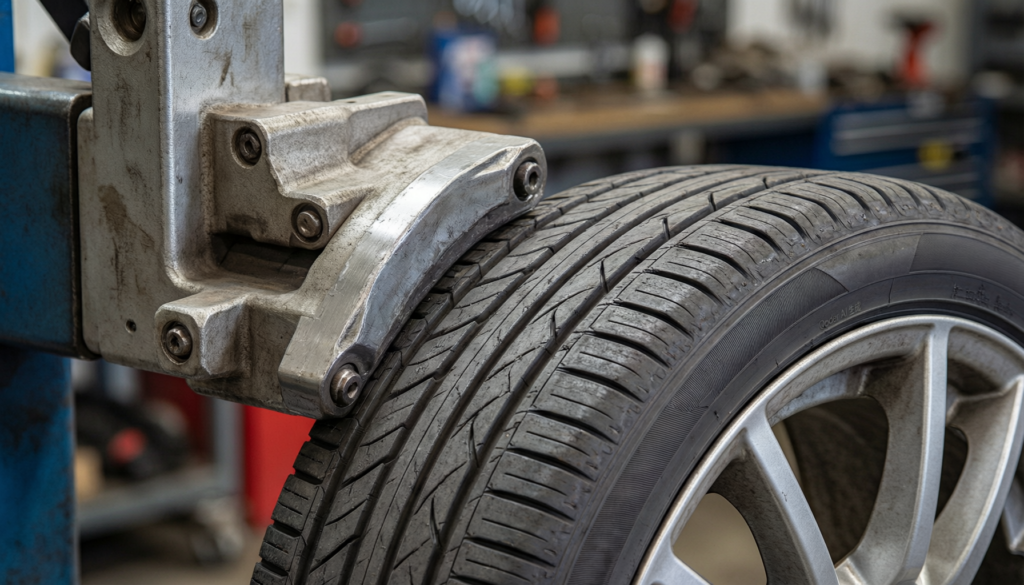
Bead breaking is often the most difficult step with low-profile and run-flat tires. The machine must apply sufficient force to break the bead without damaging the tire or rim.
| Aspect | Requirement | Why It Matters |
|---|---|---|
| Breaking force | Minimum 2,500 kg for stiff sidewalls; controlled application rather than impact | Standard breakers may fail to sever a run-flat bead, or apply uneven force that shifts the tire |
| Sidewall retention | Internal clamping system or specialized bead-breaking shoes that prevent rotation during the break | Without secure holding, the tire slips when force transfers, risking bead or rim damage |
| Breaker position and angle | Adjustable depth and angle to reach the bead without contacting the rim flange | Deep-drop-center rims (common on low-profile setups) require precise tool-to-rim clearance |
Power, Compressed Air, and Workshop Workflow Requirements
A tire changer’s power and air requirements affect whether it can handle difficult tires consistently and how it fits into your workshop workflow.
| Requirement | Typical Specification | Verification Point |
|---|---|---|
| Motor power | 1.5–3 kW for heavy-duty machines | Check torque curve at low speed, not just peak kW—consistent rotation matters more than brief bursts |
| Compressed air | 8–12 bar; volume in L/min for bead breaker + assist arm simultaneously | Confirm your compressor meets both pressure and flow demand under sustained use, not just single-tool operation |
| Ergonomic features | Power-assisted breaker, automatic clamping, adjustable tool positions, appropriate turntable height | Match automation level to daily volume: high-throughput shops benefit from reduced operator fatigue features |
| Footprint and setup | Machine dimensions, floor anchor requirements, electrical supply location | Measure before ordering; ensure service access around the machine for tire positioning |
How to Test the Machine with Representative Wheels
Paper specifications do not prove that a machine can handle your specific tires. Test the tire changer with representative wheels from your target market before ordering.
Select test tires that represent your most difficult applications: the lowest-profile tire, the stiffest run-flat, the largest rim diameter, and the most delicate rim finish. Bring these to the supplier or request a demonstration with similar tires.
During the test, observe the complete process: bead breaking, demounting, rim inspection, mounting, bead seating, and inflation. Note whether the machine struggles at any step, whether the tire or rim shows signs of stress, and whether the operator can maintain control throughout. Ask about the machine’s performance with tires similar to yours—not just the easiest examples.
Verify that the machine can handle your test tires consistently, not just once. Ask whether the supplier can demonstrate multiple cycles or whether the test tires represent typical conditions. A machine that works well on the first try but struggles on the third may not be suitable for daily use.
Tire Changer Specification Checklist for Difficult Tires
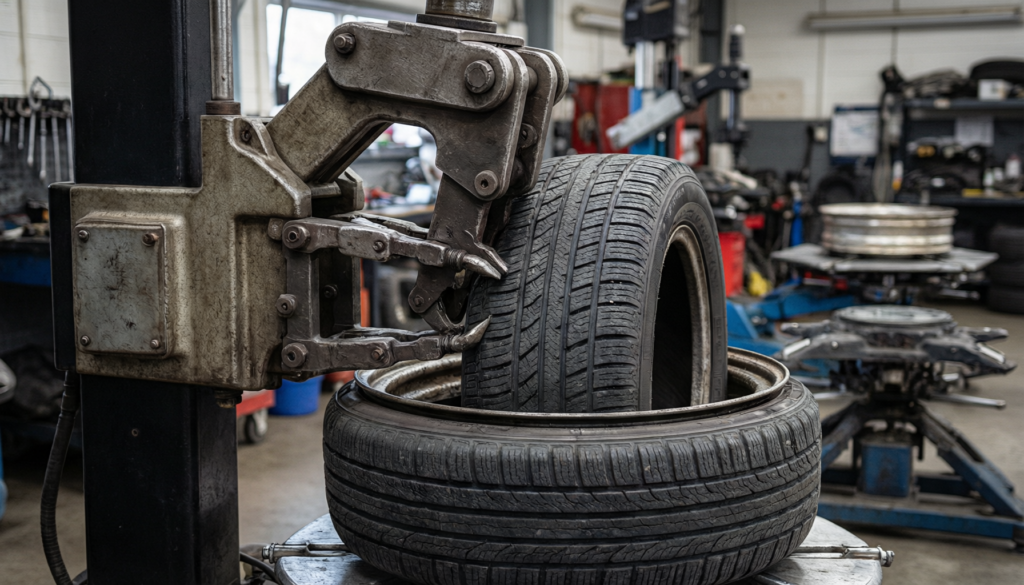
Use this checklist to compile the specifications you need to evaluate when comparing tire changers for low-profile and run-flat tires.
| Specification | What to Verify |
|---|---|
| Tire range | Rim diameter, rim width, tire diameter, aspect ratios covered. |
| Assist arm | Adjustable pressure, smooth operation, suitable for stiff sidewalls. |
| Pressing tools | Helper rollers or bead-pressing devices; adjustable positions for different rim profiles. |
| Bead breaker | Force capacity (kg), sidewall control, adjustable position, rim clearance. |
| Clamping system | Rim diameter range, centering accuracy, protective inserts for alloy wheels. |
| Mounting head | Specialized head for low-profile/run-flat tires, smooth surface, replaceable. |
| Motor power | Kilowatts and torque curve; consistent low-speed torque for stiff tires. |
| Air requirements | Pressure (bar) and volume (L/min); compatibility with workshop compressor. |
| Rim protection | Protective inserts on all contact points; replacement parts available. |
| Test availability | Supplier can demonstrate with your representative tires before ordering. |
When you send this checklist to suppliers, they can match your requirements to specific models rather than offering generic recommendations. This reduces back-and-forth and helps you compare quotations on equal terms.
If you’re also evaluating tire changer types (manual, semi-automatic, fully automatic), our guide to choosing the right tire changer covers the operational differences between designs. The specifications for handling difficult tires apply across all types—but the level of automation and tool assistance varies significantly.
Frequently Asked Questions
Do run-flat tires require a special tire changer?
Run-flat tires do not require a completely different machine, but they do require specific features: higher bead-breaking force, controlled assist arms, specialized pressing tools, and rim protection. A standard tire changer without these features may struggle with run-flat stiffness and increase the risk of tire or rim damage.
What does an assist arm do?
An assist arm presses the tire sidewall down onto the rim flange during mounting, creating the slack needed to work the bead over the rim. For low-profile and run-flat tires, the assist arm must apply controlled, adjustable pressure to avoid damaging the stiff sidewall.
Can a standard tire changer handle low-profile tires?
A standard tire changer may handle some low-profile tires, but it may struggle with the stiffest constructions or largest diameters. Verify that the machine has adequate bead-breaking force, assist tools, and rim protection for your specific low-profile range before ordering.
How can rim damage be reduced during tire changes?
Rim damage is reduced by using protective inserts on all contact points (clamping jaws, mounting head, bead breaker), ensuring proper tool geometry for the tire type, and applying controlled force rather than maximum force. Regular inspection and replacement of worn protective inserts also prevents scratches.
How should buyers test a tire changer before ordering?
Bring representative tires from your target market (lowest profile, stiffest run-flat, largest rim, most delicate finish) and test the complete process: bead breaking, demounting, mounting, bead seating, and inflation. Observe whether the machine struggles, whether tires or rims show stress, and whether performance is consistent across multiple cycles.


