
For a distributor, importer, or private-label buyer, purchasing from a factory, an export trading company, or a regional distributor creates different levels of control over pricing, customization, software access, spare parts, and after-sales support. The company label alone is not enough: buyers need to verify who actually manufactures the equipment, controls technical changes, supplies updates, and handles warranty claims.
This guide compares the main purchasing channels for wheel alignment machines and explains how each can affect MOQ, lead time, landed cost, OEM options, software support, and local service. If you have already chosen factory-direct sourcing and want to assess a specific producer, see our guide to evaluating a wheel alignment machine manufacturer.
What Is a Wheel Alignment Machine Manufacturer?
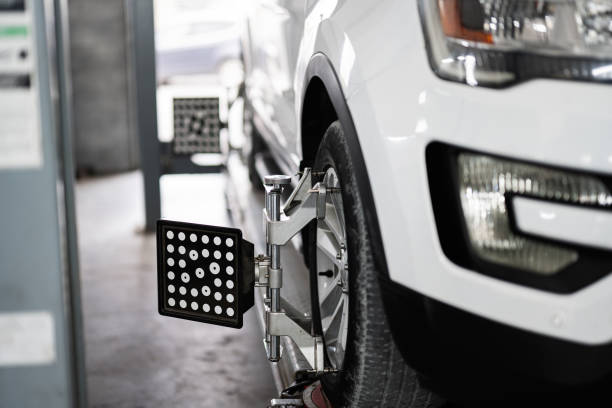
A manufacturer is the entity that designs and builds the machine itself—the frame, sensors, cameras, and the measurement software. It usually controls the underlying technology platform and decides how the product evolves across new models and versions.
Core Functions in Automotive Equipment Production
The factory serves as the technical foundation of the wheel alignment market. These companies build the complete measurement ecosystem that workshops rely on for daily vehicle diagnostics.
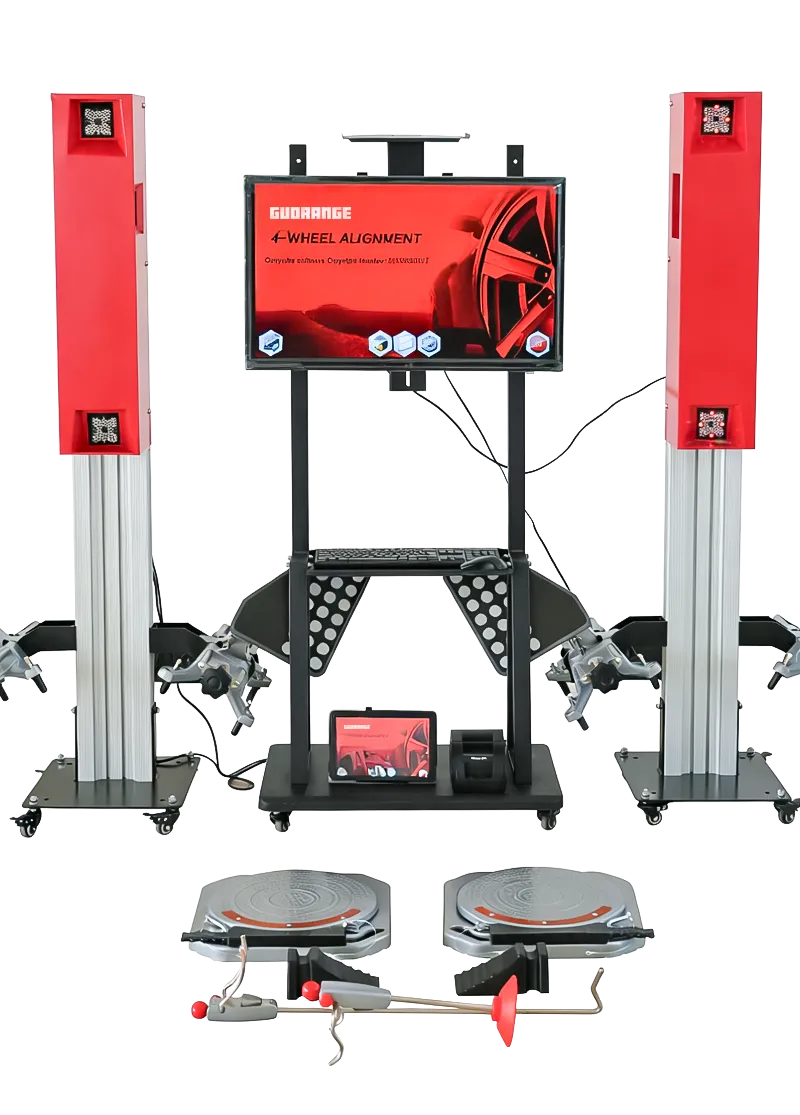
- System Engineering: Manufacturers design alignment systems and integrate high-definition cameras and laser sensors to capture accurate wheel positions.
- Software Development: They usually develop the software algorithms that calculate toe, camber, and caster angles, often drawing on vehicle specification data.
- Factory Operations: These companies operate dedicated facilities to build diverse product lines, ranging from 3D car aligners to heavy-duty truck equipment.
- Lifecycle Support: Where they support the product directly, builders can release software updates, provide technical training, and supply spare parts to maintain long-term precision.
What Is a Wheel Alignment Machine Supplier?
A supplier or distributor is the entity that brings machines to a market. It typically sources from one or more manufacturers and then handles sales, local logistics, and often installation, training, and after-sales support for end users.
Hybrid Models and What Trading Companies Actually Do
The distinction is not always clean. Some companies operate as hybrid manufacturer-suppliers, building 3D, 5D, or CCD aligners and selling them directly to end users, while standalone suppliers carry multiple brands so a garage can compare price tiers and technologies through a single point of contact. Local trading companies fill a functional gap rather than a production one: they hold nearby inventory, arrange localized training, and provide rapid field service for machines built overseas, which can shorten downtime for high-volume shops.
Core Services Provided by Alignment Equipment Suppliers
A reliable supplier does more than move boxes. They act as a technical partner for automotive service centers, managing much of the equipment’s lifecycle.
- Sourcing and Selection: Suppliers manage the sourcing process, helping shop owners select passenger-car or heavy-duty truck aligners that fit their operational needs.
- Logistics and Delivery: They handle order logistics, domestic shipping, and delivery to ensure the alignment equipment arrives safely at the service center.
- Installation and Calibration: Technicians from the supplier network install the machines, calibrate the cameras and sensors, and configure the software for accurate angle readings.
- After-Sales Support: This includes training on alignment procedures, routine maintenance, troubleshooting, and supplying spare parts such as targets and wheel clamps.
How Do Product Range and Model Access Differ?
Manufacturers build deep, specialized product lines within their own brand, while suppliers curate broad, multi-brand portfolios based on commercial agreements and local market demand.
| Dimension | Manufacturer | Supplier / Distributor |
|---|---|---|
| Product range | Deep within its own brand and technologies. | Broad, multi-brand catalog assembled from several factories. |
| Software and data | Usually owns core code, calibration logic, and vehicle databases. | Often distributes licenses and installs manufacturer updates. |
| Pricing | Lower unit price at volume, less bundling. | Higher unit price, mixed-equipment bundles and local stock. |
| OEM / ODM | Enables deep customization at the source. | Private-label via partner factories; cosmetic changes. |
| After-sales | Remote engineering, parts, warranty root cause. | Local install, calibration, first-line response. |
Differences in Product Range Breadth and Depth
Manufacturers design and control deep product lines within a single brand ecosystem, which gives them vertical depth across:
- Multiple technologies: 3D imaging, laser, and CCD alignment systems.
- Performance tiers: Ranging from entry-level workshop units to high-end OEM systems.
- Specialized variants: Built for unique space constraints or high-volume throughput requirements.
Suppliers take a different approach. They aggregate multiple brands into a broad portfolio but offer curated selections from each manufacturer’s catalog. Instead of carrying every obscure variant, they prioritize models that fit specific price points, workshop layouts, and local market demands, giving buyers a single source for several equipment categories.
Variations in Model Accessibility and Territory
Because manufacturers typically hold the intellectual property and run the production lines, they generally keep direct access to their full catalog and can supply standard models, production-line systems, and custom OEM or ODM solutions. Where a buyer needs a customized alignment system, it is usually the maker that builds it. Suppliers operate under commercial agreements and territory rights, so they often stock commercially viable subsets and may lack specialized or regional variants unless they can commit to volume.
Territory rights also shape model availability. A supplier usually sells a commercially viable subset of a manufacturer’s line, so before you quote a project, confirm that the exact model, options, and update coverage you need fall within that channel’s access rather than assuming the full catalog is available to you.
Who Controls Software, Database Updates, and Technical Changes?
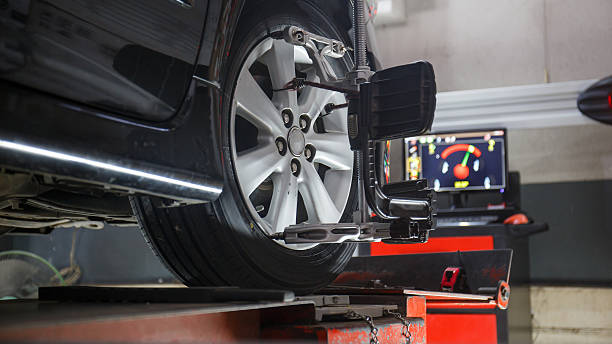
In most arrangements the manufacturer holds the software and vehicle-data updates, while the supplier acts as the delivery channel for licensing and installation.
Manufacturer Authority Over Core Software and Databases
Typically the machine maker develops the alignment software and maintains the vehicle databases. When vehicle brands release new models or revise existing geometries, that maker is usually the one who compiles and publishes the updated data sets.
Manufacturers generally retain technical control over spec corrections, regional data variations, and calibration revisions. Where they hold the source code and update logic, update packages and version upgrades originate from their own teams, which makes those releases vendor-controlled.
Supplier Responsibility for Update Distribution and Licensing
Suppliers usually do not modify technical code. They handle the customer-facing delivery of updates, provide access through authorized portals, and offer the installation support needed to implement new data sets correctly. Local distributors commonly manage the licensing or subscription terms, which can take forms such as:
- Annual packages: Recurring subscriptions for scheduled software and database access.
- Per-update fees: Ad-hoc payments for specific regional or model-year database refreshes.
- Lifetime updates: Upfront licensing contracts covering ongoing access to official manufacturer releases, subject to the terms agreed.
How Do MOQ, Pricing, and Lead Time Compare?
Both manufacturers and suppliers often accept single-unit orders, while direct factories tend to lead on raw unit price and suppliers on consolidating mixed-equipment orders.
Typical MOQ and Lead Time
Order and delivery terms vary by model, configuration, and season, so confirm current figures with the seller rather than treating these as fixed benchmarks. Actual pricing depends on specification, volume, and included services, and is best established through a written quotation.
- MOQ: A single unit is common for standard models; higher minimums occasionally apply to lower-priced tools or mixed wholesale listings.
- Lead times: Frequently a few weeks from the production line, extending during high season or for heavy customization.
- Pricing basis: Unit price moves with technology level, options, and order size, so compare like-for-like configurations across channels.
Direct Manufacturers vs. Trading Suppliers
All else equal, direct manufacturers tend to offer lower unit prices and tighter control over lead times, which suits buyers needing OEM branding, custom integration, or bulk fleet orders. The margin advantage is most visible on single-model volume rather than one-off purchases.
Trading companies and distributors usually price in their sourcing margin, local stock, and service layers. They tend to be more useful for mixed-product orders and for reducing procurement complexity, for example when a buyer wants an aligner, a lift, and a tire changer at the same time and prefers one coordinated shipment over several international ones. Because delivery, risk transfer, and cost responsibility differ sharply between a factory export and a local supplier, it helps to fix those obligations in writing; the ICC’s Incoterms® rules are the standard reference for allocating seller and buyer duties in a shipment.
Which Partner Is Better for OEM and Private-Label Orders?
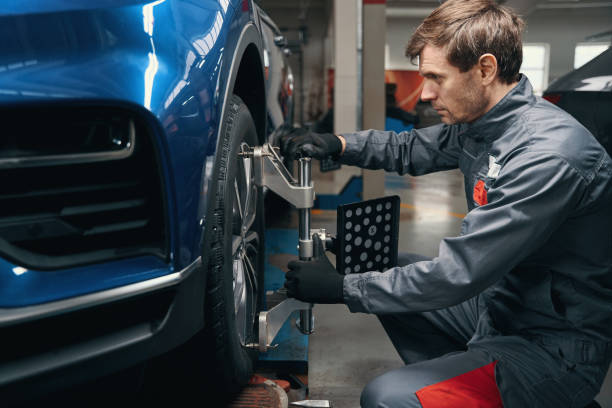
Choose a direct manufacturer for deep technical customization and OEM specs, or a sourcing aggregator to deploy a broader private-label workshop portfolio faster.
Direct Manufacturers for High-Control and Custom OEM Needs
Direct manufacturers build alignment machines on their own production lines. This can give buyers more influence over product architecture, including hardware design, software, firmware, and calibration standards, and in some cases the option to integrate alignment systems into a shop’s own workflow.
For private-label buyers, a direct relationship can allow structural changes that create technically distinct products rather than only a surface-level brand sticker, for example:
- Software Customization: Branded digital interfaces and guided workflows.
- Mechanical Adjustments: Bespoke camera towers, turnplates, and lift interfaces.
- Brand Identity: Integrated corporate logos and specialized component colorways.
Partner with a direct manufacturer when long-term technical differentiation, larger volume commitments, and strict vehicle-manufacturer specifications drive your strategy. Before you commit to a factory, run the same manufacturer-vetting checks described in the evaluation guide linked above.
Suppliers and Aggregators for Portfolio Breadth and Speed
Suppliers source equipment from a network of factories. They let buyers assemble a broader workshop portfolio under a single private-label brand, combining wheel aligners, lifts, and tire changers into one catalog. If you are buying wholesale across several categories, our wholesale buying guide for distributors and private labels covers container consolidation and qualification in more depth.
- Factory Selection: Managing initial quality checks across multiple specialized producers.
- Mixed Shipments: Consolidating different equipment categories into single LCL or FCL containers.
- Documentation: Coordinating regional safety testing and compliance paperwork.
A sourcing aggregator is usually the better fit for mid-market private-label lines where logistics convenience, speed to market, and vendor consolidation matter more than deep technical co-development.
Who Handles Quality Issues and After-Sales Support?
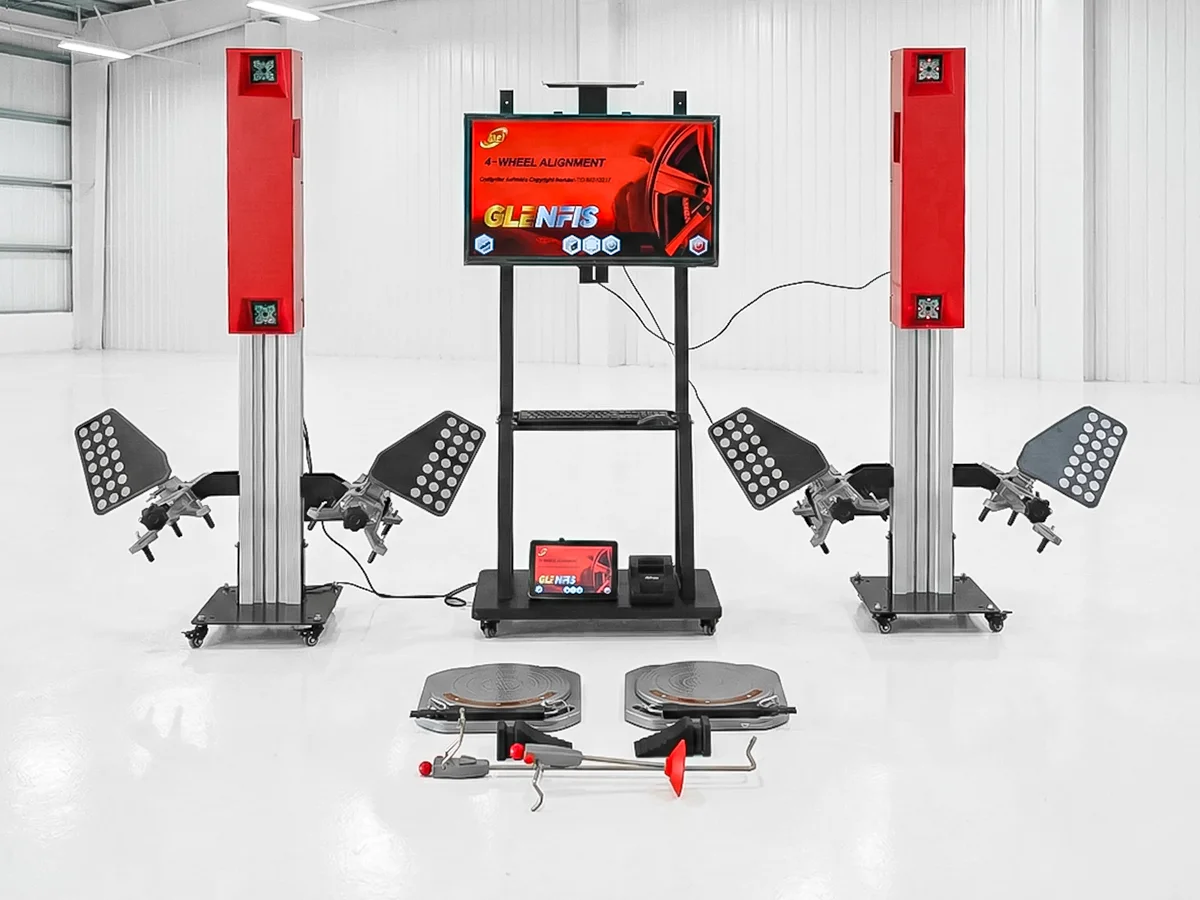
The manufacturer generally carries the product design and core warranty liability, while local suppliers usually manage front-line troubleshooting, installation, and warranty logistics.
Manufacturer Accountability for Quality and Warranties
Manufacturers are accountable for product design, structural integrity, and electronic reliability. When genuine manufacturing flaws occur, they are usually the final authority on parts replacement and modular repairs, and typically require technical evidence from the field to process a claim.
- Core Equipment Warranties: Often stated in years and scoped to defects in materials and electronics under normal use; confirm exact terms per model.
- System Maintenance: Manufacturers typically issue firmware updates and define calibration procedures to keep machines accurate.
- Technical Assistance: The factory can provide remote diagnostic support for complex software or measurement errors.
Supplier Role in Front-Line Support and Logistics
While the manufacturer builds the machine, local suppliers act as the immediate support layer. They work to keep the equipment functioning in your specific environment and manage the administrative side.
- Installation and Setup: Where included, local distributors handle installation, layout planning, and baseline calibration to meet factory specifications.
- Front-Line Diagnostics: Suppliers deploy service engineers for site visits, troubleshooting, and minor hardware adjustments.
- Warranty Administration: Distributors verify claim validity locally, coordinate with the manufacturer, and arrange shipping for replacement components.
- Operator Training: Distributors provide practical training on routine maintenance to help avoid user-induced failures.
Which Option Fits Your Purchasing Model?
As a B2B buyer, match the channel to your procurement model: how much volume you commit, how much brand and specification control you need, and what service coverage your customers expect.
| Purchasing Model | Best Fit For | Key Advantage | Consideration |
|---|---|---|---|
| Manufacturer-Direct | High-volume distributors, brands, OEM-linked buyers | Specification and roadmap influence, direct updates | Larger commitment and coordination |
| Supplier & Distributor | Regional resellers, mixed-catalog buyers | Flexible quantities, local stock and support | Must verify the underlying manufacturer |
Manufacturer-Direct Purchasing
Buying factory-direct tends to suit buyers who commit repeatable volume and want influence over specification and roadmap. Going direct can shorten the line to core engineering support, so updates and measurement improvements reach your operation as the maker releases them.
- Onboarding support: Where included, setup and staff training are handled by factory-trained teams or approved installers.
- Data access: Workshops receive vehicle database updates from the development source.
- Financial return: This route usually needs higher upfront investment but can optimize uptime over a long equipment life, depending on utilization.
Supplier and Distributor Purchasing
A supplier-led model suits buyers who value flexibility over depth: stocking a few units, covering a region, or assembling a mixed catalog without opening separate accounts at several factories. It shifts more coordination, and some margin, to the channel partner.
- Regional logistics: Local distributors often keep regional warehousing, which can speed initial delivery.
- Maintenance speed: Local inventory supports faster spare-part replacement when hardware fails.
- Due diligence: Verify the underlying manufacturer behind the equipment to protect warranty validity and long-term software updates.
Frequently Asked Questions
What is the difference between a wheel aligner supplier and a manufacturer?
In general, a manufacturer designs, engineers, and builds the machines and holds the product’s core IP, while a supplier or distributor brings them to market through sales, logistics, and local service. It is a division of roles: the maker creates the product, and the channel delivers and supports it downstream.
Is it cheaper to buy a wheel alignment machine from a factory?
A factory usually lists a lower unit price, but the true difference depends on order size and total landed cost. International freight, duties, installation, and downtime can narrow the gap for a single unit, so factory-direct tends to be most cost-effective for high-volume or OEM orders, while a supplier’s bundled logistics and support can suit one-off purchases.
Who provides wheel alignment software updates?
The manufacturer typically creates the core software and vehicle-database updates. Workshops usually obtain and install them through authorized suppliers, distributors, or service partners, so the maker builds the update and the local channel delivers it and provides setup support.
Can a supplier provide private-label wheel aligners?
Yes. Suppliers frequently offer private-label aligners by partnering with OEM or ODM factories. The supplier manages branding, packaging, and market-specific configuration while the factory builds the hardware and software, so distributors can sell under their own brand without owning a production line.
How can I tell whether a seller is a manufacturer?
Check the business license for manufacturing terms such as “production” or “processing,” confirm the registered address sits in an industrial zone, and ask for a live video tour of the floor. Genuine manufacturers can usually show assembly lines and calibration benches, whereas trading companies may show warehouse space instead.
Final Thoughts
Your procurement choice shapes margins and long-term uptime. A direct manufacturer generally offers the most influence over specification and the software roadmap, while a regional supplier can simplify mixed-equipment logistics and front-line support. The reliable path is to match the channel to your B2B purchasing model, then verify the partner behind the brand and the update and warranty terms in writing before you buy.
When you are weighing factory-direct against a supplier for wheel aligners, the practical step is to define your volume, service coverage, and private-label needs. Our sourcing specialists can help you scope configurations, database and warranty terms, and factory access, so reach out to structure a private-label rollout or a direct supply plan.


