
Sourcing wheel alignment machines for wholesale requires more than comparing unit prices. Distributors must consider measurement performance, vehicle coverage, software updates, installation requirements, spare parts, and after-sales support before adding a model to their catalog.
This guide explains how to compare wheel alignment machine technologies, technical specifications, database terms, private-label options, trial orders, and production requirements. It will help distributors build a product range that fits their target customers and can be supported after delivery.
Which Wheel Alignment Models Should a Distributor Carry?
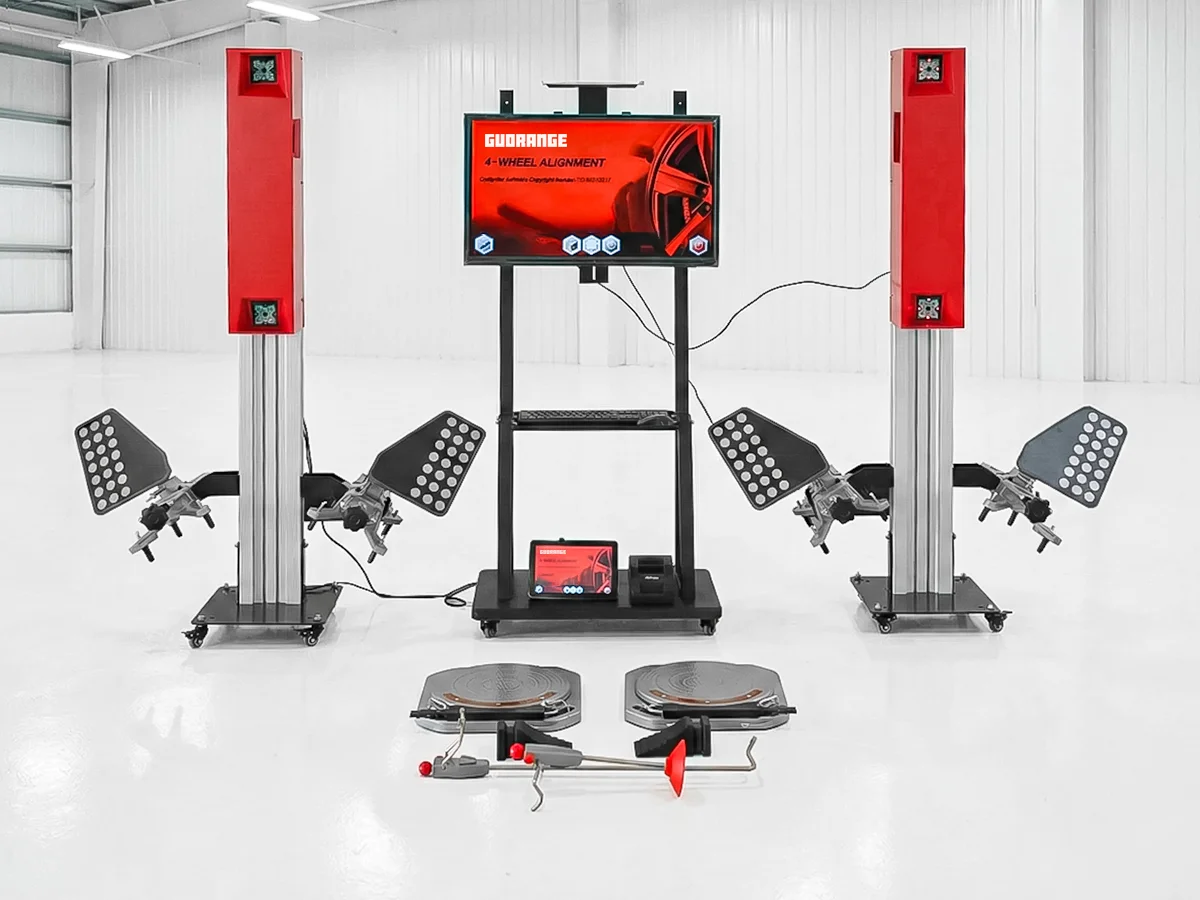
The right product range depends on local workshop budgets, vehicle types, bay layouts, and expected service volume. Distributors should validate customer demand before deciding which models to stock.
Match the Product Range to Customer Needs
Rather than stocking every available technology, begin with a focused range that covers the most common applications in your market.
| System Type | Suitable Customers | Key Considerations |
|---|---|---|
| Entry-Level CCD or 3D | Smaller workshops | Core alignment functions, straightforward operation, and a more accessible initial investment |
| Fixed 3D | Workshops with dedicated alignment bays | Faster setup, repeatable workflows, and suitability for higher daily service volumes |
| Mobile or Compact 3D | Multi-purpose workshops | Flexible equipment placement and easier adaptation to shared or changing bay layouts |
| Higher-Specification Models | Workshops requiring broader functions | Compare vehicle coverage, camera configuration, reporting tools, languages, and installation options |
| Specialized Systems | Heavy-duty or niche users | Add heavy-duty, multi-axle, laser, or touchless models only after confirming local demand, parts, training, and technical support |
Distributors can start with a small number of models covering different price and application levels. Sales enquiries, trial installations, and service feedback can then guide later additions to the catalog.
Product demand should be validated from the workshop buyer’s perspective. Distributors considering 3D models can review whether a 3D wheel alignment machine is worth the investment for different workshop volumes, layouts, and operating requirements.
What Technical Information Should Each Model Provide?

A useful specification sheet should separate measurement performance, vehicle compatibility, installation requirements, software functions, and included accessories. All figures should be confirmed for the individual model.
Measurement and Vehicle Compatibility
Ask the supplier to provide:
| Specification Area | Information to Confirm |
|---|---|
| Measurement Range | Supported ranges for toe, camber, caster, thrust angle, setback, and other available parameters |
| Accuracy and Resolution | Separate figures for measurement accuracy, display resolution, and repeatability, together with the applicable test conditions |
| Measured and Calculated Values | Which alignment angles are measured directly and which values are calculated by the software |
| Wheel and Vehicle Range | Compatible rim diameter, track width, wheelbase, maximum vehicle width, and supported vehicle categories |
| Lift and Bay Compatibility | Compatibility with four-post lifts, scissor lifts, two-post workflows, alignment pits, or floor installations |
| Calibration Requirements | Required calibration tools, procedures, intervals, test conditions, and technician responsibilities |
| Reports and Data Output | Available report formats, printing, data export, customer records, storage, and network functions |
Hardware and Installation Requirements
The technical file should also state:
| Specification Area | Information to Confirm |
|---|---|
| Measurement Architecture | Whether the model uses camera-based 3D measurement, CCD sensor heads, passive targets, or another defined system |
| Equipment Dimensions | Cabinet, camera beam, target, and accessory dimensions, together with packaged size and shipping weight |
| Working Space | Required distance between the cameras and vehicle, ceiling clearance, and minimum usable bay dimensions |
| Power Requirements | Voltage, frequency, phase, power consumption, plug type, and any backup-power requirements |
| Computer and Network Requirements | Operating system, PC specifications, storage, connectivity, update method, and supported peripherals |
| Included Accessories | Wheel clamps or targets, turntables where applicable, steering-wheel holder, brake-pedal depressor, printer, and calibration tools |
| Operating Environment | Permitted temperature, humidity, lighting, dust, floor stability, and other environmental limits |
Technical specifications should also be evaluated against the customer’s actual workflow. This guide on how to choose a wheel alignment machine for an auto repair shop explains how vehicle mix, service volume, bay layout, lift compatibility, and ongoing support affect the final decision.
Build Your Wheel Aligner Product Line
What Should You Confirm About Software and Vehicle Databases?
Database coverage, update terms, and software support affect which vehicles a workshop can service over time. Buyers should verify these details for each model instead of relying only on the total number of vehicles advertised.
Vehicle Coverage and Data Sources
A wheel alignment database provides the target specifications technicians use to evaluate measured angles. Incomplete or inaccurate data may cause technicians to compare results against the wrong specifications, even when the measuring hardware is operating correctly.
Before ordering, confirm:
- Regional Coverage: Check whether the database includes the makes, models, production years, and vehicle types commonly serviced in the target market.
- Model Variants: Verify coverage for different wheelbases, suspension packages, AWD configurations, performance versions, EVs, hybrids, and light commercial vehicles where relevant.
- Latest Included Model Year: Ask when the database was last updated and which recent vehicles are included in the installed software version.
- Data Source and Validation: Request an explanation of how specifications are collected, reviewed, corrected, and updated. Do not assume that a large vehicle count means every entry comes directly from an OEM.
- Search Functions: Confirm whether technicians can search by make, model, year, chassis code, or other identifiers. VIN or barcode functions should be treated as model-specific features.
- Measured Values and Target Specifications: Make sure the software clearly separates the angles measured by the machine from the manufacturer specifications stored in the database.
- Related Service Functions: If ADAS guidance, steering-angle reset information, TPMS procedures, or other service functions are advertised, confirm exactly what the software provides. A wheel aligner does not automatically perform ADAS calibration simply because related instructions appear in its database.
Ask the supplier to demonstrate several vehicles commonly found in your market during the trial or software review. This is more useful than relying on a headline figure for the total number of database entries.
Software Updates, Licensing, and Hardware Compatibility
Update policies vary between suppliers and software versions. Buyers should obtain written terms covering:
- Update Schedule: How often new vehicle data, corrections, and software improvements are released.
- Delivery Method: Whether updates are installed online, through downloadable packages, by USB, or with remote technical assistance.
- Licensing Terms: Whether the initial price includes updates, how long access remains active, and whether later updates require a subscription or one-time fee.
- Supported Software Version: How long the installed version will receive updates and technical support.
- Hardware Requirements: Minimum computer, operating-system, storage, display, and network requirements for current and future supported versions.
- Recovery Procedure: How the distributor or workshop can restore licensed software, configuration files, and vehicle data after a PC or storage failure.
- Language and Units: Available interface languages, measurement units, report formats, and whether these settings can be localized.
- Distributor Access: Whether distributors receive installation packages, update instructions, release notes, and tools for supporting customer machines.
Test the update and recovery process during a trial order where possible. The contract should clearly state which software version is supplied, what database release is included, and which future updates are free or chargeable.
Which OEM and Private-Label Changes Are Available?
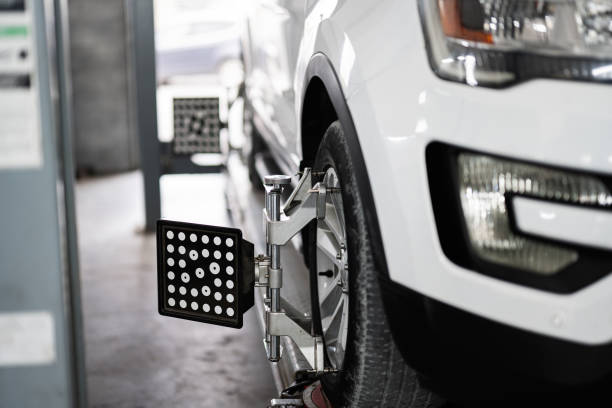
Private-label options usually focus on branding, market adaptation, software settings, documentation, and packaging. Changes to the core measuring system or safety-related hardware require separate engineering review and may not be available for every model.
Branding, Packaging, and Documentation Options
Available options depend on the model, order quantity, and supplier’s production process. Buyers should request an itemized customization list rather than assume every component can be changed.
Common options may include:
- Cabinet Colors: Custom paint colors or finishes for cabinets, columns, monitor frames, and accessory carts where the production process allows.
- Logo Placement: Buyer logos on approved cabinet areas, packaging, manuals, and marketing materials.
- Model Names: Private-label model names and product codes for catalogs, packaging, and inventory systems.
- Software Localization: Available interface languages, measurement units, report templates, and buyer branding where supported by the software platform.
- Electrical Configuration: Destination-market voltage, frequency, plug type, and related electrical labels for available model configurations.
- Documentation: Localized operating manuals, installation instructions, safety information, parts lists, and warranty documents.
- Packaging: Custom cartons, labels, pallet marks, barcodes, and shipping marks for distributor inventory systems.
Private labeling must not obscure legally required information. The rating plate may still need to identify the responsible manufacturer, product model, serial number, electrical ratings, and other required details. सीई, UL, or other conformity marks should appear only when the specific model and configuration meet the applicable requirements. The official EU guidance on CE marking explains the manufacturer’s responsibilities for identifying applicable requirements, preparing technical documentation, and issuing an EU Declaration of Conformity.
Before approving private-label production, confirm:
- Which areas can carry the buyer’s logo.
- Which manufacturer information must remain.
- Whether software branding is included or charged separately.
- Minimum quantities and setup fees for each customization.
- Ownership and future use of artwork, translations, and software assets.
- Whether customization affects existing test reports or compliance documents.
How Should You Plan a Trial Order and MOQ?

Use a trial order to confirm the selected configuration, software, accessories, documentation, packaging, and supplier support before committing to a larger order. MOQ should be confirmed separately for standard equipment and each customization item.
Clarify the MOQ Structure
Wheel alignment machine MOQ varies by model, supplier, stock status, and customization scope. A standard model may be available as a single-unit trial, while custom branding, paint, packaging, software localization, or engineering changes may require different minimum quantities or setup charges.
Ask the supplier to clarify:
- Standard Model MOQ: Minimum quantity for an existing configuration without customization.
- Branding MOQ: Requirements for cabinet logos, model names, labels, and branded manuals.
- Color MOQ: Minimum batch size and setup charge for custom paint colors.
- Packaging MOQ: Requirements for printed cartons, branded pallets, labels, or barcodes.
- Software MOQ: Conditions for custom languages, reports, interfaces, or database changes.
- Mixed-Model Policy: Whether different models can be combined to meet an order minimum.
- Repeat-Order MOQ: Whether later orders must meet the same quantity as the first customized production run.
Confirm whether each minimum applies per model, per customization, or to the total order. Also ask whether setup charges can replace a higher MOQ for a small initial order.
Use a Phased Buying Process
A phased approach helps distributors evaluate both the equipment and the supplier before expanding inventory.
- Trial Order: Test one available standard or lightly customized unit where permitted. Confirm the supplied configuration, accessories, software version, vehicle database, manuals, and packaging.
- Technical Evaluation: Check measurement repeatability, calibration procedure, lift compatibility, report output, update process, and remote-support response.
- Market Evaluation: Collect feedback from technicians and potential customers on operation, vehicle coverage, installation requirements, and price positioning.
- Pilot Order: Place a limited follow-up order after resolving problems found during the trial. Use this stage to confirm branding consistency, packaging quality, and spare-parts fulfillment.
- Repeat Orders: Increase order volume only after sales demand, product quality, software support, warranty handling, and parts availability have been demonstrated.
Before scaling, obtain written terms for tiered pricing, software updates, warranty claims, spare parts, production lead time, and approved specifications. Larger orders should follow verified demand rather than a predetermined quantity.
Reviewing an existing standard model can help buyers define the configuration required for a trial. For example, the GF-A7 wheel aligner provides a reference for checking measurement specifications, vehicle range, software functions, installation requirements, optional accessories, and available support before requesting a quotation.
Which Spare Parts Should Be Included in the First Order?
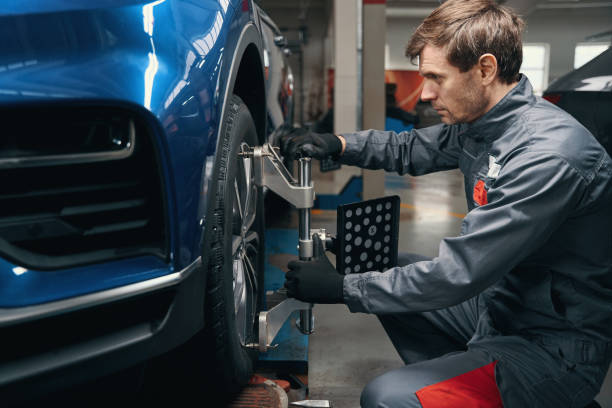
Spare-parts requirements depend on the measurement architecture, installed accessories, local service capability, and expected replacement lead time. Ask the manufacturer for a model-specific recommended parts list before ordering.
Match Spare Parts to the System Type
Do not use the same spare-parts package for every wheel alignment machine. Confirm which components apply to the selected model.
| System or Component | Parts to Consider | Important Note |
|---|---|---|
| 3D Camera Systems | Passive targets, target clamps, clamp protectors, camera or communication cables, and calibration accessories | Passive targets usually do not require batteries; confirm compatibility with the specific model |
| CCD Systems | Sensor batteries, chargers, communication cables or modules, and model-specific sensor-head components | Confirm whether replacement sensor parts require pairing, configuration, or calibration |
| Laser Systems | Laser modules and other components recommended for the selected model | Do not treat laser modules as universal spares across different machines |
| Computer Components | Industrial PC, display, printer, storage drive, and communication hardware | Follow the manufacturer’s approved replacement and configuration procedure |
| Software Recovery | License details, configuration backups, recovery instructions, and the authorized installation package | Copying or reinstalling software and vehicle databases may be restricted by licensing |
| Common Wear Items | Clamp protectors, clamp jaws, cables, connectors, and charging accessories | Confirm expected replacement intervals and whether these parts are covered by warranty |
Ask the supplier to separate the list into:
- Parts included under warranty.
- Recommended parts for the distributor’s warehouse.
- Parts that require factory calibration or pairing.
- Components that technicians can replace locally.
- Parts that must be returned to the factory for repair.
Accessories and Workshop Equipment
Confirm which items are included with the machine and which must be purchased separately:
- Wheel clamps or targets.
- Steering-wheel holder.
- Brake-pedal depressor.
- Printer and report accessories.
- Calibration tools.
- Turntables and slip plates, where required.
- Clamp extensions and adapters for the intended wheel range.
Turntables, slip plates, and alignment-lift components should be specified according to the workshop installation rather than automatically treated as spare parts.
Frequently Asked Questions
Which wheel alignment machines should a distributor stock?
Distributors should choose models based on local workshop budgets, vehicle types, bay layouts, and service volumes. A focused range may include entry-level CCD or 3D systems, fixed 3D models for dedicated alignment bays, and compact or mobile configurations for multi-purpose workshops. Heavy-duty, multi-axle, laser, or touchless systems should be added only when there is verified customer demand and suitable technical support is available.
What software and vehicle database details should buyers confirm?
Buyers need to verify the total vehicle count, aiming for tens of thousands of models across global and regional brands, including recent EVs, hybrids, and ADAS calibration data. Confirm that the database uses original OEM specifications, check the update frequency, and clarify whether updates are lifetime-included or require paid subscriptions.
Can wheel alignment machines be private labeled?
Yes, wholesale suppliers widely support OEM and ODM private labeling. Buyers can customize machine colors, logo placements, software interfaces, packaging, and user manuals. Standard machines usually offer a low minimum order quantity (MOQ), but custom branding typically requires an MOQ of 20 to 50 units.
What should be included in a trial order?
A trial order should consist of a single fully functional machine, complete with all core hardware, standard accessories, and the full control software package. Buyers should request calibration tools, shipment documentation, and a small spare parts kit. This allows you to accurately test measurement precision, software stability, and setup requirements before committing to bulk purchases.
Final Thoughts
Choosing wheel alignment machines for a wholesale catalog requires more than comparing prices or advertised vehicle counts. Distributors should evaluate each model’s measurement specifications, workshop compatibility, database coverage, software terms, customization limits, calibration requirements, and architecture-specific spare parts.
Where available, begin with a trial unit to review the supplied configuration, measurement repeatability, software functions, installation process, documentation, packaging, and technical support. Resolve any issues before moving to a pilot or repeat order. Contact our wholesale team to compare Guorange wheel aligners and discuss available branding, software localization, accessories, order requirements, and after-sales support.


