
Building a profitable tire changer portfolio requires more than comparing purchase prices. Distributors must match equipment capacity, niveau d'automatisation, tire compatibility, and after-sales support to the needs of their target workshops. Carrying too many similar models ties up capital, while an incomplete range can leave important customer segments uncovered.
This tire changer buying guide explains how to structure product tiers, confirm power and installation requirements, select accessories and spare parts, evaluate export packaging, and test a sample machine before placing a bulk order. Use these criteria to build a focused product range with less inventory overlap and stronger long-term serviceability.
Which Tire Changer Product Tiers Should a Distributor Carry?
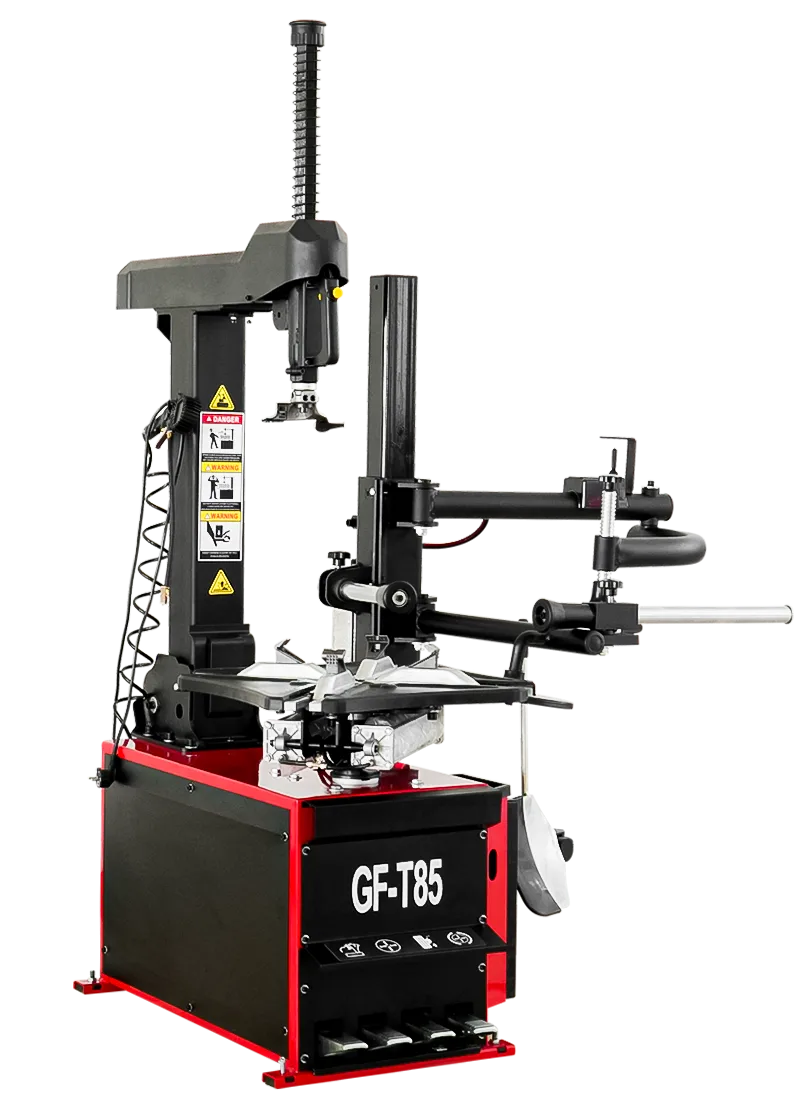
Most distributors should build their range around mid-tier professional machines, supported by an entry-level option and selected premium or heavy-duty models where local demand justifies them.
| Equipment Tier | Target Customers | Role in the Product Range |
|---|---|---|
| Entry-Level | Low-volume workshops and budget-conscious buyers | Provides an accessible starting price |
| Mid-Tier | Independent tire shops and general repair workshops | Covers the broadest professional demand |
| Prime | High-volume and specialty wheel shops | Adds advanced handling and product differentiation |
| Commercial | Truck tire dealers, fleet workshops and agricultural service providers | Serves a separate heavy-duty customer segment |
Core Equipment Tiers for Tire Service
- Entry-level machines: Basic swing-arm models suit workshops with limited tire volume and straightforward passenger-car work. They give distributors an accessible option for price-sensitive buyers without requiring multiple similar low-cost models.
- Mid-tier machines: Professional swing-arm and tilt-back models generally cover the widest customer base. They balance operating capacity, durability and price for independent tire shops handling varied daily workloads.
- Premium machines: Leverless, touchless or fully assisted configurations may suit high-volume shops and businesses that frequently service low-profile, run-flat or damage-sensitive wheels. Their exact tire and wheel compatibility must still be confirmed from the specifications of each model.
- Commercial machines: Heavy-duty models are designed for truck, bus, agricultural or OTR wheel assemblies. Because these machines serve a distinct market, distributors should add them only when there is sufficient local fleet or commercial demand.
Strategic Stocking Rules
- Build the range around mid-tier models: These machines usually address the broadest share of professional demand and should form the core of the catalog.
- Use entry-level models as a price anchor: One clearly positioned basic option is generally more useful than several machines with only minor differences.
- Add specialty equipment selectively: Premium and heavy-duty models should reflect confirmed demand from the distributor’s target customers.
- Limit functional overlap: Each model should have a clear reason to exist, such as a different wheel range, niveau d'automatisation, assist system or target application.
Distributors who need a clearer breakdown of swing-arm, tilt-back, leverless, and other configurations can review our guide to the main types of tire changer machines before finalizing their product tiers.
How Should You Cover Standard, Low-Profile, Run-Flat, and Light Commercial Tires?
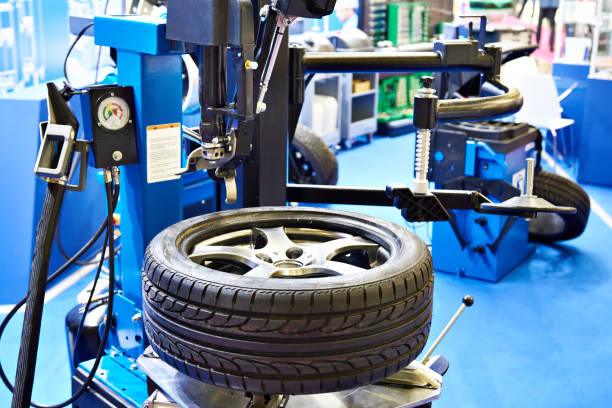
Distributors should match each machine’s approved wheel range, clamping system and assist features to the tire types handled by their target workshops. Tire compatibility cannot be determined from bead-breaker force or automation level alone.
Machine Requirements by Tire Type
| Tire Type | Typical Requirements | What the Distributor Should Confirm |
|---|---|---|
| Standard passenger-car tires | Secure clamping, controlled bead breaking and a suitable mounting head | Approved rim diameter, width and clamping range |
| Low-profile tires | Assist arms, controlled bead pressing and rim-protection components | Whether the tools can keep the bead in the drop center without excessive force |
| Run-flat tires | Compatible assist tools, controlled bead handling and approved procedures | The model’s approved tire range; leverless operation is not mandatory for every application |
| Light commercial tires | Suitable clamping range, load capacity, handling components and possibly a wheel lift | Approved wheel dimensions, load limits and vehicle category |
Features to Compare for Specialized Tires
When evaluating machines for more demanding tire applications, compare:
- Clamping range and method: Confirm the supported rim diameters, widths and internal or external clamping limits.
- Assist arms and bead-pressing tools: Check whether they can hold stiff sidewalls in the drop center without excessive manual force.
- Mounting-head design: Compare conventional, low-contact and leverless systems, together with their approved operating procedures.
- Bead-breaker capacity: Review its operating range, control and suitability for the intended tire types rather than relying on force figures alone.
- Wheel lifts: Consider these for workshops that regularly handle heavy wheel assemblies.
- Rim-protection components: Check the availability and replacement cost of plastic inserts, protective covers and non-marring contact points.
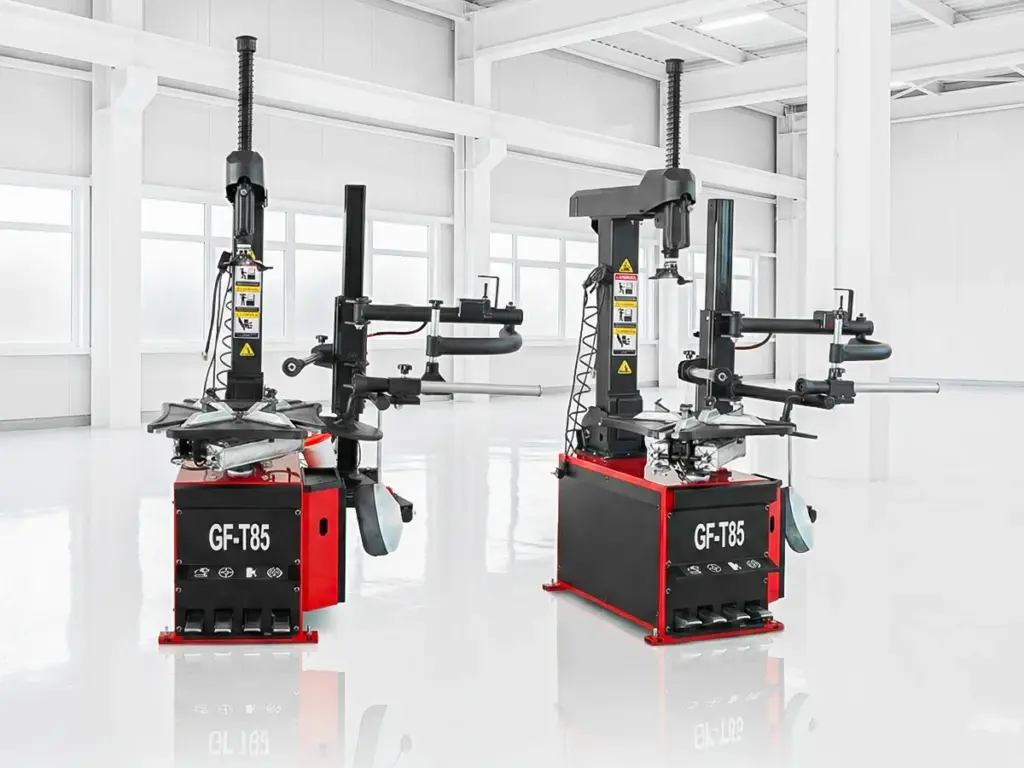
Buyers comparing a tilt-back configuration with an assist arm can review the GF-T85 semi-automatic tire changer as one available model example. Confirm its wheel range, utilities, and included accessories against the requirements of your target market.
Before adding a model to the catalog, test it with representative wheel and tire combinations from the target market. Confirm the approved tire range, required accessories and operating procedure in the manufacturer’s technical documentation.
Which Voltage, Prise, and Language Options Must Be Confirmed?
Avant de commander, distributors must confirm that each machine’s electrical configuration, connection method, safety labels and documentation match the requirements of the destination market.
Electrical Specifications to Verify
Voltage alone is not enough to determine whether a tire changer is suitable for a workshop. The required configuration depends on the machine, its motor and the electrical supply available at the installation site.
Confirm the following for every model and destination market:
| Item to Confirm | Verification Requirement |
|---|---|
| Rated voltage and range | Match the machine nameplate rating to the end user’s actual supply. |
| Phase and frequency | Confirm single-phase or three-phase power and 50 Hz or 60 Hz compatibility. |
| Rated current | Check circuit capacity, protective devices and starting-current requirements. |
| Connection method | Specify the correct plug or confirm whether qualified hardwired installation is required. |
| Motor and compressor | Verify compatibility with the workshop’s electrical and pneumatic utilities. |
| Local installation rules | Have the proposed circuit and connection checked against applicable local requirements. |
Distributors should record the approved electrical configuration on the quotation, purchase order and sample-approval documents. This reduces the risk of receiving machines that cannot be installed in the destination market without modification.
Language and Documentation Requirements
Operators must be able to understand the machine’s controls, warnings and safe operating procedures. Documentation requirements vary by destination, so distributors should confirm them before placing a bulk order.
The required package may include:
- An operating and maintenance manual in the required language;
- Safety labels and control-panel markings that operators can understand;
- Installation and electrical connection instructions;
- Parts diagrams and troubleshooting guidance;
- Applicable compliance documents and declarations;
- Translated training or operating materials where needed.
Do not assume that an English manual will satisfy every market. Confirm the required languages, document format and compliance materials with the importer or local authority, then include these requirements in the approved order specification.
Which Accessories and Wear Parts Belong in the First Order?
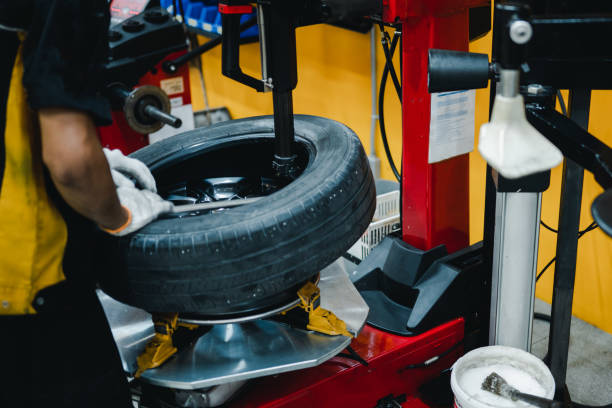
The first order should include model-specific protective consumables, commonly used service parts and only those accessories needed by the distributor’s target customers.
Protective Consumables and Service Parts
Small protective components may wear faster than the main machine. Including suitable replacements in the first order helps distributors support installed machines without waiting for international replenishment.
Selon le modèle, commonly requested items may include:
- Mounting-head protectors: Plastic inserts, nylon heads or protective covers that reduce direct metal contact with the rim.
- Clamping-jaw protectors: Replaceable covers designed for the machine’s specific jaw profile and clamping system.
- Bead-breaker protectors: Pads or covers that protect contact areas during bead breaking.
- Air-system service parts: Frequently replaced seals, hoses, connectors or valve components identified by the manufacturer.
- Model-specific wear items: Other consumable components listed in the parts manual or recommended spare-parts schedule.
Do not order parts based only on their appearance or generic description. Confirm the part number, compatible machine model, expected replacement frequency and supplier lead time before setting the quantity.
Accessories for Broader Tire Coverage
Accessories should reflect the actual applications of the distributor’s target workshops. Options may include:
- Assist arms and bead-pressing tools for stiff sidewalls and low-profile tires;
- Wheel lifts for heavier wheel assemblies;
- Motorcycle or ATV adapters where those customer segments are relevant;
- Jaw extensions or approved adapters for additional wheel sizes;
- Rim-protection kits for damage-sensitive alloy wheels.
These accessories do not automatically make every machine suitable for every tire type. Confirm the approved wheel range, load limits, installation requirements and operating procedures for each machine-and-accessory combination.
Set stocking levels according to the number of installed machines, expected consumption, replacement lead time and the consequences of a part failure. High-value, low-frequency components can usually remain available from the factory rather than being included in every initial order.
What Should You Check About Packaging, Rust Prevention, and Shipping?

Packaging should be selected according to the machine, freight method, transit time and storage conditions. The goal is to prevent movement, impact, moisture exposure and missing components during delivery.
Packaging and Corrosion Protection
Before shipment, confirm how the machine and its loose components will be secured. Depending on the route and storage conditions, suitable protection may include:
- A reinforced crate or transport frame: The machine should be fixed to its base, with moving parts restrained and loose accessories packed separately.
- Surface protection: Foam, corrugated material or protective covers can help prevent painted surfaces and exposed components from rubbing against the packaging.
- Moisture protection: Desiccants, moisture-resistant wrapping or sealed barriers may be appropriate for long ocean shipments or humid storage conditions.
- Corrosion prevention: Exposed metal surfaces may require suitable rust-preventive treatment. VCI materials are one possible option, but they are not necessary for every machine or shipping route.
- Compliant wood packaging: If solid-wood packaging is used, confirm that it satisfies the import requirements of the destination country and carries any required treatment markings.
Wood-packaging requirements also depend on the destination. For example, the USDA APHIS requirements for wood packaging material state that regulated wood packaging entering or transiting the United States must be treated and carry the required ISPM 15 mark. Importers should verify the applicable rules for their own destination market.
Ask the supplier to provide packaging dimensions, gross weight, lifting points and photographs of the packed sample. These details help distributors estimate freight costs and approve the packaging method before the bulk order ships.
Shipping and Arrival Inspection
- Load securing: Confirm that the packed machines will be blocked, braced or strapped appropriately for the chosen freight method.
- Handling information: Mark the package with its weight, orientation, lifting points and other relevant handling instructions.
- Packing records: Use a packing list to identify the machine, accessories, manuals and spare parts included in each shipment.
- Arrival inspection: Check the packaging for water exposure, impact, broken restraints or signs of mishandling before unpacking.
- Damage documentation: Photograph the external packaging and affected components, record missing items and notify the responsible party within the required claim period.
The distributor should agree on the packaging specification, inspection method and damage-reporting process before shipment rather than relying on a general promise of “export-standard packaging.”
How Should You Approve a Sample Machine?
Approve a sample only after confirming that it matches the agreed specifications, operates correctly with representative wheels and has no unresolved safety or functional defects.
Initial Inspection
Before operating the sample, compare its nameplate, components and configuration with the approved quotation and technical specification.
- Electrical configuration: Confirm the voltage, phase, frequency, plug or connection method and rated current.
- Pneumatic system: Inspect hoses, fittings and controls for damage or leakage. Where fitted, check the filter, regulator and lubricator components.
- Controls and safety features: Test pedals, switches, emergency controls and guards according to the operating manual.
- Structure and assembly: Inspect the frame, welds, arms, fasteners, turntable and bead-breaker assembly for visible defects, looseness or unexpected movement.
- Included materials: Verify the accessories, spare parts, manuals, labels and compliance documents against the packing list and order specification.
Machine weight alone does not establish durability. Evaluate the material specifications, qualité de construction, movement under load and available test records instead.
Functional Testing
Test the sample with representative tire and wheel combinations from the distributor’s target market.
| Test Area | Approval Check |
|---|---|
| Clamping and rotation | Confirm approved wheel sizes are held securely without unexpected slipping or stalling. |
| Bead breaking | Check positioning and controlled operation across the intended tire range. |
| Mounting and removal | Test standard tires and any specialized applications claimed for the model. |
| Rim protection | Inspect each test wheel and the fit and condition of protective contact components. |
| Assist systems | Test helper arms, bead-pressing tools, wheel lifts or leverless components where included. |
| Usability and maintenance | Evaluate the controls, instructions, lubrication points and service access. |
Record the test conditions and results with photographs or video. Document defects, agree on corrective actions and verify the revised sample or evidence of correction before approving bulk production.
How Should You Plan Replenishment, Garantie, and After-Sales Support?
Spare-parts planning should reflect the installed machine population, actual consumption, supplier lead times and the operational impact of each component.
Replenishment of Consumables and Parts
Group parts according to replacement frequency, cost and downtime risk:
| Parts Category | Examples | Stocking Approach |
|---|---|---|
| Protective consumables | Mounting-head inserts, jaw covers and bead-breaker pads | Keep quantities based on installed machines and actual replacement rates. |
| Routine service parts | Seals, hoses and connectors | Replenish according to maintenance records and consumption. |
| Critical downtime parts | Selected valves, switches, pedal components or control parts | Consider local stock when failure stops operation and replenishment is slow. |
| High-value, low-frequency parts | Motors, cylinders and major assemblies | Usually keep available from the supplier unless the installed base justifies local stock. |
Do not apply a fixed three- or six-month inventory rule to every distributor. Set minimum and reorder quantities using the number of installed machines, replacement history, supplier lead time and required customer response time.
Warranty and Technical Support
Warranty coverage varies by supplier and model. Avant de commander, confirm:
- The warranty period and its starting date;
- Which mechanical, pneumatic and electrical components are covered;
- Which consumables and wear parts are excluded;
- Whether replacement-part freight and labor are covered;
- What evidence is required for a claim;
- Who performs diagnosis and repairs;
- How quickly technical support and replacement parts are available.
Guorange provides a 12-month warranty on the complete machine, remote technical support, and spare-parts assistance. On-site repair is not included, so distributors should establish a local process for inspection, basic maintenance, and component replacement.
Keep installation records, maintenance logs, photographs, videos and fault descriptions for each claim. Clear documentation helps the supplier diagnose problems remotely and identify the correct replacement parts.
Foire aux questions
Which tire changer models should a distributor carry?
Most distributors should carry an entry-level model, one or two mid-tier professional machines, and a premium option for more demanding tires. Add motorcycle, light commercial, or heavy-duty machines only when local customer demand supports those segments.
Can one tire changer handle both standard and run-flat tires?
Oui, some professional tire changers can handle both standard and run-flat tires when equipped with compatible assist arms, bead-pressing tools and rim-protection components. Confirm the approved tire range and operating procedure for the specific model. A dedicated machine may be useful for workshops with consistently high run-flat or low-profile tire volume.
Which tire changer wear parts should be included in the first order?
A first order may include model-specific mounting-head protectors, jaw covers, bead-breaker pads, seals and other frequently replaced parts. Confirm part numbers, expected replacement frequency and supplier lead times before setting quantities. High-value components are usually ordered separately unless local stock is justified.
How should a tire changer sample be inspected?
Compare the sample with the approved specifications, then inspect its structure, contrôles, electrical connections and pneumatic system. Test it with representative wheels and tires within the model’s approved range. Record any defects, confirm corrective actions and verify the final configuration before approving a bulk order.
Pensées finales
A strong tire changer catalog does not need to cover every available configuration. Most distributors can build around a small number of clearly differentiated models, then add premium, motorcycle or heavy-duty equipment only where local demand supports it. Electrical compatibility, tire coverage, accessories, spare parts and after-sales arrangements should all be confirmed before the first bulk order. For more detail on matching equipment to an end user’s workload, types de véhicules, and workshop layout, lisez notre guide pour choosing a tire changing machine for a workshop.
Start with a sample machine and test it against the approved specifications and representative tire applications. Document any issues and resolve them before approving production. Contact our wholesale team to discuss your target customers, required configurations and tire changer product range.


