
A car lift carries vehicles over people, so buyers judge a manufacturer on evidence rather than on rated capacity and price alone. The useful question is not whether a supplier claims a standard, but whether the exact model you intend to import has documentation that supports the claim.
This guide walks through the checks a buyer can actually run: identifying the model and its supplier, reading certification and conformity claims, requesting test and document records, clarifying installation and after-sales responsibilities, and arranging an audit or third-party inspection before a volume order.
What Should You Verify About the Supplier?
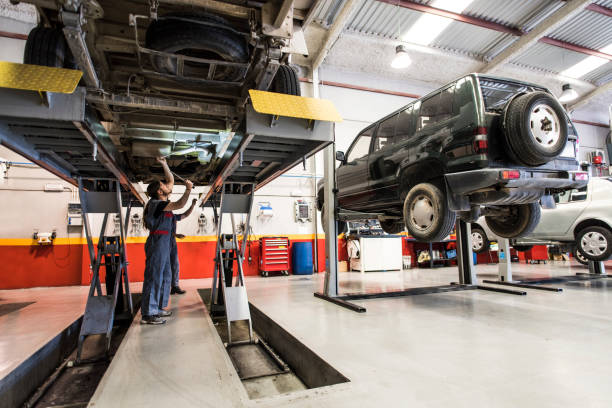
Fix the legal entity, the exact model, and the delivered configuration first. Every later check either attaches to that model or it does not count.
Identify the Entity Behind the Product
Establish who designs, builds, and takes responsibility for the lift. A trading company, a branding owner, and the factory that welds and assembles are three different parties, and conformity documents name only one of them. Ask for the registered company name and address, the manufacturing site used for your orders, the models built there, and the export history to your region. Where a private label arrangement applies, confirm in writing whose name appears on the technical file and who answers a field defect.
Fix the Exact Model and Configuration
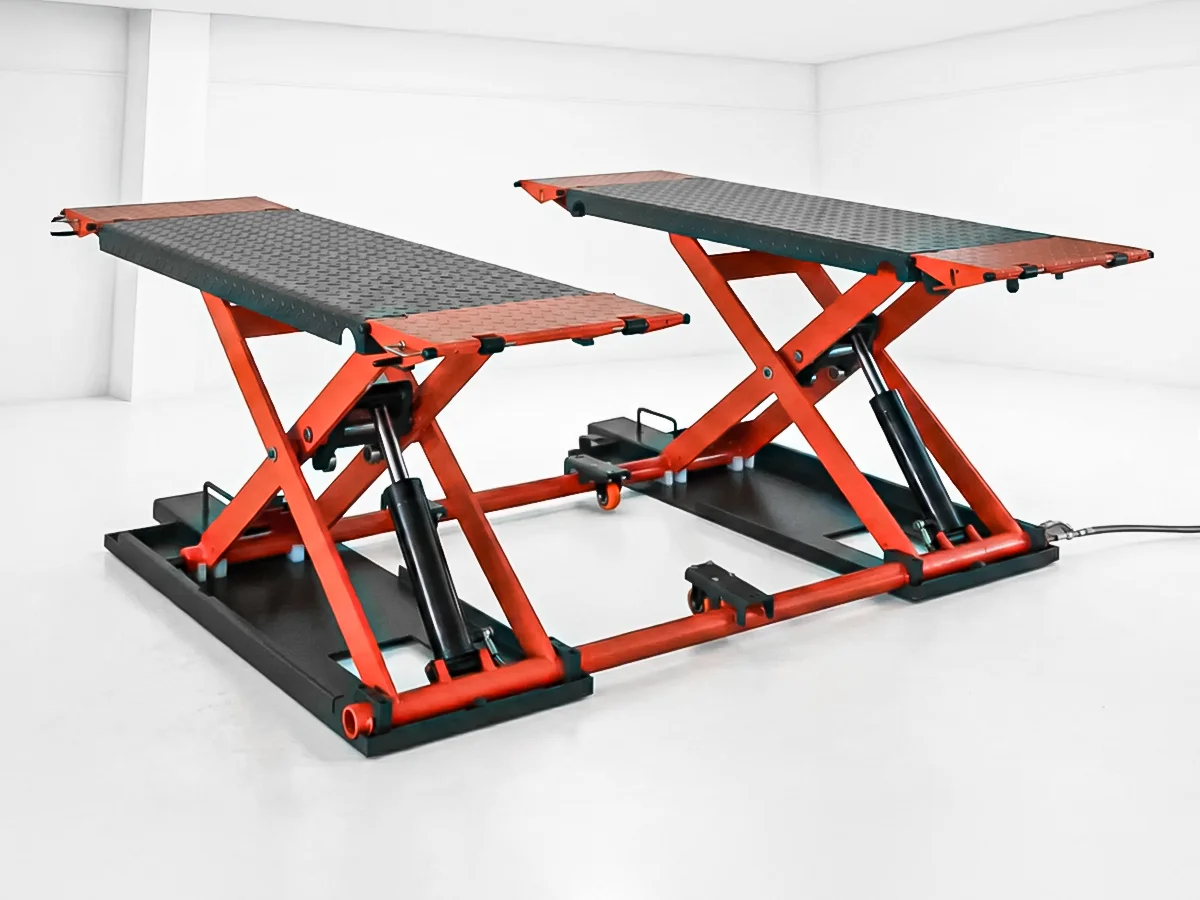
Buyers routinely receive a specification sheet for one variant and a delivered machine of another. Tie the quotation to a model code, a version or revision, and an option list, then check the same identifiers on the nameplate, in the manual, and on the packing list. Our car lift range lists each model with its published capacity, lifting height, power supply, and platform dimensions, and the GF-L12E mid-rise scissor lift page shows the format we supply for quotation.
- Lift type and layout fit: scissor, two-post, four-post, or mobile column, chosen against your ceiling height, floor space, door clearance, and the vehicles you actually service. 에이 vehicle lift types guide helps you narrow this before comparing suppliers.
- Physical limits: rated capacity, maximum lifting height, minimum lowered height, platform length and width, clearance between platforms, and overall footprint.
- Site inputs: supply voltage, 빈도, and phase, plus control-console voltage and hydraulic working pressure.
- Delivery scope: standard equipment, options, and the parts you are expected to source locally.
How Do You Read Certification and Conformity Claims?
Third-party product certification, self-declared conformity marks, quality-management certificates, and trade-association membership are four different statements. Read them separately.
ALI Certification Is Tied to a Model and a Label
For North American projects that require ALI certification, verify the exact model in the ALI directory of certified lifts and confirm that the delivered lift bears the ALI Gold Certification Label. Manufacturer membership, component-level electrical marks, or statements such as “certification pending” do not establish that the complete lift is ALI Certified. The Automotive Lift Institute states on its lift certification FAQ that there are no conditional, temporary, or partial certifications, and that only lifts bearing its gold certification label are certified.
CE Marking Is a Manufacturer Declaration
For the European market, review the applicable conformity assessment, EU Declaration of Conformity, technical documentation, and CE marking for the exact model. Do not describe CE marking by itself as independent third-party certification. The European Commission’s page on CE marking explains what the mark indicates and who is responsible for placing it on a product.
Where EN 1493 is specified for the destination market, request model-specific test and conformity documentation against the applicable edition of that standard. Each document should name the published edition it cites, since a reference to a draft designation is not a reference to a published requirement.
Marks, Memberships, and Audit Evidence Are Not the Same Thing
EAC marking and other regional approvals follow their own procedures and are usually documented by certificate numbers you can look up with the issuing authority. An ISO 9001 certificate says something about a management system, not about one lift model. Use the table below to match each claim to the evidence that supports it.
| Claim you may see | What it actually states | Evidence that supports it |
|---|---|---|
| ALI Certified lift | A specific model was certified by the third-party program | The model appears in the ALI directory, and the delivered unit carries the ALI Gold Certification Label for that configuration |
| Manufacturer is an ALI member | Membership status only | Does not certify any model; check the directory per model |
| CE marked for Europe | The responsible party declares conformity with applicable EU requirements | EU Declaration of Conformity naming the model, the requirements applied, the edition cited, and the party that signed |
| ETL or similar electrical mark | Often applies to an electrical component or assembly, not the complete lift | Scope of the mark, the listed item, and how it relates to the whole lift |
| ISO 9001 certified factory | A management-system certificate covering a scope and site | Valid, in-scope certificate; note that management-system certification does not prove that a specific lift model meets a product safety standard |
| “Tested to 150%” or similar figure | One number out of a full test protocol | The complete test basis described in the next section |
One more caution for the North American market: product listings that show ALI names, logos, or labels do not by themselves prove participation in the certification program. The Institute publishes warnings about unauthorised use of its marks on its lift certification claims page, and directs buyers to check the directory before purchasing.
How Should Capacity and Test Evidence Be Checked?
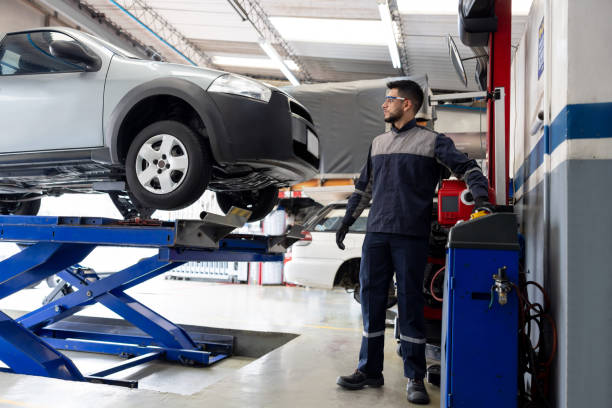
Ask for the whole test basis behind a capacity rating. A single overload percentage cannot replace it, and no test result on its own proves that a lift will never fail.
Request the Complete Model-Specific Test Basis
Ask for the applicable standard, rated load, static and dynamic test conditions, load distribution, safety-device tests, and whether the evidence comes from type testing, certification surveillance, or routine factory inspection. Do not treat one overload percentage as a substitute for the full test protocol.
Different regimes describe these conditions differently, and a figure quoted by one supplier is rarely comparable with a figure quoted by another. Product pages in this category may state static and dynamic overload ratios, working pressure limits, or lift and lowering times; treat those figures as claims tied to a model until the underlying report identifies the specimen, the load arrangement, the number of cycles, and the acceptance criteria used.
Traceability, Nameplates, and Type Against Routine
Confirm that the tested specimen corresponds to what ships. Ask which serial or unit number the report covers, whether the tested configuration matches the ordered options, and how production units are checked afterwards. Verify that the delivered lift carries the required model identification, rated-capacity marking, warnings, and any applicable certification label before installation and commissioning. Those markings come from the certified or declared production process; they are not labels an installer can add on site.
Safety Devices and Failure Behaviour
Request the records for the protective features your operation depends on: mechanical locks and their engagement, hydraulic failure protection such as rupture or flow-restriction devices and descending control, limit switches and cutoffs, synchronization between platforms, grounding and emergency stop function, and pinch or shear clearances. Ask how each was tested and what the acceptance criteria were. Then confirm the inspection interval the manufacturer specifies, since in-service inspection duties sit with the owner and the local rules that apply.
What Document-Control Evidence Should a Buyer Request?
Do not take a description of a system. Ask for dated records you can match to your own order and serial numbers.
A supplier that controls its drawings can answer the following questions with documents rather than assurances. Use them as your request list during qualification.
- Controlled drawings: is there a revision history for the structural, hydraulic, and electrical drawings of your exact model, with identification, approval, and effective date on each sheet?
- Change approval: who authorises a design change, and is there a change record showing reason, affected parts, and implementation date?
- Serial-to-version link: for a serial number you already own, which drawing revisions and option set does it correspond to?
- Supplier changes: if a critical purchased part such as a cylinder, pump, lock, or control console changes supplier or specification, are customers notified?
- Superseded documents: how are obsolete drawings and instructions withdrawn from the production floor and from the spare-parts catalogue?
- Record retention: define retention periods according to the destination-market regulations, applicable conformity regime, certification-program requirements, contract terms, and the expected service life of the lift. Different obligations may apply to manufacturers, importers, installers, inspectors, and equipment owners.
Manuals and labels belong to the same discipline. Ask which language and which revision ships with your order, whether a superseded manual can be downloaded, and whether capacity plates and warning labels match the standard used at destination. Buyers comparing suppliers across categories can reuse the same request list; our article on finding reliable workshop equipment suppliers covers that screening step.
How Should Structural, Hydraulic, and Electrical Controls Be Audited?
Each engineering discipline has its own verification path. A purchasing audit asks what documentation can be produced per unit, and to what level of traceability.
Structure and Welding
Load-bearing behaviour depends on design calculations, material grade, and weld quality. Rather than expecting a buyer to judge them, ask what records exist: structural calculations and load combinations, steel grade certificates tied to heat, batch, or lot numbers, the welding procedure specifications used on loaded joints and the qualification records for the operators and equipment, plus the in-process inspection method for those welds and what happens when one fails.
Hydraulics and Descent Control
Hydraulic requirements change with lift type, rated load, and the standard applied, so treat any generic figure with caution. Ask for the circuit schematic, the working and proof pressure of the cylinders, the protection against loss of pressure during descent, the filtration and moisture control specified for the fluid, the leak test performed on each unit, and the maintenance interval for fluid and hoses.
Electrical Systems and Controls
Ask for the wiring diagram, component ratings, enclosure protection type, supplied voltage, 빈도, and phase, and the tests carried out before shipment such as grounding continuity and insulation resistance. Confirm which parts of the electrical supply are the buyer’s responsibility on site, and whether the console, locks, and limit switches are covered by any electrical mark and at what scope.
Assembly, Adjustment, and Final Check
Finish with the line. Ask for the assembly and adjustment instructions used, the factory test checklist signed for each unit, the functional checks for locks and synchronization, the packing method and protection for transport, and how a finished unit’s records are retrieved later by serial number.
What Installation and Commissioning Support Can You Expect?

Treat site planning, trained installers, remote support, and operator training as questions to ask, not as services that automatically come with the machine.
Site Preparation Before Shipment
Ask for the installation drawing for your model: floor area and clearances, floor flatness and bearing expectations, anchor method if the design is anchored, power feed requirements, and any drainage or door-height constraint. Compare that sheet with what your building can deliver, and get the gaps in writing before the container is booked. Buyers weighing lift type against their floor should read our comparison of two-post and four-post car lifts before the layout conversation.
Who Installs and Commissions the Lift
Ask whether the supplier or its distributor performs installation and commissioning in your market, who pays travel and accommodation, what the commissioning checklist covers, and what documentation you receive afterwards: dated checklist, initial functional test results, and handover record. Where no authorized installer exists, confirm whether your own contractor may perform the work, what qualifications that person needs, and how self-installation affects warranty and any certification on the machine. The same question applies to inspection duties, which commonly sit with the owner under local rules.
Training and Ongoing Assistance
Ask what training is actually available and in what form: manuals and videos in your language, a remote session, or on-site instruction. Establish how technical questions are handled after handover, in which languages and hours, with what response time, and whether parts replacement is expected to happen in your workshop or through returned components.
How Are Warranty, 예비 부품, and Defects Managed?

Compare warranty terms in writing across suppliers, because the useful differences sit in scope and process rather than in a length of cover.
What to Compare in a Warranty
Read the clause rather than the headline figure, and compare the following items across the quotations you hold: when cover starts, since shipping, delivery, customs clearance, and commissioning dates differ; which period applies to structure, hydraulic components, electrical components, and consumables; whether labor, travel, and freight are included or excluded; what counts as normal wear; what evidence a claim requires and within what time the supplier responds; how an authorised repair is recognised; and for how long spare parts remain available for that model.
Replacement Parts and Certification Status
Safety-critical replacement parts should meet the manufacturer’s specifications and applicable certification requirements. Before using an alternative part, confirm its suitability, 선적 서류 비치, and effect on the lift’s certification and warranty with the manufacturer or responsible service organization. Ask which wear and safety parts you should hold on hand, how they are identified on the drawing or exploded view, and what the lead time is when they are not stocked locally. On a certified lift, note that altering the configuration with non-certified options or accessories can affect the certified status of that machine for as long as the alteration remains.
Field Defects and Corrective Action
Do not assume a fixed remedy. How a supplier handles a reported defect depends on severity, the investigation finding, the contract, and any legal reporting duty in the destination market. Ask what the process is: how a report is logged, who inspects, what interim guidance users receive, how affected serial ranges are identified, and what form a correction takes, whether a repair kit, a retrofit part, an updated instruction, or an on-site visit, and who pays.
How Do You Verify Before a Volume Order?
Choose verification that fits the product. For a lift, review an installed reference unit, witness agreed factory tests, or commission a qualified third-party inspection of a representative model.
A car lift is large, fixed to the building, and governed by safety rules, so a buyer-side sample test is rarely the practical route. Your own inspection can usefully cover appearance, workmanship, nameplate and marking content, completeness of documents, and function of locks, controls, and emergency stop. Structural and load testing that supports a capacity claim should be carried out by a party with the facilities, instrumentation, and procedures to do it, and witnessed or reviewed as records rather than attempted in your workshop.
| Verification Activity | What You Can Confirm Yourself | What Needs Records or a Qualified Party |
|---|---|---|
| Factory audit | Production flow, in-process checks, storage and packing, test station in use, personnel at the workstations | Welder qualifications, calculations, calibration status, traceability from serial to records |
| Reference installation review | Machine condition after service use, availability of spares, response from the local supplier, operator feedback | Inspection history and any field correction applied to that unit |
| Witnessed test | That a documented test was performed on your unit, and how it was carried out | Load values, instrumentation, acceptance criteria, and the report behind the result |
| Third-party inspection | An independent finding on pre-shipment condition and documentation completeness | Safety-standard conformity, which requires a laboratory or certification body working to a published standard |
| Document review | Consistency of model codes, revisions, certificates, and markings across the package | Validity of a certificate, which you verify with the issuing body, not with the supplier |
Close the pre-order review with the commercial terms that carry the risk: quotation validity, lead time, trade term with named place, inspection point before shipment, and the documents delivered with the goods. Distributors building a lift programme usually need this check repeated per model rather than once per factory; our wholesale car lift buying guide covers the range and stocking side.
자주 묻는 질문
How do I evaluate a car lift manufacturer?
Work from the model outward. Confirm the legal entity and manufacturing site, fix the exact model and delivered configuration, then ask for model-specific documents: test basis, conformity or certification evidence for your market, controlled drawings, serial traceability, 설치 요구 사항, and written warranty and spare-parts terms. Verify whether the exact lift model—not merely the manufacturer—is listed under the ALI Lift Certification Program when ALI certification is required.
What documents should a car lift manufacturer provide?
Ask for the installation, operation, inspection, and maintenance manual for your model; the rated-capacity and warning label content; the conformity or certification document that applies at destination, named to the model and edition it cites; the factory test record for the shipped unit; the packing list and option list; and the drawings you need for site preparation. Where a document is issued by a third party, verify it with that body rather than accepting a scanned copy.
How is a car lift’s rated capacity verified?
By a documented test basis, not by a single figure. Request the applicable standard, rated load, static and dynamic conditions, load distribution, safety-device tests, and whether the result is type testing, certification surveillance, or routine factory inspection. The testing regime differs between programs, and a capacity claim is only as strong as the report behind it.
What quality records should be kept for a lift?
Keep the purchase contract and specification, the delivered documents, the installation and commissioning record, inspection and maintenance reports, parts replacements, and any field correction. Set retention periods according to the destination-market regulations, applicable conformity regime, certification-program requirements, contract terms, and the expected service life of the lift; different obligations may apply to manufacturers, importers, installers, inspectors, and equipment owners.
Does a non-original replacement part void the warranty?
You cannot assume either outcome, so ask before you fit one. Safety-critical replacement parts should meet the manufacturer’s specifications and applicable certification requirements. Before using an alternative part, confirm its suitability, 선적 서류 비치, and effect on the lift’s certification and warranty with the manufacturer or responsible service organization.
Is ISO 9001 enough to prove a lift is safe?
아니요. Review the supplier’s quality-management system, which may include a valid ISO 9001 certificate, while recognizing that management-system certification does not prove that a specific lift model meets a product safety standard. Product-level evidence comes from the test basis and from any certification or conformity document naming that model.
최종 생각
Evaluating a car lift manufacturer requires more than reviewing rated capacity and price. Buyers should verify the exact product model, applicable destination-market requirements, certification or conformity evidence, controlled technical documents, test records, installation conditions, and after-sales responsibilities.
Before placing a volume order, compare model-specific documents across suppliers and arrange an appropriate factory audit, witnessed test, reference installation review, or qualified third-party inspection. Send us your lift type, capacity, floor space, power supply, and destination market through our contact page, and we will reply with current specifications and the documentation available for your intended market and lift configuration.


