
A car lift quotation can come from the factory that built the equipment, an export trading company, an authorized distributor, or a local service firm. The label in the email header tells you less than the name on the contract. Before comparing prices, establish which legal entity signs the order, issues product documentation, performs the installation, accepts a warranty claim, and ships a spare cylinder three years from now.
This guide separates those four roles and lists what to confirm with each. Verification of certification and factory capability follows a different sequence, so we cover it in how to evaluate a car lift manufacturer and reference it here only where a purchasing decision depends on it.
Supplier and Manufacturer Roles Defined
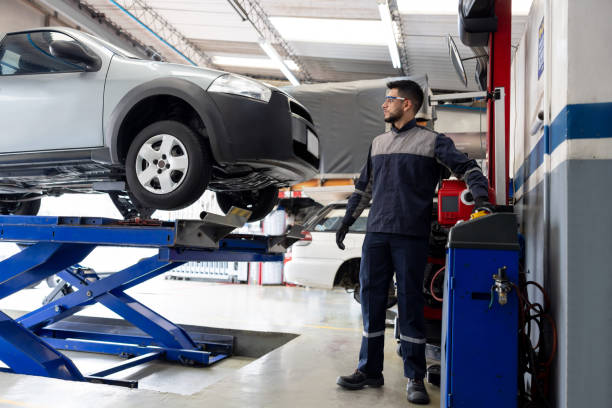
“Supplier” describes who sells to you, not how the lift was made. A manufacturer selling its own lifts is also a supplier, and a trading company selling nothing but lifts is not a factory. Assign responsibilities by contract rather than by title.
Four roles appear repeatedly in lift procurement, and one company can hold two of them at once. A factory may sell direct while also authorizing dealers in your market. A distributor may import under its own name and subcontract installation to an independent service firm.
- Direct manufacturer: engineers and builds the lift, issues model documentation, and answers for product defects within the terms of sale.
- Export trading company: consolidates products from one or more factories, exports under its own name, and usually handles no site work.
- Authorized distributor: buys finished lifts for resale and may hold local inventory, with installation and site service provided in-house, subcontracted, or not at all.
- Local installation and service provider: performs installation, inspection, and repair under its own scope of work, sometimes for brands it does not sell.
A workshop that assumes the seller built the lift may later discover that the technical manual names a different company, and that spare parts have to be sourced through a third party. Confirm the identity of each responsible party in writing before ordering. Certification follows the same logic: an ALI certification applies to a specific certified model rather than to everything a factory sells. Where seller identity is the question, our supplier screening guide sets out the checks.
Who Handles Each Part of the Order?
Every row below should be answered by a named party in your paperwork. A blank cell is a commercial risk, whatever the seller’s title.
| Responsibility | Direct manufacturer | Export trader | Authorized distributor | Local service provider |
|---|---|---|---|---|
| Signs the sales contract and issues the invoice | Usually itself | Usually itself | Usually itself | Only for its own service scope |
| Issues model drawings, 매뉴얼, and conformity documents | Expected to hold these | Relays documents from the factory | Relays documents from its supplier | Does not issue them |
| Performs installation and commissioning | Confirm whether it sends staff or a partner | Normally excluded | Commonly, in-house or subcontracted | 예, within its quoted scope |
| Receives and processes warranty claims | The party named in the warranty text | Depends on contract terms | Often the first contact | Repairs; claim authority needs confirmation |
| Holds spare parts and states lead time | Confirm what is held and where it ships from | Confirm what it stocks | Confirm warehouse location and stock list | Confirm coverage area and parts source |
| Handles import clearance and destination delivery | Depends on the agreed Incoterm | Depends on the agreed Incoterm | Often handled when goods already sit in market | Not applicable to imported units |
Treat the cells above as questions, not assumptions. A manufacturer can sell you a lift and leave every site task to an unrelated contractor; a distributor can hold stock, install, and repair while never touching the design. Where a duty matters to your operation, get it in writing with the party’s legal name, and keep that document with the purchase order.
How Do You Compare Quotations on Equal Terms?
Compare offers only after you standardize the model specification, trade term, delivery point, installation responsibility, and warranty scope. Until then, two prices are not for the same purchase.
Rebuild each quotation against the checklist below before reading the totals. Differences concentrate in scope rather than in the unit price, and a lower figure frequently reflects an item that someone else has stopped covering.
| Item to standardize | What to request in each offer |
|---|---|
| Model and rated capacity | Exact model code, lifting capacity, platform or runway length, rise height, and drive type |
| Model-specific accessories and options | Approved adapters, arm extensions, or rolling jacks where applicable, with each included and excluded item listed separately |
| Trade term and delivery point | The published Incoterm rule plus named place or port, and who arranges onward transport |
| Delivery basis | Whether the unit is in stock now or built after order, stated as a date rather than a range alone |
| Installation responsibility | Who supplies labor, tools, and anchoring materials, and what site preparation you must complete |
| Warranty text | The document itself: covered parts, exclusions, claim contact, and who pays labor and freight |
| Spare parts commitment | Named parts, stock location, standard lead time, and the price basis for post-warranty orders |
| Product documentation | Manual, wiring and hydraulic diagrams, nameplate photo, and the conformity document required at destination |
Freight terms decide how much of the journey sits with you. 그만큼 International Chamber of Commerce publishes the current Incoterms® rules with the obligations each one assigns to buyer and seller, and the incoterms section of our wholesale car lifts buying guide applies them to lift shipments. Confirm the exact rule and named place in the proforma invoice instead of relying on a three-letter abbreviation in an email.
Price differences between channels should be traceable to a scope line above. Do not assume that any route is cheaper by a fixed margin: an import price that excludes clearance, inland delivery, installation, and a service call can land higher than a locally invoiced unit that includes them. Incoterms® rules describe obligations in cross-border sales, so do not press a local seller into quoting under them. When you compare a delivered price for goods already in market with an export quotation, map both onto the same delivery location and the same installation and service scope, then compare the totals and the responsibilities behind them.
What Changes When You Modify the Configuration?
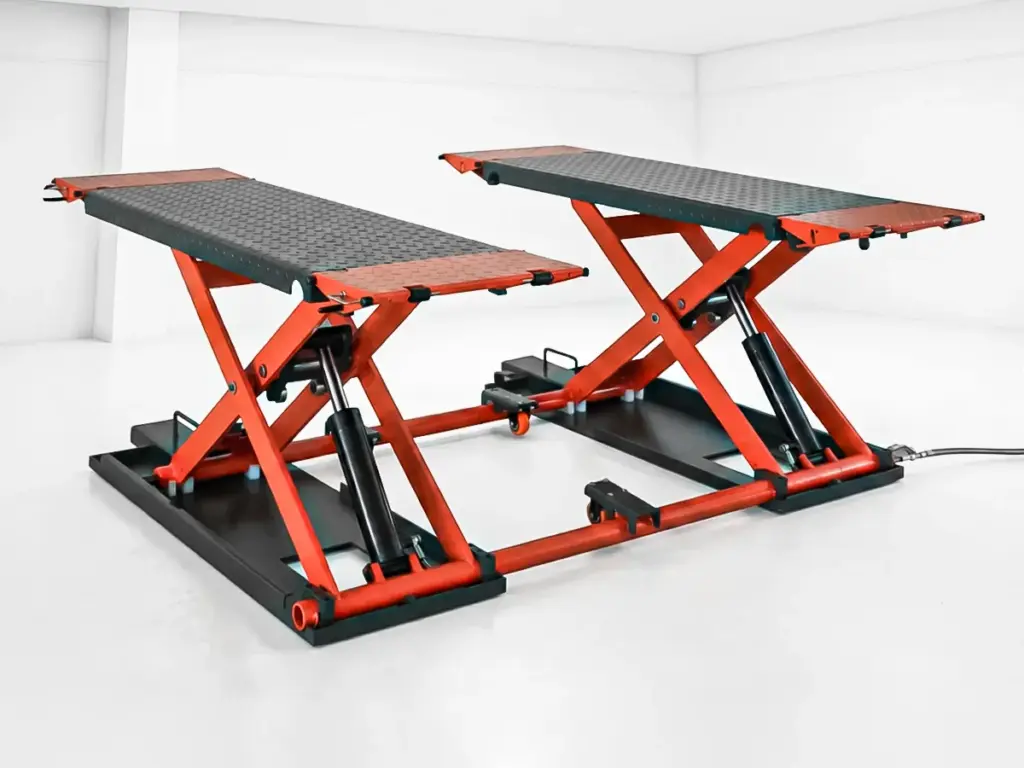
Ask who can change a specification and what has to be re-checked afterwards, rather than assuming the seller on the invoice controls the design.
Engineering Access and Customization Control
Structural changes, capacity changes, and safety-related revisions require written confirmation from the party that holds the design and the model documentation. Confirm the engineering contact channel before you place a customized order, and put each requested change in writing with the model code attached.
Any change to a load path, locking arrangement, hydraulic circuit, or control function requires reassessment of the applicable conformity or certification scope for that model. A modification can move a unit outside the documentation that accompanied it, and a trading company or distributor cannot authorize that on the factory’s behalf without written support.
Commercial Configurations and Approved Options
Sellers routinely offer options that do not alter the design: adapter sets, arm extensions, or a bundled service plan. Request the formal accessory list for the exact model with each part code, and ask whether an item is a documented option in that list or a locally fabricated part. Bundles that combine a lift with unrelated equipment are a commercial arrangement, so keep the specification of each machine separate in the order.
Documents That Must Arrive With the Lift
Packaging protects the machines in transit; it says nothing about their conformity. What you should verify on arrival is the paperwork: the installation and operation manual for that model, wiring and hydraulic diagrams, the rated-capacity nameplate matching the order, and the conformity or certification document that the destination market requires. Ask whose name appears on each document, whether it matches the model nameplate, and which published edition of a standard each one cites. ALI certification follows the same model-by-model logic, as the Automotive Lift Institute explains.
How Do You Verify Installation and Parts Support?

Installation, stock, and repair coverage are the service items a distant seller most often subcontracts. Confirm them before the order, when the choice is still yours.
Installation Requirements Follow the Model and Local Rules
Concrete thickness, anchor type, torque values, and clearance requirements come from the manual for the specific model, and local building or electrical requirements add further conditions. Ask the installer which document governs each figure and request the completed installation record after the work. Treat a generic installation checklist offered as universal with caution: it may not match the model you bought or the rules at the site.
Stock Location, Parts Lead Time, and Service Coverage
Ask three concrete questions: where the parts are physically held, what lead time applies to a worn seal kit or a hydraulic hose ordered after the warranty period, and how far the seller’s own technicians travel. A stated response window means little until you know who employs the technician and whose van carries the part. If your site sits outside the stated coverage area, price the travel cost before you compare quotations.
Who Accepts the Claim and Who Pays What
Read the sales contract first to identify the party that carries the warranty obligation, then separate that obligation from a producer’s product liability under the law that applies at the site. The practical question is narrower: who receives the claim, who approves parts, and who pays labor, travel, and freight. Confirm each of those in the same document, and record the contact route for a claim on every machine in the order.
Where a batch problem surfaces, responsibility for corrective action also depends on contract terms and applicable law. Establish in writing who is notified, who funds the remedy, and who performs work at your site. That clause matters most when the seller and the manufacturer are different companies in different countries.
Which Channel Fits Your Situation?
Match the channel to the constraint you cannot move: the install date, the service radius, the specification, or the number of sites.
| Situation | Options worth quoting | What decides it |
|---|---|---|
| One lift, fixed opening date | In-stock distributor offer and factory order, priced in parallel | Which offer names a delivery date and an installer for that date |
| Several identical bays, no fixed date | Direct manufacturer or export trader | Whether you can absorb clearance, inland delivery, and installation coordination |
| Private label or a changed specification | Party that holds the design and model documentation | Written confirmation of what can change and how conformity is re-established |
| Site outside a dense service area | Seller with confirmed coverage, or local provider plus remote parts supply | Travel cost, parts lead time, and who attends a failure in week two |
| Mixed equipment for one workshop | Single seller for convenience, or separate orders per machine | Whether one warranty and one service contact genuinely covers every brand supplied |
If the lift type is still open, settle that question first: comparing two-post and four-post lifts covers the floor space, runway length, and vehicle access each arrangement assumes.
Send the same specification to both routes and compare the completed checklists. The question worth answering is not which type of company a listing page claims to be, but which party accepts which duty, and that answer belongs in the contract rather than in a product brochure.
자주 묻는 질문
What is the difference between a car lift supplier and a manufacturer?
A manufacturer builds the lift and holds its design and model documentation. A supplier is whoever sells it to you, which can be that manufacturer, an export trading company, or a distributor. Because the roles overlap, compare what each party agrees to do in writing: contracting, 선적 서류 비치, delivery, installation, 보증 처리, and spare parts.
Is it cheaper to buy car lifts directly from a factory?
Not automatically. A factory invoice may exclude import clearance, inland delivery, installation, and a service call, while a locally invoiced unit may include them. Put both offers on the same trade term and delivery point, add the service scope, and compare the resulting totals and the responsibilities behind them.
Can a supplier provide private-label car lifts?
A supplier can offer private labeling when it holds written authority from the party that controls the model. Ask who manufactures the specific model code, request documentation in that manufacturer’s name, then confirm who is identified as the manufacturer or other responsible party on the nameplate and destination-market documents, and whether the proposed private-label configuration remains within the applicable certification or conformity scope.
Who provides installation and warranty support?
Whichever party the contract names. Installation figures should follow the manual for your model plus local requirements, and warranty support depends on who accepts the claim, who approves parts, and who pays labor and travel. If your site sits outside a stated service area, get that resolved in writing before the order.
How do I confirm a seller actually manufactures the model?
A manufacturing scope in a business registration and a factory video do not establish that the seller builds the model you are buying. Check the model documentation, the rated-capacity nameplate, and the conformity or certification records against that model code, and identify the party that issued them. The verification sequence sits in how to evaluate a car lift manufacturer.
최종 생각
Decide first which entity must answer for each part of the purchase, then request quotations that fit that division of responsibility. A manufacturer sale and a distributor sale can both be correct; what fails is a comparison where trade term, installation duty, warranty contact, and parts lead time were never written down.
A purchasing channel does not, on its own, deliver a lower price, a certified model, or local service. Confirm the contracting and service party, put every specification on the same basis, and request the documents in the model’s name before the order. Then tell us your bay layout, quantity, and required service scope through our contact page, and we will confirm in writing which items we cover directly.


